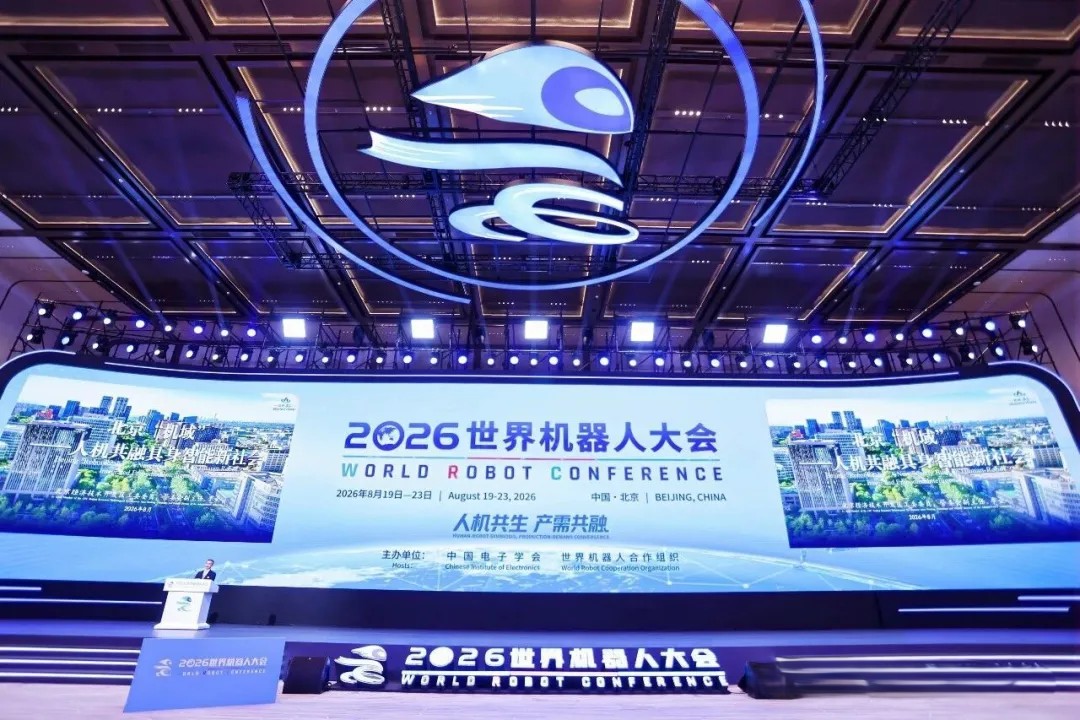
On August 22, 2026, the world’s attention will once again turn to the “Ice Ribbon,” Beijing’s National Speed Skating Oval. Following the success of the inaugural event, the second World Humanoid Robot Games will make a grand return under the theme “Intelligent Competition Toward the Future.” A total of 666 teams and 2,056 robots from 16 countries across six continents will compete on the same stage—a 138% increase in the number of teams compared to the first edition, and a fourfold increase in the number of robots. The number of events has expanded from 26 to 51, with the addition of high-intensity competitive events such as long jump, weightlifting, tug-of-war, and table tennis. Scenario-based competitions have also been extended to nine real-world environments, including industrial, residential, and hotel settings. This grand event is not only a showdown showcasing the pinnacle of global humanoid robot technology but also carries the industrial mission of “setting standards through competition and promoting production through standards”—every breakthrough on the competition floor points toward a future of harmonious coexistence between humans and machines.
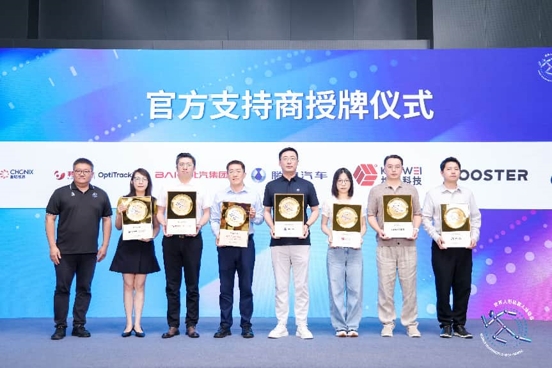
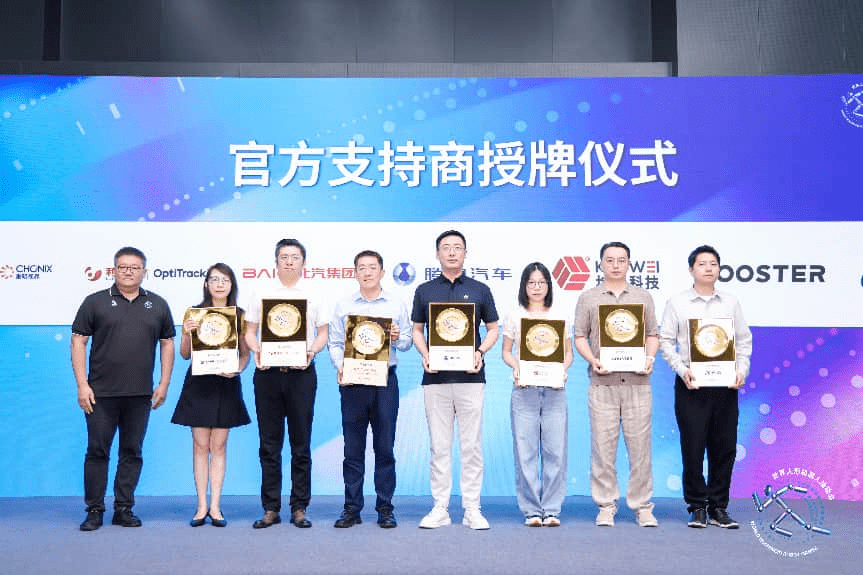
Kunwei Sensing Technology is honored to serve as an official sponsor and to provide exclusive force control technology support for this Humanoid Robot Games.
I. Industry Trends: Force Sensing Is “Essential Hardware” for the Large-Scale Deployment of Humanoid Robots
Surveys by multiple industry organizations indicate that 2026 is widely recognized as the starting year for the commercialization of humanoid robots. As the robot’s “tactile nerves,” six-axis force and joint torque sensors directly determine the robot’s capabilities in compliant grasping, bipedal balance, and safe human-robot interaction, making them indispensable core components.
Previously, the high-end multi-axis force sensing market was long monopolized by overseas brands such as ATI and Schunk. High equipment prices, long customization cycles, and weak localized services hindered the cost reduction and mass production of domestic humanoid robots. By 2025, domestic force sensor manufacturers collectively held a 58.8% market share, surpassing foreign brands for the first time, with local enterprises represented by Kunwei Technology emerging as the core driving force behind domestic substitution.
Industry analysts note: “For humanoid robots to move beyond the laboratory, the force sensing supply chain must be made self-reliant and controllable. Leading robot manufacturers have reached a consensus to prioritize domestically produced force sensors when precision is equivalent, with core requirements focused on three key dimensions: aerospace-grade stability, lightweight integration, and rapid customization and delivery.”
II. Pre-Event Preview: Kunwei’s Three Core Product Portfolios Set to Debut at the Competition Carnival; Aerospace Technology Forms a Differentiation Barrier
According to publicly available company information, Kunwei’s entire product line draws on over 50 years of technical expertise in the aerospace testing field. The founding team consists of professionals from national-level aerospace research institutes who have dedicated nearly 20 years to the R&D of multi-dimensional force sensors. They have pioneered a dual-path core technology combining “structural decoupling” and “algorithmic decoupling,” which simultaneously suppresses cross-axis crosstalk errors at both the structural and algorithmic levels.
(1) Six-Axis Force Sensors: Comprehensive Coverage of Force Measurement Needs Across Humanoid, Industrial, and Research Applications
1. Technological Leadership
The products utilize strain gauge measurement principles and aerospace-grade calibration processes, achieving repeatability accuracy better than 0.1% FS and trueness (including crosstalk) better than 0.3% FS, with core metrics reaching world-leading levels. Through in-house elastic body structural design and six-axis joint loading calibration technology, inter-axis crosstalk errors are controlled to an extremely low level. Kunwei has also established the only six-axis joint calibration laboratory among private enterprises in China. Leveraging in-house automated calibration equipment, the sensors undergo thousands of network parameter optimizations before leaving the factory, ensuring consistency across mass-produced products.
2. Functional Versatility
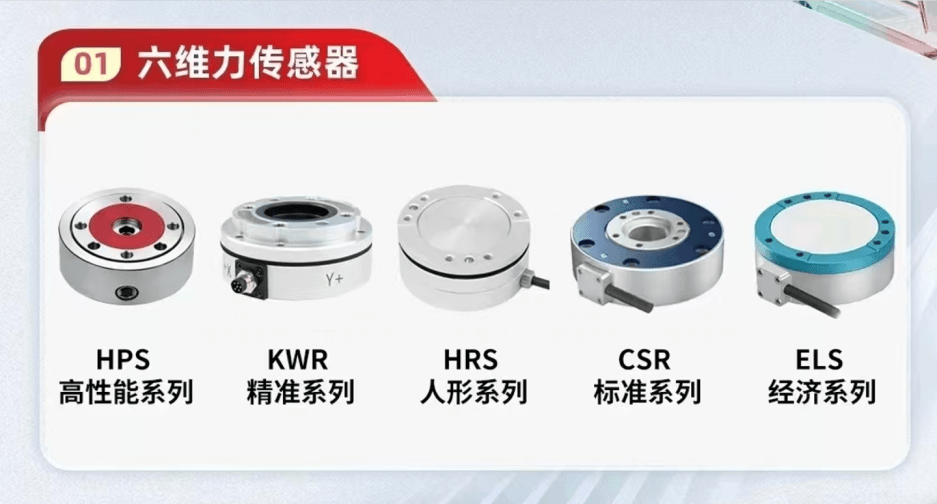
Product diameters range from 36 mm to 200 mm, with measurement ranges spanning 30 N to 10 kN, accommodating diverse assembly spaces and force measurement scenarios. Four complete product lines are on display at the event:
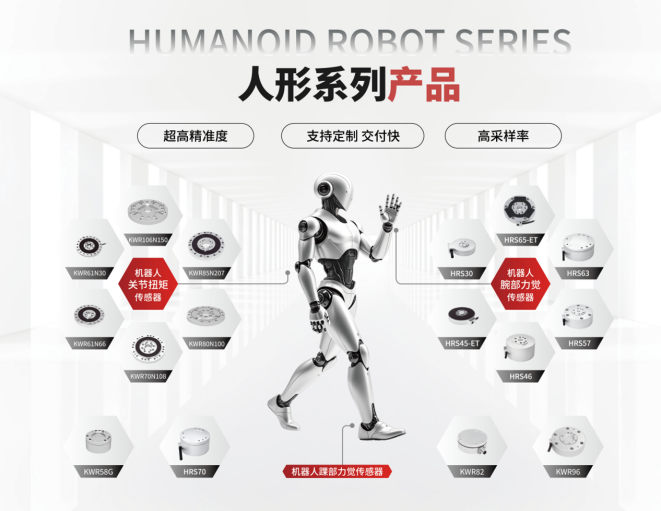
HRS Humanoid Series: Specifically designed for lightweight integration into the wrists and ankles of humanoid robots. The HRS30-60 is suited for compact wrist assemblies, while the HRS60-90 ensures safe high-dynamic movement at the ankles through its high-rigidity structure. These products are currently supplied in volume to leading humanoid robot manufacturers such as UBTech, Zhiyuan, Galaxy General, and Xinghaitu;
HPS Ultra-High-Performance Series: Utilizing proprietary titanium alloy elastomers with a sampling rate of up to 30 kHz, this series breaks the monopoly held by imported brands in the high-end, high-precision force measurement sector;
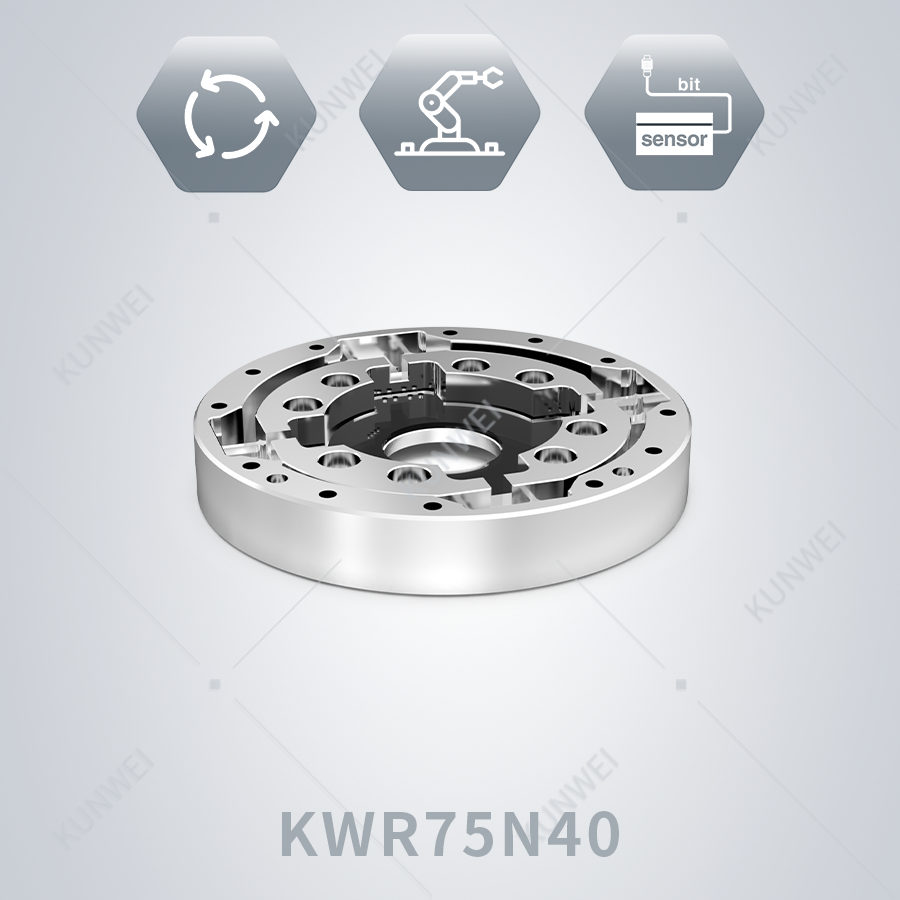
KWR Precision Series: Designed for mechanical testing applications in industrial automation production lines, universities, and research institutions;
CSR Economy Series: With specifications ranging from 60 mm to 100 mm, this series offers high cost-effectiveness to lower the barrier to entry for force control technology adoption among small and medium-sized manufacturing enterprises.
3. Innovation and Uniqueness
Kunwei served as the lead drafter of the national standard GB/T 43199-2023, “Testing Specifications for Multidimensional Force/Torque Sensors for Robots,” filling a gap in domestic industry standards. Additionally, the company has independently researched, developed, and built high-precision automated six-axis force combined loading and calibration equipment, providing calibration capabilities unique among domestic private enterprises.
A technical lead from a downstream robot manufacturer commented: “Kunwei’s lightweight design and low crosstalk performance in its humanoid-specific sensors perfectly suit the confined installation spaces of bipedal robots. The consistency and stability demonstrated in mass production have already made them capable of replacing high-end imported models.”
(II) Joint Torque Sensors: Building the Core Unit for Distributed Force Control Across the Entire Robot
1. Technological Leadership
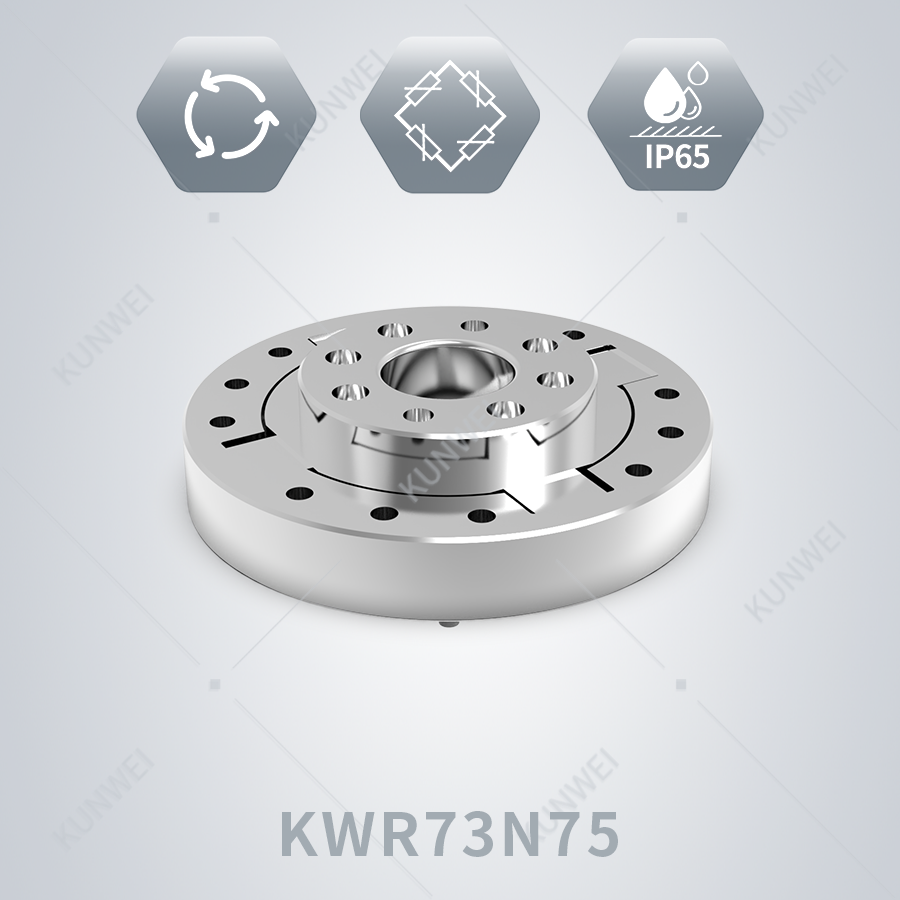
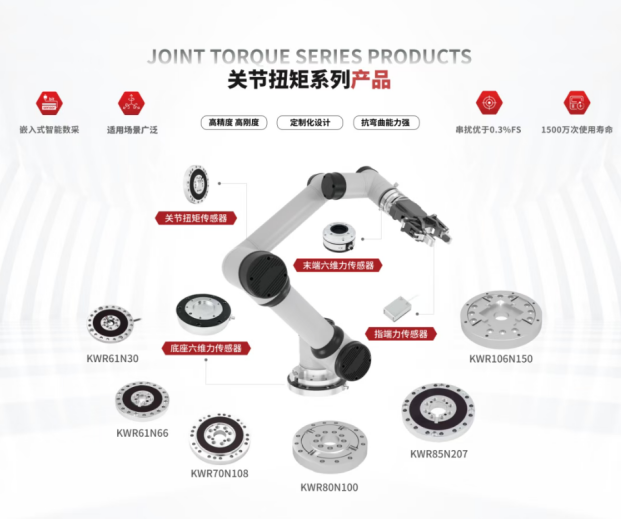
Developed specifically for integrated robot joints, these sensors feature hollow-shaft or flange-type structures with diameters ranging from 34 mm to 146 mm. The flagship model, KWR86N80, achieves a repeatability accuracy of 0.1% FS, with overall accuracy (including linearity and hysteresis) better than 0.15% FS and a zero-point temperature drift of ≤0.05% FS/10°C. The system can detect minute torque changes as small as 0.03% FS. The entire series comes standard with IP65 protection; select models achieve IP67. With a safe overload capacity of 200% FS and a maximum overload capacity of 300% FS, these encoders offer strong adaptability to various operating conditions.
2. Functional Suitability
The measurement range spans from 3 N·m to 545 N·m, with select models supporting direct RS485 digital signal output, reducing signal latency to the millisecond level. These products are widely deployed inside the joints of humanoid robots, collaborative robots, and industrial robots. When used in conjunction with six-degree-of-freedom force sensors at the end-effector, they establish a full-chain “joint + end-effector” force perception capability, providing critical underlying data support for humanoid robot walking stability, compliant grasping, and whole-body distributed force control.
3. Innovation and Uniqueness
The product integrates high-precision strain gauges, temperature compensation circuits, and digital-to-analog converters into the sensor body, eliminating the need for traditional separate signal conditioning modules and significantly simplifying internal joint wiring. Based on a design philosophy that balances “high stiffness” and “high sensitivity,” it effectively reduces the negative impact of elastic deformation in the transmission chain on the overall positioning accuracy of the robot.
Industry Integrator Perspective: “Traditional split-type torque sensors occupy a significant amount of internal space within the joint, complicating the system’s lightweight design. Kunwei’s integrated solution effectively addresses this challenge. The combination of ‘joint torque and six-degree-of-freedom end-effector force’ for full-body sensing is one of the optimal domestic solutions for achieving full-body compliant control.”
(3) 3D Force Platform: Core Equipment for Precise Testing of Robot Dynamics
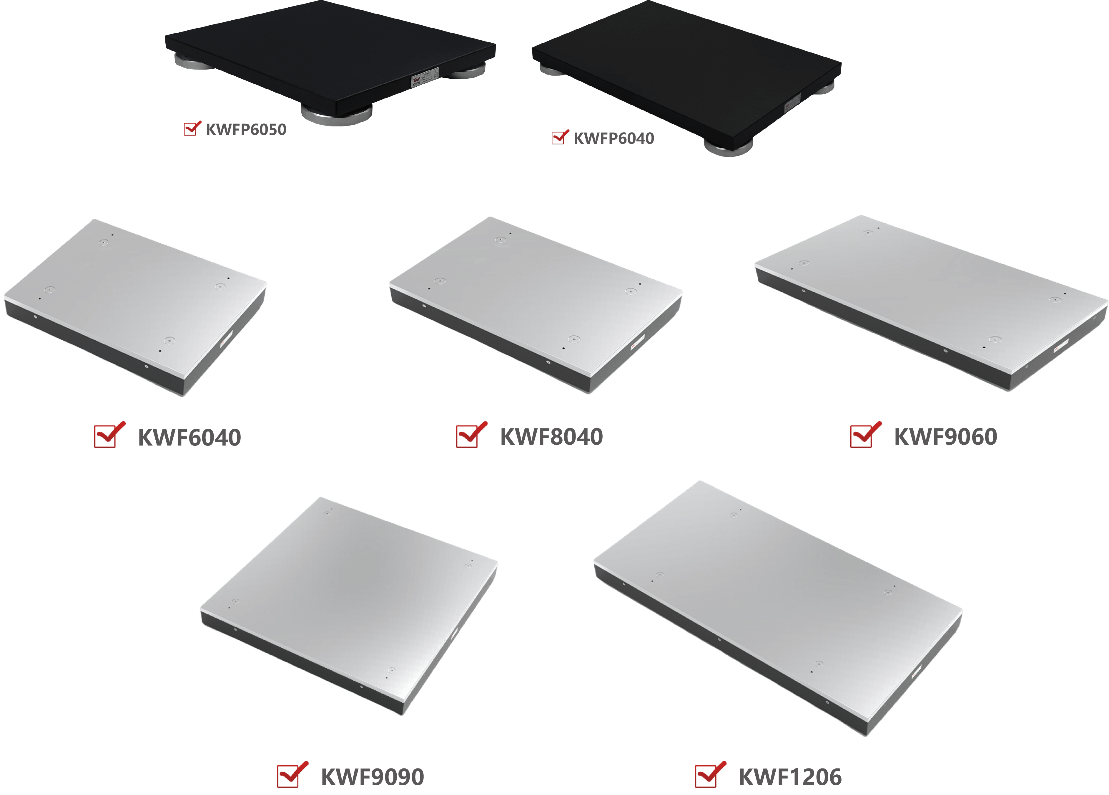
The 3D force platform is a core precision instrument for testing the dynamic performance of legged robots and humanoid robots. Utilizing an embedded multi-dimensional force sensor array, it can collect real-time data on the three-axis ground reaction forces (Fx, Fy, Fz) and three-axis torques during the interaction between the robot’s feet and the ground, and use this data to calculate key parameters such as ground reaction forces and gait cycles. The system can quantitatively evaluate balance performance and foot-ground interaction mechanics during dynamic movements such as walking, running, and jumping, providing high-fidelity experimental data to support the iteration of gait planning algorithms, the validation of stability control strategies, and the optimization of foot structure.
The value of the 3D force plate is further highlighted in competitive events such as robotics competitions. It provides comprehensive mechanical data support for events including the long jump, high jump, and weightlifting. The device can record in real time the peak resultant force, impulse, and power output during the takeoff and push-off phases, while simultaneously capturing key parameters such as flight height, flight time, and landing impact, providing objective, quantifiable criteria for competition judges. At the same time, force feedback data collected under extreme operating conditions can inform R&D teams, helping to optimize joint drive strategies and structural strength to continuously improve robotic performance in competitive scenarios.
Furthermore, the equipment can synchronize with optical motion capture systems to perform kinematic-dynamic fusion testing, providing reliable quantitative experimental data for the development of motion control and embodied intelligence algorithms for humanoid and quadruped robots.
Kunwei’s independently developed portable and stationary high-precision 3D force measurement platforms are available in multiple models, with a wide range of measurement ranges and structural dimensions. They are compatible with robots of various shapes and sizes, fully meeting diverse robotics testing needs, including scientific research, scenario-based operational testing, and competition evaluations.
III. Industrial Value: End-to-End Force Sensing Solutions to Accelerate Mass Production and Reduce Costs for Humanoid Robots
There are currently two major pain points in the industry: First, each humanoid robot requires at least 3–6 force sensors, and imported components drive up the overall cost of the robot. Second, inconsistent technical standards among domestic and international manufacturers result in lengthy periods for adapting and debugging the robot and sensors.
From an industrial perspective, Kunwei Technology has established a complete closed-loop system spanning calibration equipment, standard-setting, sensor R&D, and mass delivery. On one hand, the company leverages large-scale domestic production to reduce procurement costs, resulting in significantly lower prices compared to imported products; on the other hand, by relying on its domestic R&D team, it can quickly respond to robot manufacturers’ customized requirements for dimensions, measurement ranges, and communication protocols, thereby substantially shortening the overall development cycle.
IV. Future Outlook
The Second World Humanoid Robot Games are about to begin. The event organizers will continue to refine the competition format, expand the range of events, and optimize the rules to enable the “One Conference, One Competition” platform to play a greater role in technological innovation and industrial development. After the event, the “Ice Ribbon” venue will become a permanent training and competition base, accelerating the implementation of the “One Competition, One Park, One Zone” framework; competition rules will evolve into technical acceptance standards, and a closed-loop system where “winning a medal leads to an order, and leaving the competition arena means entering the field” is taking shape.
Looking at the industry as a whole, 2026–2027 marks a critical juncture for the humanoid robotics sector. Global shipments in the first half of the year have already reached 19,100 units, nearly tripling year-over-year; Goldman Sachs projects global shipments will reach 76,000 units in 2027 and rise to 502,000 units by 2032. Humanoid robots are transitioning from “showcasing technical prowess in laboratories” to “large-scale mass production,” evolving from “athletes” on the competition floor to “workers” in factories and “butlers” in homes. The doors to human-robot symbiosis are being opened one by one.