What is a load cell
Load cell sensors convert pressure or mechanical force into a measurable electrical signal. Load cells come in many variants, varying in size, shape and principle of operation. Load cells are commonly used in household and industrial applications. Some domestic applications of load cells include personal weighing machines, kitchen scales, bathroom scales, pallet scales, and luggage weighing machines. Some industrial applications for load cells include geotechnical equipment, medical equipment, belt scales, hopper scales, track scales, and truck scales.
Types of Load Cells
Load cells vary widely in size, shape, application and operating principle. The easiest way to classify load cells is by how they work. Based on this, almost all load cells fall into one of the following three categories.
Hydraulic load cell
Pneumatic load cell
Strain Gauge Load Cell
Hydraulic load cells measure mechanical force by sensing a pushing force applied to a fluid. They have a typical piston and cylinder setup where fluid is stored between two pistons. One of the pistons is stationary. Another piston can move under pressure or thrust. The movement of the piston causes a change in pressure within the Bourdon tube, which is detected by the pressure gauge. These types of load cells are usually analog.
Pneumatic load cells measure mechanical force by sensing air or gas pressure. It has a similar cylindrical setup where the cylinder is filled with air or gas and the movable piston is placed on top of the load cell. When pressure is applied to the piston, the air pressure inside the cylinder changes, causing air to escape through nozzles at the bottom of the cylinder. The pressure exerted by the escaping air/gas is measured by a pressure gauge inside the load cell.
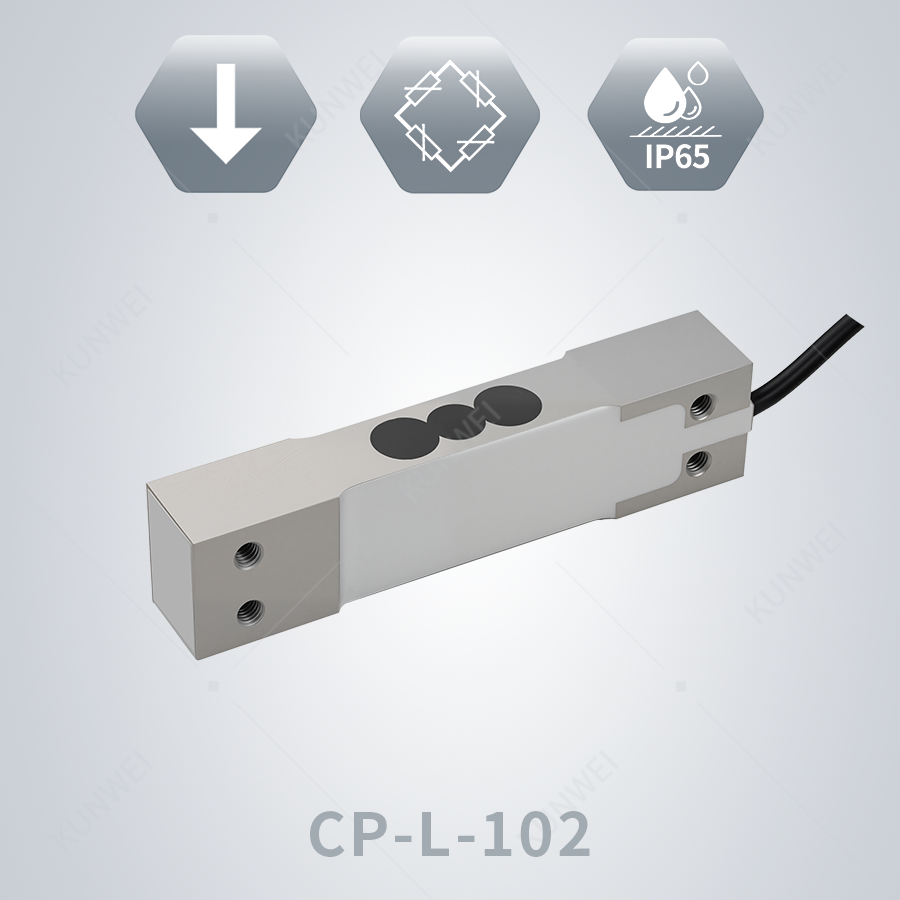
Strain gauge load cells measure mechanical force by sensing the deformation of one or more strain gauges within the load cell. Strain gauge load cells are the most common type of load cell. They come in many shapes and configurations. For example, a bar load cell has four strain gauges; two are placed at each end of the bar. The load cells are arranged in a Z-shape between two platforms on the weighing scale. When some weight is placed on the pole (top platform), the load cell bends due to the force applied. Two strain gauges in the rod measure tension and two measure compression to detect the resulting bending deformation. Rod load cells are also known as curved beam load cells.
Four load cells are arranged in a Wheatstone bridge for maximum sensitivity in a typical weighing machine.
in conclusion
Weight measurement is done using load cells, which come in a variety of shapes, sizes, use cases and operating principles for a variety of applications. These load cells can be single strain gauges or Wheatstone load cells. Depending on their shape and setup, a strain gauge load cell can be a bending beam load cell, button/disc type, S-type, torque load cell, or tank load cell. Even single strain gauge load cells are often used in a Wheatstone configuration for maximum sensitivity.
prodotti correlati
.jpg)