On 20 July, the 2026 World Artificial Intelligence Conference and the High-Level Meeting on Global AI Governance drew to a close in Shanghai. Held under the theme ‘Intelligent Partners, Co-creating the Future’, this year’s conference spanned three major districts—the World Expo Area, Zhangjiang and the West Bund—with the total exhibition area exceeding 100,000 square metres for the first time. Over 1,100 companies took part, showcasing more than 3,000 exhibits, including over 300 products making their global debut. According to official statistics, the number of on-site visitors exceeded 300,000, comprising a diverse audience—ranging from industry professionals and developers specialising in humanoid robotics, embodied intelligence algorithms and system integration, to government officials, partners from investment firms and academic researchers, whilst media journalists and members of the general public also participated enthusiastically. With visitors from diverse backgrounds gathering under one roof, the atmosphere was vibrant with exhibition tours, networking and business negotiations, presenting the global AI industry with a high-calibre, high-density technological extravaganza.
As a leading domestic manufacturer of six-axis force sensors, Kunwei Technology showcased its full range of haptic sensing products—covering core applications such as humanoid robots, industrial collaboration, medical therapy and retail—at the Embodied Intelligence Pavilion within the Expo Exhibition Centre. Over the four-day exhibition period, the Kunwei stand welcomed thousands of professional visitors specialising in humanoid robot platforms, embodied intelligence algorithms and system integration. During this time, Kunwei not only successfully conveyed industry consensus through product demonstrations but also, on the world-class stage of WAIC, established ‘domestically produced force sensing’ as a key topic within the embodied intelligence sector.
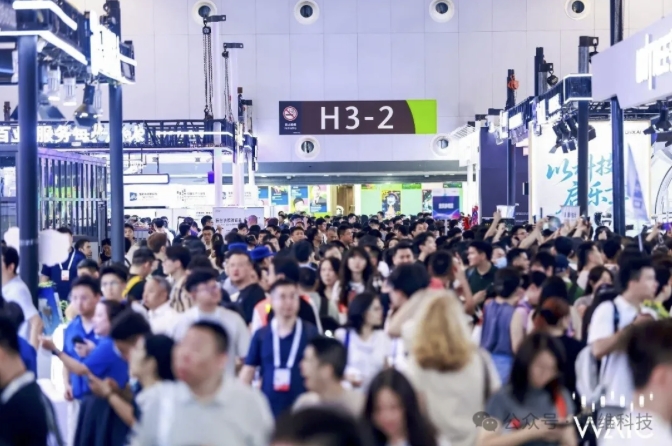
With the exhibition running for four days, why is the Kunwei stand a ‘must-visit’?
Looking back over the four-day exhibition, Kunwei Technology showcased its full range of force-sensing products—covering core applications such as humanoid robots, industrial collaboration and retail—demonstrating to the industry its comprehensive capabilities, from aerospace-grade high-precision force control to large-scale delivery.
The HRS humanoid series of six-axis force sensors was undoubtedly the centrepiece of the stand. Designed specifically for the wrists and ankles of humanoid robots, this series features an ultra-slim profile of just 10 mm at its thinnest point, combined with high overload capacity, making it perfectly suited to integration requirements in confined spaces. At the exhibition, robots equipped with Kunwei sensors were recreating real-world commercial service scenarios—such as breakfast preparation and smart pharmacy retail—executing the entire process from object retrieval and manipulation to delivery with seamless fluidity. Whether it was controlling the gripping force for items of different materials or the precise identification and handling of hundreds of types of medicines, these tasks relied on the real-time perception of end-effector contact force provided by the six-axis force sensors and the precise measurement of joint torque by the joint torque sensors. This ‘joint + end-effector’ dual-force haptic closed-loop solution has enabled robots to evolve from ‘executing at fixed positions’ to becoming intelligent agents that ‘perceive their environment and adapt accordingly’. The HRS series is currently being supplied in bulk to leading humanoid robotics companies such as UBTech, Zhiyuan, Galaxy General and Xiaomi.
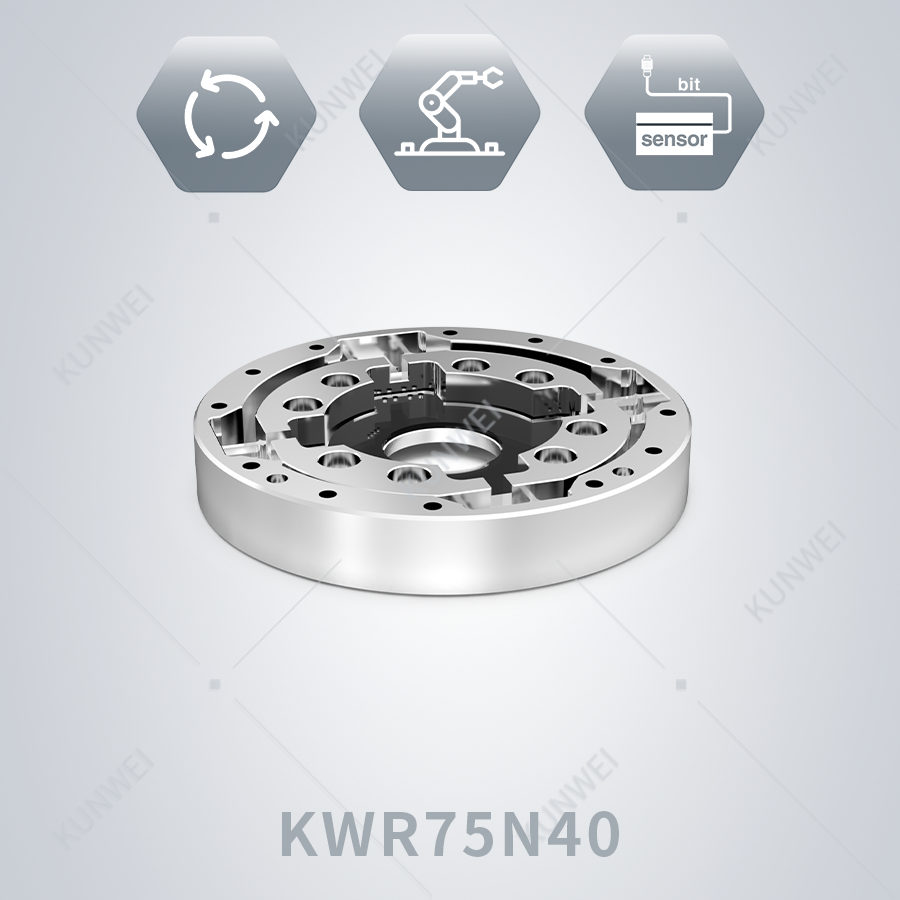
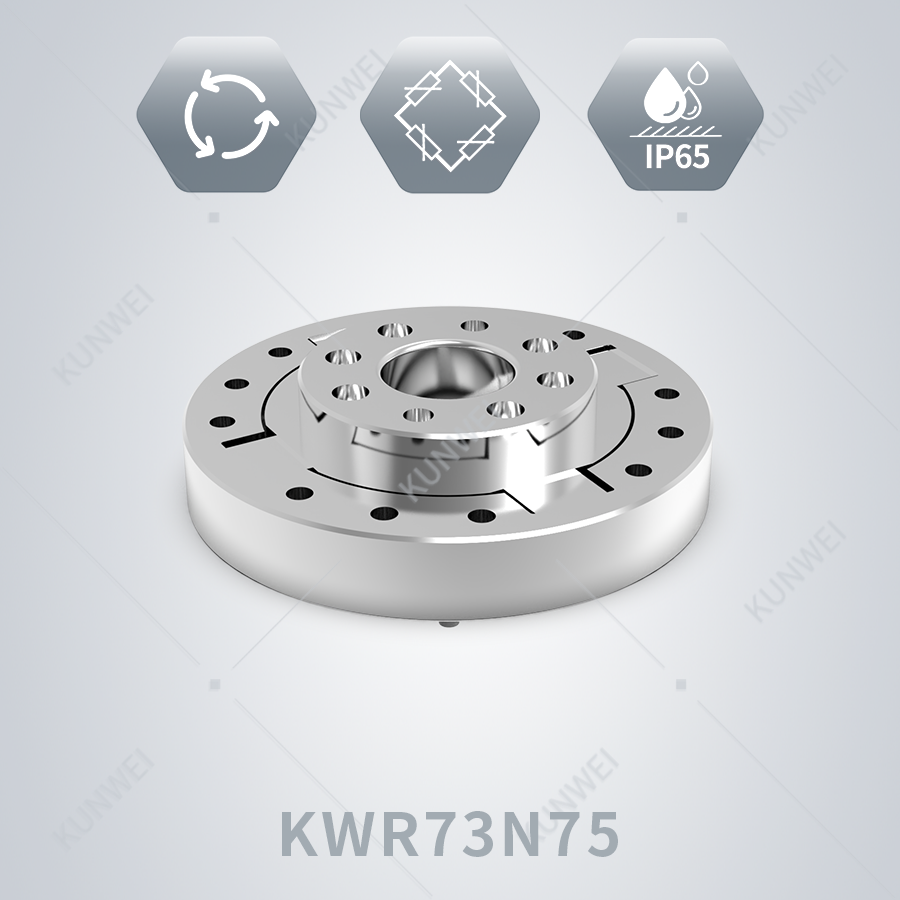
Joint torque sensors were also a key feature of the stand. Designed specifically for integrated robotic joints, these sensors measure rotational torque at the joint output in real time. The product range covers a variety of measurement ranges and models, utilising either hollow-shaft or flange-mounted designs with diameters ranging from 34 mm to 146 mm. They can be directly embedded between harmonic reducers and motors and are already in mass production for use within the joints of humanoid robots, collaborative robots and industrial robots. Together with the six-degree-of-freedom force sensors at the end effector, they establish a complete chain from joint force control to end-effector force feedback.
The KWR Precision Series, meanwhile, focuses on industrial and research applications. With a repeatability accuracy of 0.1% FS, it is widely used in fields such as precision assembly, adaptive polishing and medical surgical robots. During the exhibition, Huayan’s PR series of collaborative robots, equipped with KUNWEI’s six-axis end-effector force sensors, demonstrated practical applications such as precision assembly and constant-force polishing. The sensors provide real-time feedback on contact force, enabling the robotic arm to operate with the ‘tactile sensitivity’ of a skilled technician, precisely regulating polishing pressure. In the event of an unexpected collision, the system responds within milliseconds to apply emergency braking – this is precisely where the six-axis force sensors deliver their core value to collaborative robots.
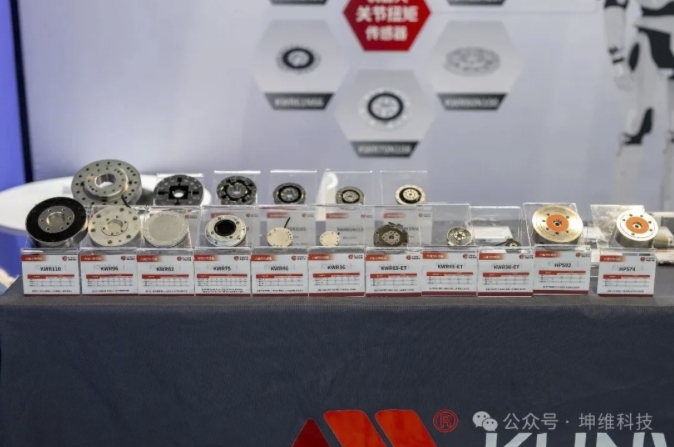
A set of figures that shed light on Kunwei’s performance in the WAIC
According to MIR Rui Industry’s 2026 White Paper on the Development of China’s Six-Axis Force Sensor Industry, Kunwei Technology accounts for 53 per cent of six-axis force sensor shipments in China’s humanoid robot and collaborative robot sectors, maintaining a commanding lead. This figure reflects the trust placed in the company by its customers through their orders.
In terms of product performance, Kunwei’s six-axis force sensors boast an accuracy (including crosstalk) of better than 0.3% FS and a precision of better than 0.1% FS, with core metrics far exceeding those of comparable domestic products. The KWR Precision Series, with a repeatability of 0.1% FS, has become a reliable choice in industrial and research applications; joint torque sensors also perform exceptionally well—taking the KWR86N80-NEU as an example, its repeatability is better than 0.05% FS, whilst non-linearity and hysteresis are both better than 0.15% FS. Of particular importance is temperature stability: as joint torque sensors are installed in close proximity to motors, the temperature rise in the operating environment has a significant impact on measurement accuracy. Through aerospace-grade temperature compensation design, KUNWEI has controlled zero-point temperature drift to ≤0.05% FS/10°C, ensuring stable and reliable signal output across a wide temperature range. Its comprehensive product portfolio—covering humanoid robots, industrial collaboration and medical physiotherapy—enables customers from diverse sectors to find force control solutions tailored to their specific requirements.
In terms of service, Kunwei has independently developed multiple sets of fully automated, intelligent six-axis combined loading, calibration and testing equipment—the only such facilities among private enterprises in China. The company is aiming to reach an annual production capacity of 120,000 units by the end of 2026, with efficient next-day delivery available in the East China region. The balance between ‘aerospace-grade quality’ and ‘industrial-grade cost’ means customers no longer need to compromise between ‘performance’ and ‘price’. From solution selection to after-sales support, Kunwei’s technical service team provides end-to-end support, genuinely helping customers reduce the cost of implementing automated force control.
It is precisely this dual-drive approach of product excellence and service excellence that has earned Kunwei the trust of its customers: its products have entered the supply chains of all leading domestic humanoid robot manufacturers, cover over 70 per cent of China’s collaborative robot manufacturers, and have served a cumulative total of over 500 clients. As domestic substitution shifts from a trend to a reality, Kunwei is defining new standards for the force and tactile sensing industry through tangible delivery results.
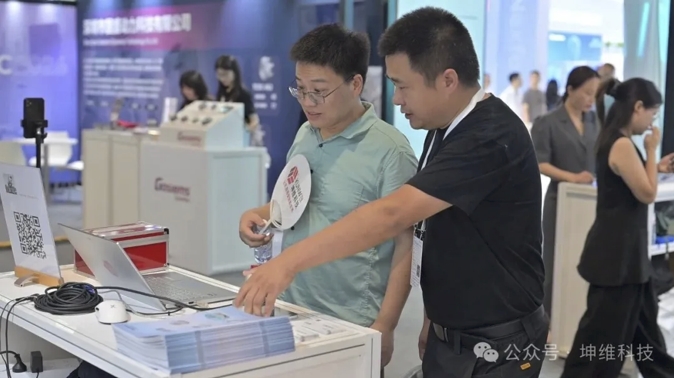
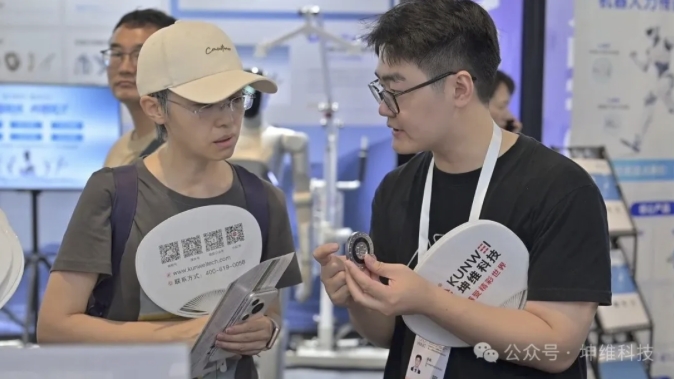
Trends as Seen at WAIC – The ‘Golden Age’ of Force Sensing Has Arrived
The most significant message emerging from this year’s WAIC is that embodied intelligence is shifting from ‘showcasing technical prowess’ to ‘getting the job done’. The event was no longer dominated by a race for technical specifications and benchmark scores; all manufacturers were pointing in the same direction—AI moving from the screen into real-world scenarios. Force sensing is becoming a crucial factor in determining whether a robot can ‘truly get the job done’. Vision tells the robot ‘what it is’, whilst force sensing tells it ‘how much force to apply’—without the latter, a robot’s operations will forever remain merely ‘looking the part’ rather than ‘actually achieving the task’.
Domestic substitution is also shifting from a ‘trend’ to a ‘reality’. By 2025, domestic manufacturers had captured a 58.8 per cent market share in the six-axis force sensor sector, marking the first time they had historically overtaken foreign competitors. The fact that a domestic high-end sensor manufacturer has secured a 53 per cent market share in the precision measurement sector—long dominated by overseas firms—speaks volumes: domestic substitution in China’s robotics industry is entering a deeper phase—moving from ‘functional’ to ‘user-friendly’, and from ‘price advantage’ to ‘performance leadership’.
At the same time, the ‘mass production capability’ of core components is emerging as a new competitive barrier. As humanoid robots transition from prototypes to large-scale production, delivery capacity will determine the winner. Kunwei’s planned annual production capacity of 120,000 units is precisely aimed at securing a head start in the ‘era of mass production’—as the industry shifts from ‘can we manufacture it?’ to ‘can we deliver it in bulk?’, whoever is first to resolve the challenges of scaling up production capacity and quality control will gain the upper hand in this race.
Closing Remarks — More Than Just a Trade Fair
Over the four-day exhibition, ranging from product demonstrations to technical exchanges, and from government recognition to customer orders, Kunwei achieved a leap from ‘technology showcase’ to ‘industry consensus’ at WAIC. As the exhibition draws to a close, our journey continues. Kunwei will continue to deepen its expertise in the underlying technologies of multi-dimensional force sensing, expand production and enhance efficiency, and build a globally comprehensive, domestically produced force sensing platform for all scenarios—using independently developed and controllable core components to help China’s embodied AI and high-end equipment industries overcome bottlenecks.
Although WAIC has drawn to a close, the dialogue continues. Clients who were unable to attend may leave a message via the contact form to book prototype testing or arrange on-site technical consultations; leave a comment saying ‘Force Sensing Solutions’ in the comments section to receive the full product manual; and follow the Kunwei Technology WeChat official account for further technical updates and industry insights.
Giving every robot a ‘Chinese touch’—Kunwei Technology is always on the move.
.jpg)
.jpg)