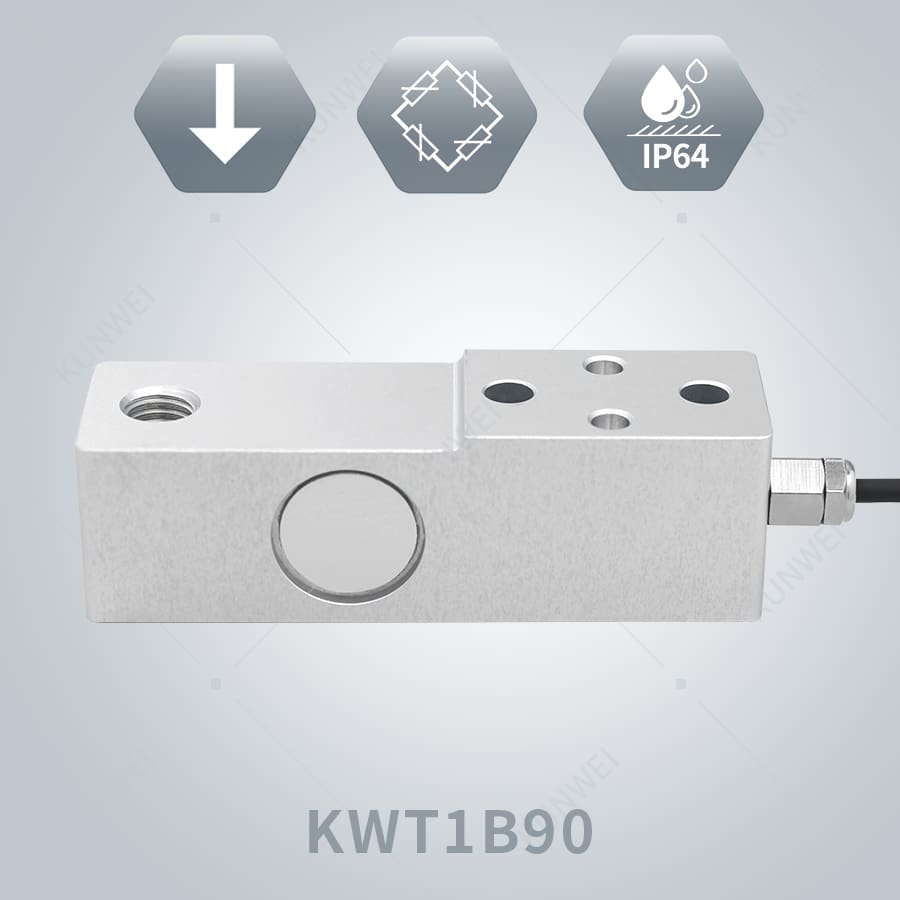
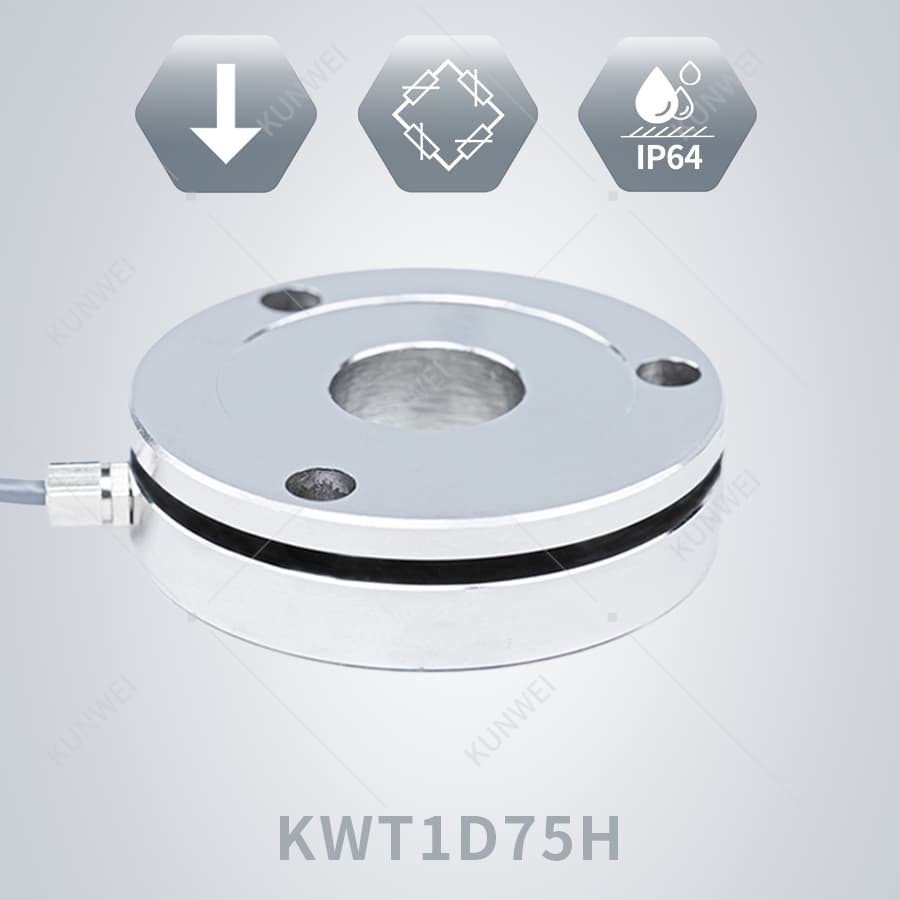
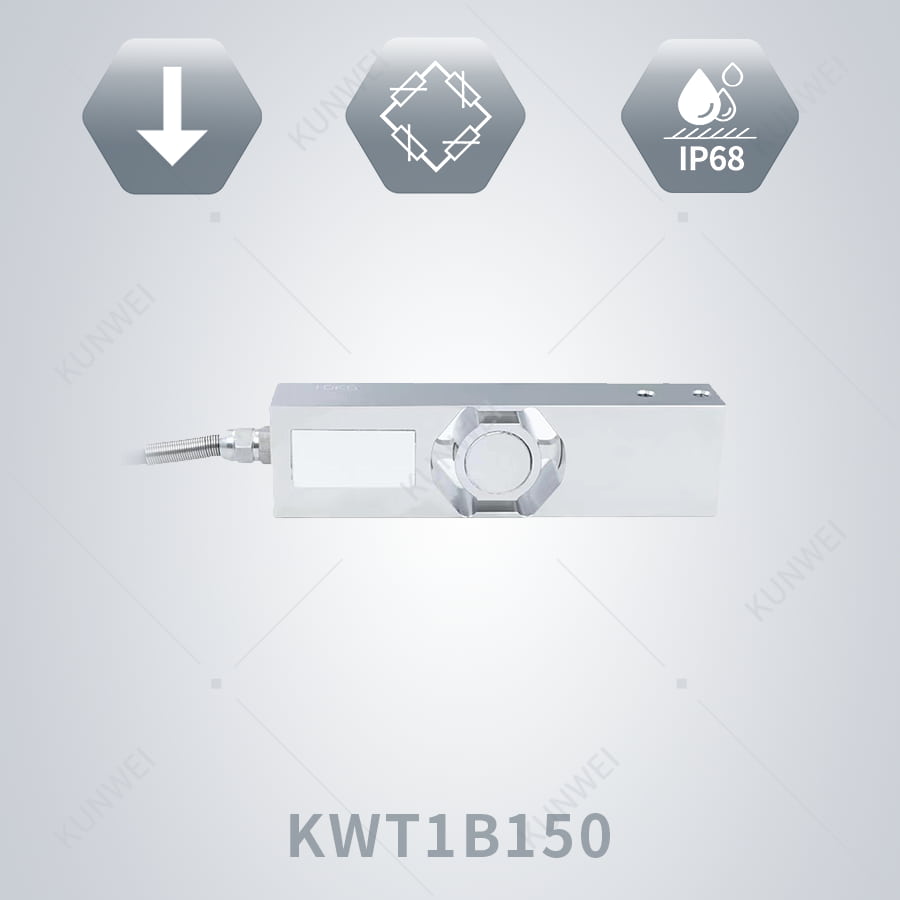
Resposta Rápida: The IP (Ingress Protection) rating of a célula de carga is a standardised two-digit classification defined by IEC 60529 (Degrees of Protection Provided by Enclosures). It quantifies an enclosure’s resistance to the ingress of solid particles and liquid penetration, which are two of the most destructive environmental factors in industrial weighing applications.
According to the International Electrotechnical Commission (IEC 60529:2013) and the OIML R 60 International Recommendation for the Metrological Regulation of Load Cells, the IP rating determines whether a load cell can maintain calibration integrity, sensor longevity, and signal accuracy in wet, dusty, corrosive, or wash-down environments. Using a load cell with an inadequate IP rating for its installation environment is one of the main causes of premature failure, signal drift, and unplanned downtime in process weighing systems worldwide.
The IEC 60529 Standard: What IP Ratings Actually Measure
The IP rating system is not a marketing label; it is a rigorous testing protocol defined by the International Electrotechnical Commission (IEC) in IEC 60529. First published in 1976, it was most recently revised in 2013 with Amendment 2 (2019). Every IP code follows the format IP[first digit][second digit], where the first digit indicates the level of protection against solid objects and dust, and the second digit indicates the level of protection against water. An IP68 rating, for example, tells an engineer that the enclosure has passed a complete dust-exclusion test and a continuous submersion test at a depth exceeding one metre, as specified by the manufacturer.
What makes IP ratings especially valuable for load cell specifications is that they translate abstract environmental conditions into quantifiable, testable performance thresholds. A food processing plant manager does not need to estimate whether high-pressure steam cleaning would damage a compression load cell, for example; an IP69K rating confirms that the enclosure has survived a standardised 80 °C, 100-bar water jet test from all angles at a distance of 100–150 mm (per ISO 20653/DIN 40050 Part 9). This removes guesswork from the specification process and creates a defensible audit trail for maintenance and safety compliance.
It is also worth understanding what IP ratings do not measure. They do not assess chemical or mechanical impact resistance, UV degradation, or temperature extremes (the latter two of which are covered by IK codes under IEC 62262). For example, a load cell with an IP67 rating could still be damaged by aggressive cleaning chemicals if its housing is made from standard stainless steel rather than duplex or Hastelloy alloy. An IP rating must always be read alongside the material specification and not in isolation.

Decoding the Two-Digit IP Code: First Digit (Solids)
The first digit of the IP code classifies protection against solid foreign objects, ranging from large mechanical parts down to microscopic conductive dust particles. In load cell applications, this digit is most critical in mining, cement production, grain handling, pharmaceuticals, and any operation where airborne particulate can settle on sensing elements, penetrate cable entry points, or accumulate inside strain gauge housings.
| 0 | No protection | — | Indoor laboratory balances only |
| 1 | ≥ 50 mm solid objects | Large body parts (back of hand) | None — effectively obsolete in industry |
| 2 | ≥ 12.5 mm solid objects | Fingers | Light-duty indoor conveyor scales |
| 3 | ≥ 2.5 mm solid objects | Tools, thick wire | General-purpose platform scales |
| 4 | ≥ 1 mm solid objects | Fine wire, small screws | Packaging line checkweighers |
| 5 | Dust-protected | Limited dust ingress allowed | Grain silos, cement batching |
| 6 | Dust-tight | Zero dust ingress (vacuum test) | Pharmaceutical, electronics, food |
For the vast majority of industrial and commercial load cell installations, a first-digit rating of 5 (dust-protected) is the practical minimum. Critical processes in pharmaceutical manufacturing, flour milling, and electronics assembly demand 6 (dust-tight), where the IEC 60529 test applies a vacuum of 2 kPa and circulates talcum powder around the enclosure for eight hours — zero particle ingress is permissible for a pass result.
Decoding the Two-Digit IP Code: Second Digit (Liquids)
The second digit is typically the more consequential specification for load cells, because water and process liquids attack strain gauges, bridge circuitry, and cable terminations far more aggressively than dust. Even trace moisture penetrating a poorly sealed cable gland can increase the electrical resistance of the Wheatstone bridge circuit, producing measurable zero-point drift within weeks of installation.
| 0 | No protection | — | Dry indoor environments only |
| 4 | Splash-proof | Water splashed from any direction | Outdoor platform scales (covered) |
| 5 | Jet-proof | 12.5 L/min water jet, 3 min, all angles | Open outdoor weighbridges |
| 6 | Powerful jet-proof | 100 L/min water jet, 3 min, all angles | Marine deck scales, outdoor hoppers |
| 7 | Immersion-proof | 1 m depth, 30 minutes | Flood-prone pit installations |
| 8 | Continuous submersion | Manufacturer-specified depth > 1 m | Underwater silo bases, tank farms |
| 9K | High-pressure/temp jet | 80°C, 100 bar, 100–150 mm, all angles | Food & beverage wash-down lines |
The distinction between IP67 and IP68 is frequently misunderstood in procurement. IP67 certifies 30-minute submersion at one metre — adequate for incidental flooding but not continuous immersion. IP68 requires the manufacturer to declare the specific depth and duration (e.g., “IP68: 3 m / 72 hours”), making it critical to review the manufacturer’s test specification rather than assuming equivalence across brands. Two load cells both marked IP68 may have been tested to entirely different submersion profiles.
The IP69K suffix, derived from the German automotive standard DIN 40050-9 (now harmonised into ISO 20653), is the benchmark for food, dairy, beverage, and meat processing. It is not a continuation of the IP scale — it is a separate, more aggressive test that an IP68-rated enclosure may fail. Specifying IP69K without also verifying IP67 or IP68 is incomplete; many manufacturers certify IP67/IP69K or IP68/IP69K in combination to cover both submersion and steam-cleaning scenarios.
Common Load Cell IP Ratings in Industrial Practice
In practice, industrial load cell catalogues tend to be organised into four IP rating tiers that correspond to recognisable installation environments.
IP54 and IP55 are the entry-level ratings for industrial use and are found in indoor platform scales, general warehouse checkweighers and pallet weighing systems, where an occasional splash is possible, but sustained water exposure is not expected. Many tension load cells used in overhead crane weighing and cable tension monitoring fall into this category due to their enclosed deployment.
IP65 and IP66 are the standard specifications for outdoor agricultural, chemical, and general process weighing applications. The dust-tight first digit (6) and jet-resistant second digit (5 or 6) cover the combined demands of open-air dust and rain, manual hose-down cleaning, and industrial wash cycles that do not involve high-pressure heated water. Compression load cells supporting outdoor hopper scales, truck axle scales, and animal weighing platforms typically carry IP65 or IP66 ratings.
IP67 and IP68 are used for installations where the load cell may be partially or fully submerged, such as floor-level tank weighing systems, vessel weigh modules installed in drainage sumps, and concrete-embedded load cells in foundation weighing structures. Stainless steel shear-beam and pancake-style load cells in this category usually have hermetically welded seams, laser-welded cable exits, and vulcanised cable jacketing to ensure they can be submerged, rather than relying on O-ring seals which deteriorate with thermal cycling.
IP69K (with IP67 or IP68) is mandatory for CIP (clean-in-place) and SIP (sterilise-in-place) environments in the food, pharmaceutical and biotechnology industries. Manufacturers such as Mettler-Toledo, Minebea Intec and HBM (now HBK) publish third-party test certificates for IP69K-rated models specifically because food safety auditors require documented proof rather than self-declaration.
IP Rating, Calibration Stability, and Signal Integrity
The relationship between IP rating and measurement accuracy is not always obvious to engineers sourcing load cells primarily on capacity and sensitivity specifications. Moisture ingress affects load cell signal integrity through three distinct failure mechanisms:
① Insulation resistance degradation — Water bridging across the Wheatstone bridge circuit reduces the insulation resistance between the excitation and signal circuits, introducing a DC offset that manifests as an upward zero shift. Per HBM Application Note AN 2002, insulation resistance below 2 GΩ produces measurable errors in 10 mV/V load cells used in legal-for-trade weighing.
② Corrosion of strain gauge bonding — Even in nominally sealed load cells, micro-scale moisture diffusion through adhesive layers over multi-year service periods causes de-bonding of the strain gauge grid from the spring element, producing non-repeatability errors that worsen progressively and are not recoverable through recalibration.
③ Cable termination resistance variation — At cable entry points, moisture-induced oxidation of tinned copper conductors increases contact resistance asymmetrically across the four-wire or six-wire bridge connection, introducing bridge imbalance errors that appear as span drift rather than zero drift — making them harder to detect during routine calibration checks.
Properly specified IP-rated load cells address all three failure modes: hermetic sealing prevents initial ingress (mechanism ①), high-grade epoxy or glass-to-metal sealed transducers block diffusion pathways (mechanism ②), and over-moulded or laser-welded cable exits eliminate termination oxidation (mechanism ③). This is why IP rating is as much a calibration stability specification as it is a physical protection specification.

Selecting the Right IP Rating: A Practical Decision Framework
Matching load cell IP rating to installation environment requires a structured assessment of four environmental parameters: ① the presence and concentration of airborne particulate, ② the frequency and intensity of liquid exposure, ③ the cleaning method and chemical nature of washdown agents, and ④ the probability and duration of flooding or immersion. For most procurement teams, the following rules of thumb provide a reliable starting point before formal environmental classification under IEC 60529 Annex A:
Dry indoor, climate-controlled environments (laboratory, pharmaceutical clean rooms, electronics): IP54 minimum; IP65 preferred for particulate management.
Outdoor, rain-exposed, non-wash environments (weighbridges, agricultural scales, outdoor hoppers): IP65 or IP66.
Indoor wash-down with cold-water hosing (general food production, logistics, cold stores): IP66 or IP67.
High-pressure / high-temperature steam cleaning (dairy, meat, beverage, ready-meal production): IP67/IP69K or IP68/IP69K mandatory.
Submerged or semi-submerged installations (pit scales, tank farm weigh modules, flood-zone foundations): IP68, with manufacturer-specified submersion depth confirmed to exceed maximum flood level.
When in doubt, always specify one IP tier above the minimum estimated requirement. The incremental cost of a higher IP-rated load cell — typically 15–30% over a base-specification unit — is negligible compared to the cost of a field failure, recalibration event, or compliance audit failure in a regulated production environment.
FAQ: Load Cell IP Rating — Common Questions Answered
Q1: What is the most common IP rating for industrial load cells?
IP67 is the most widely specified rating for general industrial load cells because it provides both complete dust exclusion and short-term immersion protection, covering the majority of outdoor, process, and light wash-down applications. IP65 is common in drier industrial environments, while food-grade applications increasingly demand IP67/IP69K dual certification.
Q2: What is the difference between IP67 and IP68 for a load cell?
IP67 certifies 30-minute immersion at one metre depth, while IP68 certifies continuous submersion at a manufacturer-specified depth greater than one metre — making IP68 the appropriate choice for permanently submerged or flood-prone installations. Always confirm the manufacturer’s declared submersion depth and duration for IP68 claims, as these vary significantly between brands.
Q3: Does IP69K replace IP67 or IP68 on a load cell?
No — IP69K tests resistance to high-pressure, high-temperature jets but does not include submersion testing, so it does not subsume IP67 or IP68. For complete environmental protection in wash-down applications, look for combined certifications such as IP67/IP69K or IP68/IP69K on the product datasheet.
Q4: Can a load cell lose its IP rating over time?
Yes — IP ratings are based on new-condition testing, and field factors including O-ring compression set, cable jacket abrasion, corrosion at mounting hardware interfaces, and UV degradation of sealing compounds can reduce effective protection over time. Scheduled inspection and re-sealing intervals are recommended by manufacturers such as Mettler-Toledo and HBK, particularly in high-cycle wash-down environments.
Q5: What IP rating is required for food production load cells?
Food processing load cells — particularly those used in dairy, meat, beverage, and ready-meal production — are required to meet IP67/IP69K or IP68/IP69K to comply with EHEDG (European Hygienic Engineering & Design Group) guidelines and FDA 21 CFR sanitary equipment principles. IP65 or IP66 alone is insufficient for CIP/SIP environments.
Q6: Does a higher IP rating affect load cell accuracy or sensitivity?
IP rating itself does not reduce inherent accuracy, but the mechanical design choices required to achieve high IP ratings — such as thicker housing walls, additional sealing material, and hermetic welds — can slightly reduce the spring element’s mechanical sensitivity if not properly engineered. Reputable manufacturers maintain full rated accuracy (typically ±0.02% to ±0.05% full-scale) across all IP tiers by adjusting spring element geometry accordingly.
Conclusão
The IP rating of a load cell is one of the most operationally significant specifications in the procurement process, yet it is often treated as an afterthought behind capacity, sensitivity, and output signal type. This guide demonstrates that IP classification under IEC 60529 provides precise, testable protection thresholds that directly impact long-term calibration stability, signal integrity, and total cost of ownership across a range of industrial weighing environments.
Whether you are specifying compression load cells for an outdoor cement batching plant, shear-beam units for a dairy wash-down line, or hermetic submersible modules for a pit-scale installation, ensuring that the IP rating matches your actual environmental conditions is the most important specification decision you can make before signing the purchase order.
References:
- IEC 60529:2013+AMD1:2013+AMD2:2019 — Degrees of Protection Provided by Enclosures (IP Code)
- OIML R 60:2000 — Metrological Regulation for Load Cells, International Organisation of Legal Metrology
- ISO 20653:2013 / DIN 40050-9 — Road Vehicles: Degrees of Protection (IP Code) for Electrical Equipment
- HBM Application Note AN 2002 — Insulation Resistance and its Effect on Weighing Accuracy
- EHEDG Document 8 — Hygienic Design of Equipment for Open Processing
- Mettler-Toledo White Paper — Environmental Protection for Weighing Systems in Food Production, 2021