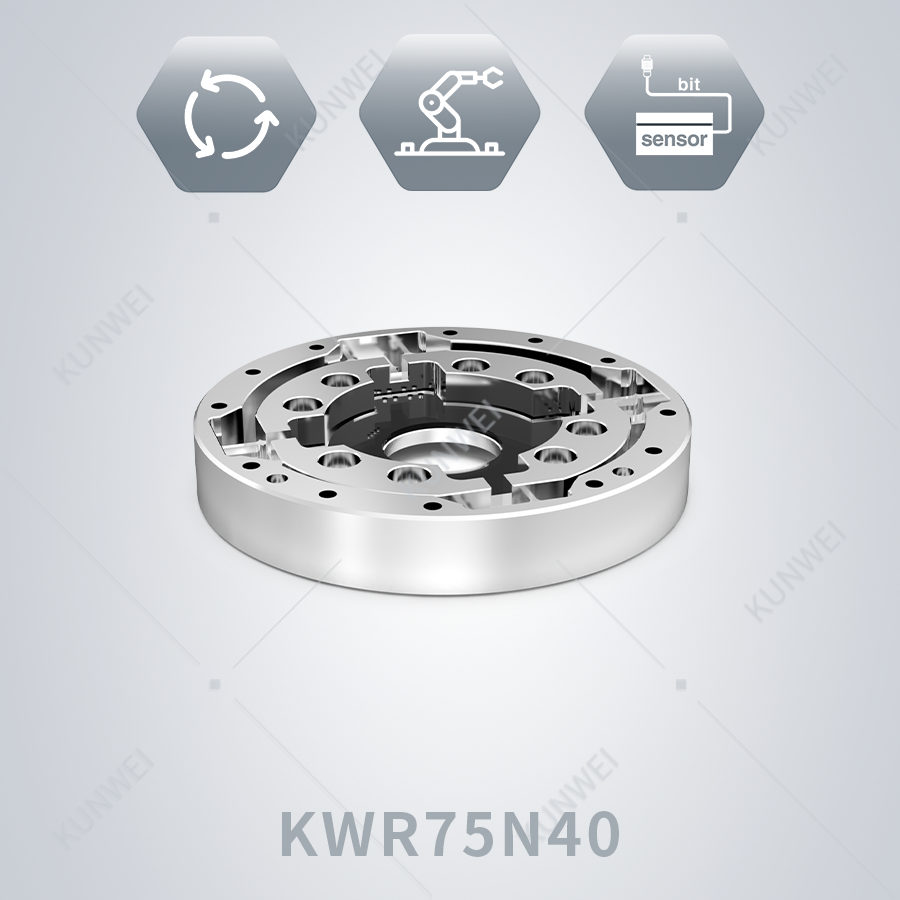
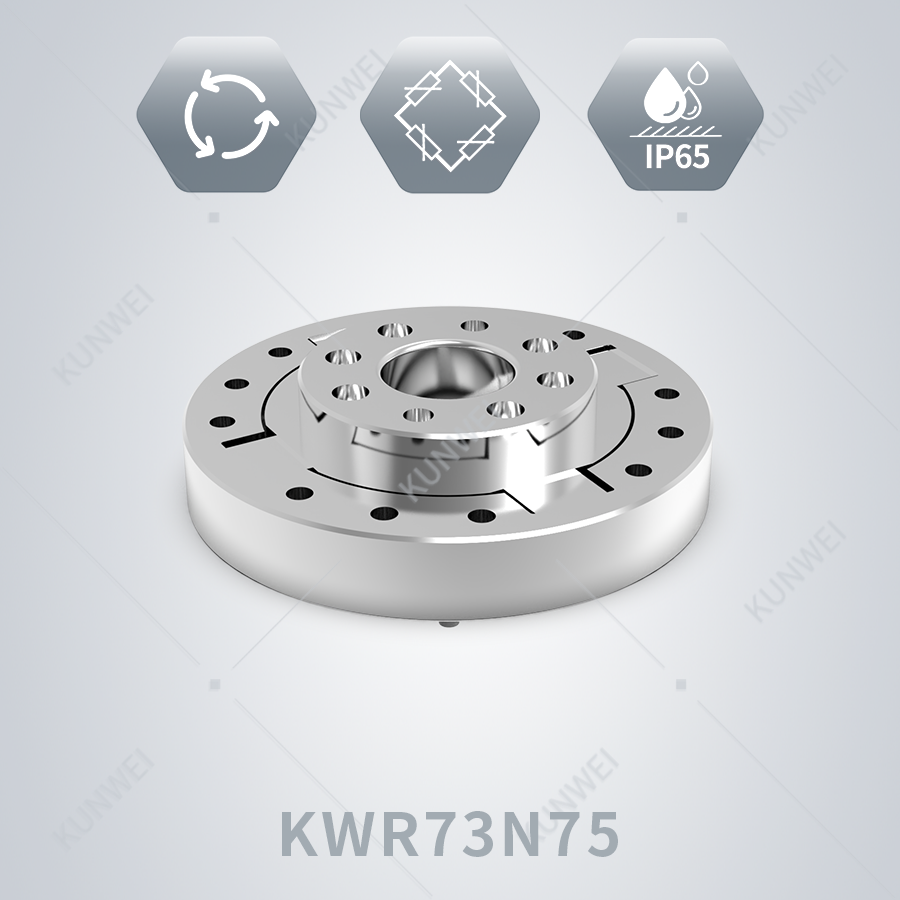
A 6 DoF (6 degrees of freedom) force sensor is designed to measure all three linear forces (F_x, F_y, F_z) and all three rotational torques (M_x, M_y, M_z) simultaneously. This provides a complete ‘wrench’ representation of the physical interaction between a robot or system and its environment. Engineering research published in journals such as Sensors and IEEE Robotics Studies indicates that these sensors are essential for precision manipulation, contact detection, and closed-loop force control in advanced robotics and industrial automation systems.
In practice, a 6 DoF force sensor enables machines to ‘feel’ forces and torques in real time, facilitating applications such as robotic assembly, surgical robotics, haptic feedback systems, and aerospace testing. As emphasised in industrial sensor documentation and robotics research, this full six-axis measurement capability is crucial for tasks that require high levels of accuracy, safety, and adaptive motion control.
Introduction: Why 6 DoF Force Sensing Has Become a Core Technology in Modern Engineering
In modern automation and robotics, machines are no longer confined to executing pre-programmed movements; they are increasingly expected to interact intelligently with unpredictable physical environments. This shift has made force sensing technology one of the most critical enablers in robotics, particularly in applications where contact, pressure, and torque must be precisely controlled.
A 6-DoF force sensor, also known as a 6-axis force/torque sensor, is central to this transformation. Unlike simple load cells, which measure force in only one direction, a 6 DoF sensor captures the full spatial interaction between an object and its environment. This includes:
- Linear forces along the X, Y, and Z axes;
- Rotational torques around the X, Y and Z axes.
Together, these six components define what engineers call a ‘wrench vector’, which fully describes physical interaction in three-dimensional space.
This capability is essential in fields such as:
- Collaborative robotics (cobots);
- Precision assembly systems;
- Medical robotics and surgery assistance;
- Aerospace structural testing;
- Haptic feedback devices;
- Industrial quality control systems.
Modern research shows that six-axis force/torque sensors are now foundational in robotic systems that require adaptive control and safe human–machine interaction.
Among industrial suppliers, companies such as Kunwei Sensing (providing force measurement and multi-axis sensing solutions) contribute to this ecosystem by developing force sensing technologies for automation, robotics integration, and precision industrial applications. They support OEM-level requirements where stability, calibration accuracy, and signal consistency are essential.
What is a 6-DOF force sensor?
A 6-DoF force sensor is a precision measurement device that can measure multiple variables simultaneously.
Forces: Fx, Fy, and Fz (linear components); and
- Torques: Mx, My, and Mz (the rotational components). This distinguishes it from traditional single-axis or three-axis sensors.
In robotics, it is often referred to as:
- 6-axis force/torque sensor
- Multi-axis load cell
- Force/torque transducer (F/T sensor).
According to industrial definitions, these sensors are commonly installed at a robot’s wrist or end-effector to provide real-time feedback about contact forces during operation.
The key purpose is not just measurement but feedback control, which allows machines to adjust their movements dynamically based on physical interaction.
Core Functional Concept: Measuring the Full Wrench
A 6 DoF force sensor measures a complete physical interaction vector:
| Component Type | Axis | Physical Meaning |
| Force (Fx, Fy, Fz) | X, Y, Z translation | Push/pull in space |
| Torque (Mx, My, Mz) | Rotation around X, Y, Z | Twisting or rotational load |
This full dataset enables advanced motion intelligence that cannot be achieved using simpler sensors.
How Does a 6-DoF Force Sensor Work?
Although various technologies exist, the majority of industrial 6 DoF force sensors operate using strain gauge-based elastic deformation principles.
These sensors can be explained by three layers: the mechanical structure, the sensing elements, and the signal processing.
- Mechanical deformation layer
The sensor contains a precisely engineered elastic body, often made of aluminium alloy or steel. When an external force or torque is applied, the structure deforms slightly.
This deformation is extremely small — often in the micrometre range — but highly measurable.
- Strain Gauge or MEMS Sensing Layer
Strain gauges are bonded to specific points on the elastic body. When deformation occurs:
- Resistance in the strain gauges changes;
- Electrical signals shift proportionally;
- Multiple gauges capture different directional components.
Advanced MEMS-based designs use microfabricated beams or capacitive sensing structures for higher integration and miniaturisation.
- Signal decoupling and calibration layer
One of the most complex aspects is that each force or torque affects multiple sensors simultaneously (cross-axis coupling).
To solve this, manufacturers apply:
- Calibration matrices
- Finite element modelling
- Decoupling algorithms
- Temperature compensation
This ensures that the output of each axis is independent and accurate.
Technical Performance Overview
| Parameter | Typical Industrial Range | Meaning |
| Force range | ±10N to ±2000N | Load capacity |
| Torque range | ±0.1 Nm to ±50 Nm | Rotational force |
| Crosstalk | <1–3% | Signal interference |
| Sampling rate | Up to 1 kHz+ | Real-time responsiveness |
| Overload capacity | 200–500% | Safety margin |
These performance parameters vary depending on the application and the manufacturer’s design.
What is the Purpose of a 6-DOF force sensor?
The primary function of a 6-DoF force sensor is to enable machines and robotic systems to perceive and respond to physical interactions in real time.
This purpose can be broken down into five main functions.
- Enabling force-controlled robotics
Traditional robots rely on position control only. However, many tasks require force awareness, such as:
- Inserting parts into tight assemblies;
- Screwing components with controlled torque;
- Polishing or grinding surfaces;
- Handling fragile objects.
A 6-DoF force sensor enables robots to adjust their motion based on resistance, thereby preventing damage and improving precision.
This is why they are widely used in robotic end-effectors and collaborative robots.
- Human–Robot Interaction Safety
In collaborative environments, robots must instantly detect unexpected contact forces.
A 6 DoF sensor allows for:
- Collision detection
- Adaptive stopping
- Force-limited interaction
- Safe human–robot collaboration
This is critical in industrial automation and service robotics.
- Precision assembly and manufacturing
Many manufacturing processes require sub-millimetre alignment accuracy.
Six-DoF force sensors are used in:
- Electronics assembly
- Automotive component fitting
- Semiconductor handling
- Aerospace assembly
They help to detect misalignment forces during insertion tasks, enabling corrective motion.
- Medical and Surgical Robotics
In medical robotics, force feedback is essential for safety.
Applications include:
- Robotic surgery tools
- Rehabilitation devices
- Prosthetics control
- Dental robotics
Real-time force feedback ensures controlled pressure on human tissue.
- Research, testing, and industrial measurement
In engineering research, six degrees of freedom (6 DoF) sensors are used to measure material deformation, friction and tribology, structural testing, and aerodynamic forces. This allows engineers to model real-world physical behaviour with high accuracy.
Comparison of 6 DoF Force Sensors vs Traditional Sensors
| Feature | 1-Axis Sensor | 3-Axis Sensor | 6 DoF Force Sensor |
| Force measurement | Single direction | X/Y/Z forces | Full force + torque |
| Rotation sensing | No | No | Yes |
| Robotics suitability | Low | Medium | Hoch |
| Precision control | Limited | Moderate | Advanced |
| Application scope | Basic weighing | Force monitoring | Full interaction control |
The key advantage is complete spatial awareness, which is essential for intelligent automation systems.
Industrial Applications of 6 DoF Force Sensors
Robotics industry
Used in:
- Cobots
- Assembly robots
- Pick-and-place systems
Automotive industry
Used for:
- Engine testing
- Component fitting
- Automated welding control
Aerospace engineering
Structural load testing
Wind tunnel analysis
Component validation
Electronics Manufacturing
Micro-assembly
PCB handling
Semiconductor wafer processing
Industrial suppliers
Companies such as Kunwei Sensing provide force sensing solutions that support industrial automation systems requiring high precision, stability, and integration flexibility, particularly in robotic and mechanical testing environments.
Key Advantages of 6 DoF Force Sensors
In robotics engineering, six degrees of freedom (6 DoF) force sensors are essential components that enable precise interaction between robots and the physical world. These sensors measure force (Fx, Fy, and Fz) and torque (Mx, My, and Mz) in real time, which is crucial for advanced automation and intelligent systems.
- Full 3D force and torque awareness
6 DoF sensors capture:
- Linear forces along the X, Y, and Z axes
- Rotational moments around each axis
Benefits:
- Complete spatial awareness of interaction forces
- Enables true 3D feedback control
- High-precision motion control
Function:
Provides real-time force feedback to control systems
Result:
- Extremely accurate robotic movements
- Smooth and stable operation in dynamic tasks
- Improved Robotic Safety
Why it matters:
Detects unexpected contact or resistance instantly
Impact:
- Prevents collisions and mechanical damage
- Enhances the safety of human-robot collaboration
- Better assembly accuracy
Application:
Precision tasks such as:
- Insertion
- Tightening
- Alignment
Benefits:
- Higher repeatability
- Reduced assembly errors
- Real-time feedback capability
Key feature:
Continuous monitoring of force and torque changes
Advantages:
- Immediate system response
- Adaptive motion control in changing environments
- Compatibility with AI robotics systems
Modern 6 DoF sensors integrate seamlessly with:
- Machine learning-based control systems
- Adaptive robotics algorithms
Result:
- Smarter decision-making
- Improved autonomy in robotic systems
- Reduced mechanical failure risk
How it helps:
Detects overloads and abnormal force conditions early
Outcome:
- Prevents wear, deformation, and system failure
- Extends equipment lifespan
Common Challenges and Limitations
Despite their advantages, 6 DoF force sensors present several engineering challenges:
- Calibration complexity
- Cross-axis interference (crosstalk)
- Temperature drift
- High cost of precision models
- Sensitivity to overload damage
Advanced compensation algorithms and material engineering are continuously improving these limitations.
FAQ: 6 DoF Force Sensor
- What does 6 DoF mean in force sensors?
It means the sensor measures six degrees of freedom: three forces (X, Y, Z) and three torques (rotation around each axis).
- Why is a 6-DoF force sensor important in robotics?
It allows robots to detect contact forces and adjust motion dynamically, enabling precise and safe manipulation tasks.
- Where are 6 DoF force sensors commonly used?
They are used in robotics, automotive testing, aerospace engineering, medical devices, and industrial automation systems.
- What is the difference between force and torque in 6 DoF sensors?
Force refers to linear push or pull, while torque refers to rotational or twisting effects.
- Are 6 DoF force sensors expensive?
High-precision models can be expensive due to calibration complexity and material requirements, but cost varies widely by application.
- Can 6 DoF force sensors work with AI systems?
Yes. They are widely integrated into AI robotics systems for real-time feedback and adaptive control.
Schlussfolgerung
The purpose of a six-degree-of-freedom (6 DoF) force sensor is to provide a full understanding of the forces and torques acting within robotic and mechanical systems, enabling intelligent interaction with the physical world. By measuring linear and rotational components simultaneously, these sensors are fundamental to modern force-controlled robotics, precision automation, and advanced industrial testing.
As robotics continues to evolve towards greater autonomy and collaboration with humans, 6 DoF force sensing technology will remain a core enabling component, bridging the gap between mechanical motion and intelligent perception.