Quick Answer: A Cellule de charge à double poutre converts mechanical force into an electrical signal via controlled elastic deformation and strain gauge measurement. When a load is applied, the two-beam structure distributes the stress evenly. This causes the precisely designed deformation areas to generate resistance changes in the bonded strain gauges. These resistance changes are then converted into a measurable weight signal.
According to OIML R60 (Metrological Regulation for Load Cells) and ASTM E74 (Standard Practice of Calibration and Verification for Force-Measuring Instruments), Standard Practice for the Calibration and Verification of Force-Measuring Instruments, strain gauge load cells achieve accurate force measurement by maintaining a predictable relationship between applied force, elastic strain, and electrical output.
Due to their stable mechanical design, double-beam load cells are widely used in industrial weighing systems, automation equipment, material testing machines and precision measurement applications, where accuracy, durability and resistance to external interference are essential.
Introduction
In modern industrial systems, accurate force measurement is essential, as even small measurement errors can affect production efficiency, product quality and operational safety. A load cell is a vital sensing component that converts mechanical force, weight or pressure into an electrical signal that can be processed by measurement instruments, controllers or automation systems.
Of the various Cellule de charge designs, the double-beam load cell is the most widely adopted solution thanks to its excellent structural stability, high measurement accuracy and reliable performance in demanding industrial conditions. Unlike simple beam designs, the double-beam structure uses two parallel elastic beams to distribute applied forces more evenly, thereby reducing the influence of uneven loading, mechanical stress concentration and external disturbances.
Double-beam load cells are commonly found in industrial weighing applications, including:
- Peseuses de plateforme
- Conveyor weighing systems
- Hopper and tank weighing equipment
- Packaging and filling machines
- Material testing equipment
- Automated manufacturing systems
The working principle behind these sensors is based on strain gauge technology, which has been widely used in precision force measurement for decades. When a load is applied, the elastic element inside the load cell experiences controlled deformation. The strain gauges attached to specific areas detect this deformation by measuring changes in electrical resistance. Through signal amplification and calibration, the system converts these changes into accurate weight or force values.
Understanding how a double-beam load cell works enables engineers to select suitable sensors, improve system accuracy, and optimise industrial weighing solutions.
What Is a Double-Beam Load Cell?
A double-beam load cell is a strain gauge-based force sensor consisting of two parallel elastic beams that respond to applied loads. The mechanical structure is engineered so that applied force creates predictable bending stress in the areas where the strain gauges are installed.
The primary purpose of the double-beam structure is to improve mechanical balance and measurement stability. Compared with a single-beam design, the dual-beam configuration provides better load distribution and reduces the impact of off-centre loading.
- A typical double-beam load cell consists of several key components:
- Upper beam: Supports part of the applied force and transfers mechanical stress.
- Lower beam: Works together with the upper beam to create balanced deformation.
- Elastic body: The metal structure that undergoes controlled deformation.
- Strain gauges: Electrical sensors bonded to the deformation zones.
- Signal circuit: Converts resistance changes into output voltage.
- Protective housing: Protects the internal components from environmental conditions.
The elastic body is typically made from strong materials such as aluminium alloy or stainless steel. These materials provide the necessary combination of strength, elasticity and fatigue resistance for repeated loading cycles.
The double-beam design is particularly suitable for industrial applications because the symmetrical structure helps minimise measurement errors caused by:
uneven loading, side forces, mechanical vibration and installation variations. This makes double-beam load cells a preferred option when reliability and repeatability are important.

Working Principle of a Double-Beam Load Cell
The operation of a double-beam load cell follows a simple but highly precise conversion process:
Mechanical force → Elastic deformation → Strain measurement → Electrical signal → Weight calculation
Each stage plays an important role in achieving accurate measurement results.
-
Force Application
When an object is placed on a weighing platform or a force is applied to the sensor, the load is transferred to the load cell’s mechanical structure.
The double-beam design distributes the applied force between the two beams, allowing the sensor to handle higher loads while maintaining structural stability.
Unlike rigid structures that resist deformation completely, a load cell requires a small amount of controlled deformation. This deformation must be within the elastic range of the material so that the sensor returns to its original shape after the load is removed.
-
Elastic Deformation
The applied force creates bending stress within the load cell beams. Although the deformation is extremely small—usually measured in microstrain—the change is sufficient for precision measurement.
The design of the elastic body determines where stress is concentrated. Engineers place strain gauges in these high-strain areas to maximize measurement sensitivity.
The double-beam configuration improves this process by creating a more balanced stress distribution. This reduces unnecessary mechanical stress and improves long-term measurement stability.
-
Strain Gauge Resistance Change
Strain gauges are the core sensing elements inside most industrial load cells. They operate based on the principle that electrical resistance changes when a conductive material is stretched or compressed.
When the beam bends:
- Tensile areas stretch and increase resistance.
- Compression areas shorten and decrease resistance.
Multiple strain gauges are usually arranged into a Wheatstone bridge circuit. This configuration allows extremely small resistance changes to be detected accurately while compensating for environmental influences such as temperature variations.
-
Electrical Signal Conversion
The resistance change generated by the strain gauges produces a small electrical output signal, typically measured in millivolts per volt (mV/V).
Because the output signal is very small, additional electronics are required to:
- Amplify the signal
- Filter electrical noise
- Convert analog signals into digital data
- Send measurement results to controllers or indicators
Modern industrial weighing systems often combine load cells with digital processors to improve accuracy and communication capability.
-
Signal Processing and Weight Calculation
The final stage involves converting the electrical signal into a readable measurement value.
The weighing controller uses calibration parameters to calculate the applied force based on the relationship between:
- Electrical output
- Applied load
- Sensor capacity
- Calibration standards
Proper calibration ensures that the load cell provides accurate measurements throughout its operating range.
According to OIML R60 requirements, load cells used in commercial weighing applications must maintain defined accuracy levels under controlled testing conditions.
Why Is the Double-Beam Structure Used in Load Cells?
The double-beam structure provides several advantages compared with simpler mechanical designs. The main reason engineers choose this configuration is improved stability under real-world operating conditions.
-
Higher Measurement Stability
Because two beams share the applied load, stress distribution becomes more uniform. This reduces localized stress concentration and improves repeatability during repeated weighing cycles.
-
Better Resistance to Side Loads
Industrial weighing systems often experience forces that are not perfectly vertical. Side loads can create measurement errors in sensitive sensors.
The symmetrical double-beam design helps reduce the influence of these unwanted forces, improving measurement reliability.
-
Improved Mechanical Durability
Industrial environments often require thousands or millions of loading cycles. A properly designed double-beam load cell reduces fatigue stress and extends operational lifespan.
Applications such as production lines and automated weighing systems benefit significantly from this durability.
-
Reduced Temperature Influence
Temperature changes can affect both mechanical materials and electrical components. Double-beam designs provide improved structural balance, helping reduce temperature-related measurement deviations.
Temperature compensation technologies are also commonly integrated into modern load cells to maintain accuracy across different environments.
Double-Beam Load Cell Components and Functions
| Component | Function |
| Upper Beam | Transfers applied force and creates controlled deformation |
| Lower Beam | Balances mechanical stress and improves stability |
| Elastic Body | Provides the flexible structure required for strain measurement |
| Strain Gauge | Detects deformation through resistance changes |
| Wheatstone Bridge Circuit | Converts resistance changes into electrical output |
| Protective Housing | Shields internal components from dust, moisture, and impact |
Advantages of Double-Beam Load Cells
The double-beam load cell has become a popular choice in industrial measurement systems because it provides a strong balance between accuracy, mechanical strength, and operational reliability. While different load cell designs are available for specific applications, the double-beam structure offers several advantages that make it suitable for environments where stable performance is required over long operating periods.
-
High Measurement Accuracy
One of the most important advantages of a double-beam load cell is its ability to provide consistent and accurate force measurement. The symmetrical beam structure allows the applied load to be distributed evenly, reducing errors caused by uneven stress concentration.
In precision weighing applications, even small measurement deviations can affect production efficiency. For example, inaccurate measurements in filling systems may result in incorrect material quantities, while errors in industrial scales can affect inventory control and quality management.
The combination of optimized mechanical design and strain gauge technology allows modern double-beam load cells to achieve excellent repeatability and accuracy when properly installed and calibrated.
-
Strong Resistance to Environmental Disturbances
Industrial environments often expose sensors to challenging conditions, including vibration, temperature changes, dust, and mechanical impacts. A double-beam load cell is designed to maintain stable performance under these conditions.
The dual-beam structure helps reduce sensitivity to:
- Off-center loading
- Mechanical shock
- External vibration
- Installation variations
This makes double-beam load cells especially useful in automated production systems where equipment operates continuously and measurement reliability is critical.
-
Long Service Life and Mechanical Durability
A load cell used in industrial equipment may experience thousands of loading cycles every day. Repeated stress can eventually lead to material fatigue if the sensor design is not optimized.
Double-beam structures improve fatigue resistance by distributing mechanical stress more evenly across the sensing element. High-quality load cells are manufactured using carefully selected materials such as aluminum alloy or stainless steel, which provide excellent strength-to-weight ratios and corrosion resistance.
With proper installation and regular calibration, a double-beam load cell can maintain reliable performance for many years.
-
Easy Integration Into Automated Systems
Modern manufacturing increasingly relies on automation, and load cells play an important role in monitoring and controlling industrial processes.
Double-beam load cells can be integrated with:
- PLC control systems
- Digital weighing indicators
- Data acquisition systems
- Industrial monitoring platforms
- Smart factory solutions
Many advanced load cells also support digital communication interfaces, allowing real-time monitoring and remote diagnostics.
Applications of Double-Beam Load Cells
Because of their accuracy and durability, double-beam load cells are used in many industries where precise force or weight measurement is required.
-
Industrial Weighing Systems
Industrial weighing is one of the most common applications. Double-beam load cells are used in:
- Peseuses de plateforme
- Floor scales
- Material weighing systems
- Production line measurement equipment
They provide stable measurements even when products are frequently loaded and unloaded.
-
Conveyor Belt Weighing Systems
In mining, logistics, and bulk material handling industries, conveyor systems require continuous weight monitoring.
Double-beam load cells help measure:
- Material flow rate
- Total transported weight
- Production output
Their resistance to vibration and mechanical impact makes them suitable for demanding conveyor environments.
-
Hopper and Tank Weighing
Many industrial processes require accurate measurement of materials stored in tanks, silos, or hoppers.
Applications include:
- Chemical storage tanks
- Food processing equipment
- Pharmaceutical production
- Cement and construction materials
Multiple load cells are often installed around the support structure to measure total weight accurately.
-
Packaging and Filling Machines
Automated packaging systems require precise measurement to ensure consistent product quantities.
Double-beam load cells help control:
- Liquid filling
- Powder dosing
- Granule packaging
- Batch production
High accuracy improves product consistency while reducing material waste.
-
Material Testing Equipment
Load cells are essential components in mechanical testing machines used to measure force during:
- Tensile testing
- Compression testing
- Fatigue testing
- Product durability evaluation
In these applications, measurement accuracy and repeatability are critical.
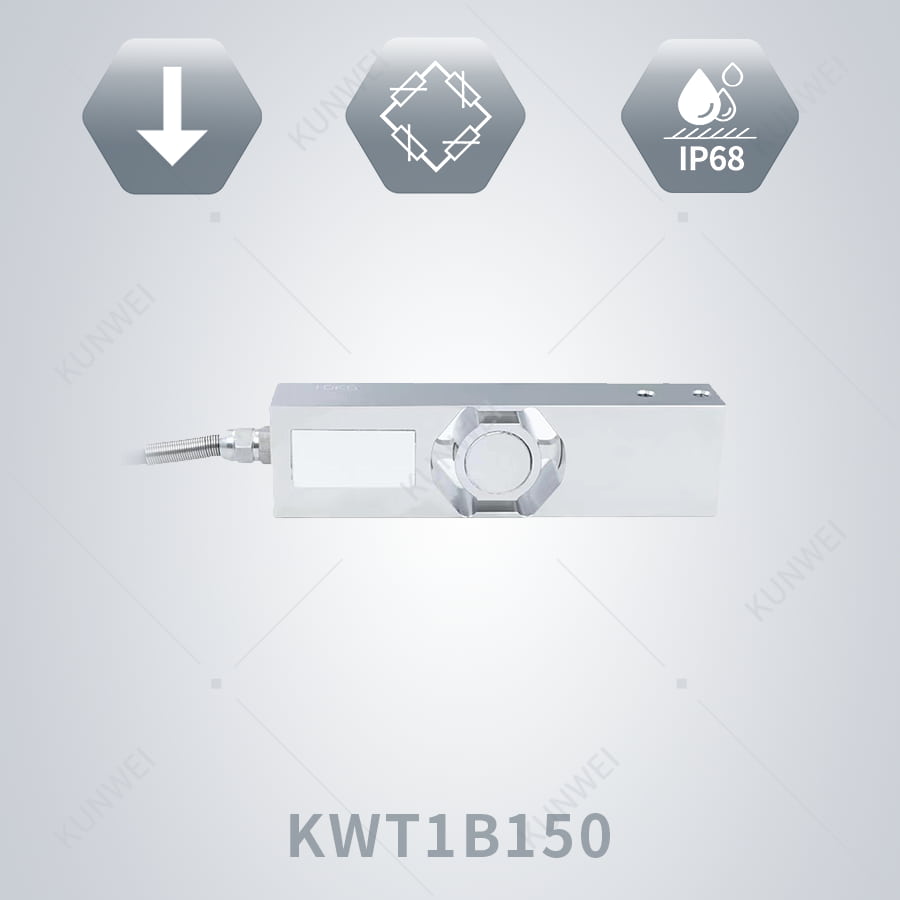
Double-Beam vs Single-Beam Load Cell Comparison
Although both single-beam and double-beam load cells operate using strain gauge technology, their mechanical structures create different performance characteristics.
A single-beam load cell typically uses one elastic beam where strain gauges detect bending deformation. It is compact and cost-effective, making it suitable for smaller weighing systems.
A double-beam load cell uses two parallel beams, creating a more balanced structure. This design improves stability and reduces measurement errors caused by uneven loading conditions.
| Feature | Double-Beam Load Cell | Single-Beam Load Cell |
| Structural Design | Two parallel elastic beams | Single elastic beam |
| Load Distribution | More balanced stress distribution | Higher sensitivity to uneven loading |
| Accuracy | High stability and repeatability | Good for general applications |
| Side Load Resistance | Better resistance | More affected by side forces |
| Durability | Suitable for frequent loading cycles | Suitable for lighter applications |
| Typical Use | Industrial weighing, automation systems | Small scales, compact equipment |
Factors to Consider When Selecting a Double-Beam Load Cell
Choosing the correct load cell requires evaluating several technical factors. Selecting an unsuitable model may result in inaccurate measurements, reduced lifespan, or equipment failure.
-
Load Capacity
The first consideration is the maximum force or weight the sensor needs to measure.
Common load capacities vary depending on application requirements:
- Low capacity: laboratory and precision equipment
- Medium capacity: industrial weighing systems
- High capacity: tanks, trucks, and heavy machinery
The selected load cell should operate within its rated capacity to prevent overload damage.
-
Accuracy Class
Accuracy requirements depend on the application.
For example:
- Commercial weighing systems require strict accuracy standards.
- Industrial monitoring systems may prioritize durability.
- Research equipment requires extremely high precision.
Calibration standards such as OIML R60 help define performance requirements for weighing applications.
-
Environmental Protection
Industrial environments may expose load cells to:
- Moisture
- Dust
- Chemicals
- Temperature fluctuations
The protection rating, such as IP65 or IP68, should match the operating environment.
Stainless steel versions are often preferred for harsh environments because they provide better corrosion resistance.
-
Output Signal Type
Common load cell output options include:
- Analog millivolt output
- Digital output
- Wireless communication
The choice depends on the control system and data processing requirements.
-
Calibration and Maintenance Requirements
Regular calibration ensures measurement accuracy over time. Factors affecting calibration include:
- Mechanical installation
- Temperature changes
- Long-term loading
- Environmental conditions
A proper maintenance schedule helps extend sensor life and maintain reliable operation.
Key Selection Factors for Double-Beam Load Cells
| Selection Factor | Importance | Consideration |
| Capacity Range | Prevents overload damage | Select a suitable rated load |
| Accuracy Class | Determines measurement precision | Match application requirements |
| Material | Affects durability | Aluminum or stainless steel depending on environment |
| Protection Rating | Improves reliability | Consider moisture and dust exposure |
| Output Signal | Enables system integration | Match controller requirements |
| Calibration | Maintains accuracy | Perform periodic verification |
Frequently Asked Questions (FAQ)
- What is a double-beam load cell?
A double-beam load cell is a force sensor that uses two parallel elastic beams equipped with strain gauges to measure applied force. The dual-beam structure improves load distribution, stability, and resistance to mechanical interference.
- How does a load cell measure weight?
A load cell measures weight by detecting the deformation caused by an applied force. Strain gauges attached to the elastic element change electrical resistance when the material bends, and this change is converted into a measurable weight signal.
- What is the difference between single-beam and double-beam load cells?
The main difference is structural design. A single-beam load cell uses one sensing beam, while a double-beam load cell uses two parallel beams for improved stability, better side-load resistance, and more consistent performance.
- Why are strain gauges used in load cells?
Strain gauges are used because they can detect extremely small mechanical deformations with high accuracy. Their resistance changes proportionally with strain, allowing precise conversion of mechanical force into electrical signals.
- How accurate is a double-beam load cell?
The accuracy depends on the design, calibration, and application requirements. High-quality industrial double-beam load cells can provide excellent repeatability and accuracy when installed and maintained correctly.
- Where are double-beam load cells used?
Double-beam load cells are commonly used in industrial weighing systems, conveyor scales, hopper scales, packaging machines, automation equipment, and material testing systems.
Conclusion
A double-beam load cell operates using a precise combination of mechanical engineering and strain gauge measurement technology. Its dual-beam structure enables forces to be distributed more evenly, thereby improving the accuracy, stability, and durability of the load cell compared with simpler sensor designs.
Thanks to these advantages, double-beam load cells have become an essential solution for industrial weighing, automation, material testing, and process monitoring applications. Selecting the correct model requires careful consideration of factors such as load capacity, accuracy requirements, environmental conditions, output signals and maintenance needs.
As industries continue to move towards smarter manufacturing and automated control systems, reliable force measurement will remain essential. With proper selection, calibration and maintenance, a high-quality double-beam load cell can deliver accurate and stable performance over the long term.

.jpg)
.jpg)