From humanoid robots appearing collectively on the Spring Festival Gala stage to accelerating collaboration across the robotics supply chain, the humanoid robotics industry has entered 2026 with unprecedented momentum. The sector is rapidly transitioning from a stage of technological validation to a critical phase of large-scale commercial deployment.
Against this backdrop, the 3rd China Embodied Intelligence and Humanoid Robot Industry Conference was successfully held from March 11 to March 13, 2026, at the Hangzhou International Expo Center. Under the theme “Intelligent Manufacturing · Life · Future — Industrial Evolution Toward Human–Machine Integration,” the event gathered leading companies, research institutions, and industry experts from across the robotics ecosystem to explore the next stage of industry development.
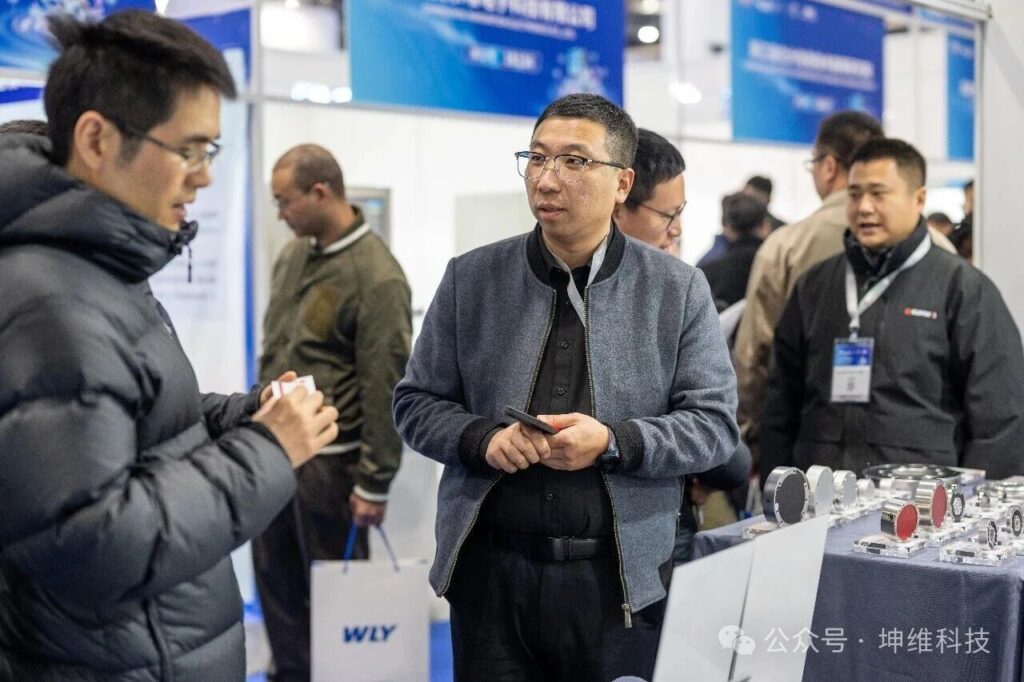
As one of China’s leading developers of robotic force-sensing technology, Kunwei Technology made a strong appearance at the conference (Booth 1B159). The company showcased its core force perception solutions, including six-axis force sensors and joint torque sensors, highlighting its technological strengths and industrial-scale capabilities at a time when the humanoid robotics industry is entering a critical phase of deep technological advancement and commercialization.
Gathering the Full Robotics Ecosystem
The conference brought together more than 5,000 industry professionals, including representatives from over 50 industry associations and research institutions, and more than 500 leading experts and executives. Participants included decision-makers from robot manufacturers, system integrators, core component suppliers, and application developers across the entire robotics value chain.
Key discussions focused on several important topics shaping the future of embodied intelligence, including:
-
Integration of AI technologies with robotics hardware
-
Commercialization pathways for humanoid robots
-
Supply chain collaboration and innovation
-
Expansion of real-world applications for intelligent robots
Through keynote speeches, panel discussions, and technical showcases, the conference provided a platform for industry leaders to exchange ideas and accelerate the transition of humanoid robotics from experimental prototypes to practical commercial solutions.
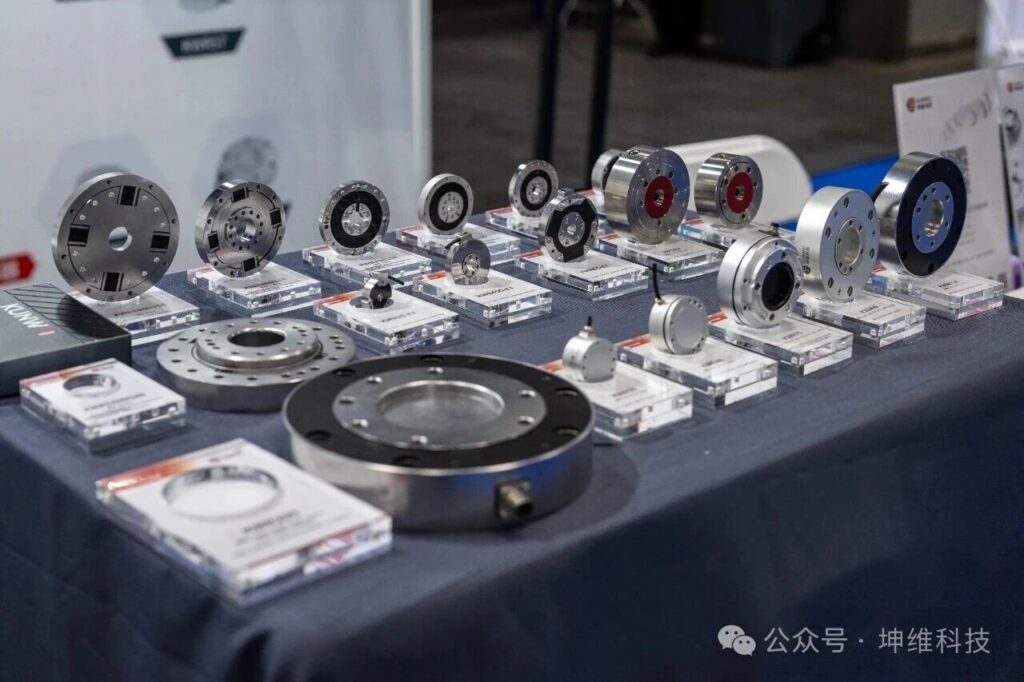
Live Demonstrations: A Complete Portfolio of Force-Sensing Technologies
At the exhibition, Kunwei Technology presented a comprehensive lineup of multi-dimensional force-sensing solutions designed for advanced robotic systems.
Six-Axis Force Sensors
Kunwei displayed several of its flagship product series, including:
-
HRS Humanoid Robot Series
-
HPS High-Performance Series
-
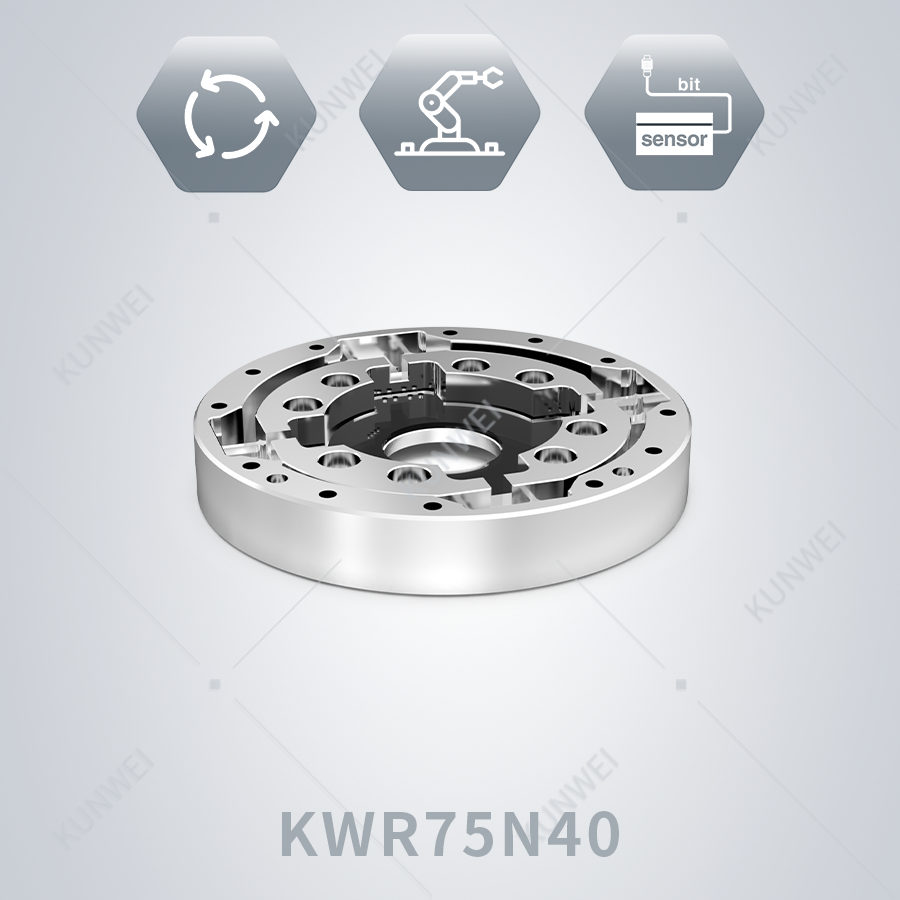
KWR Precision Series
These products attracted significant attention from robotics manufacturers and R&D engineers visiting the booth.
The HRS series, specifically designed for humanoid robot wrists and ankles, stood out due to its compact size, high load capacity, and exceptional overload resistance. These characteristics make the sensors particularly suitable for humanoid robots that require precise force feedback during dynamic motion and complex interactions with their environment.
Kunwei’s six-axis force sensors achieve repeatability of 0.1% FS and accuracy of 0.3% FS, made possible through the company’s proprietary six-axis combined loading calibration system — a specialized testing platform independently developed in China. This advanced calibration capability ensures reliable performance in high-precision tasks such as:
-
precision assembly
-
adaptive grinding and polishing
-
complex robotic manipulation
-
human–robot interaction scenarios
Joint Torque Sensors
In addition to multi-axis force sensors, Kunwei also showcased its joint torque sensors, another critical component for robotic motion control.
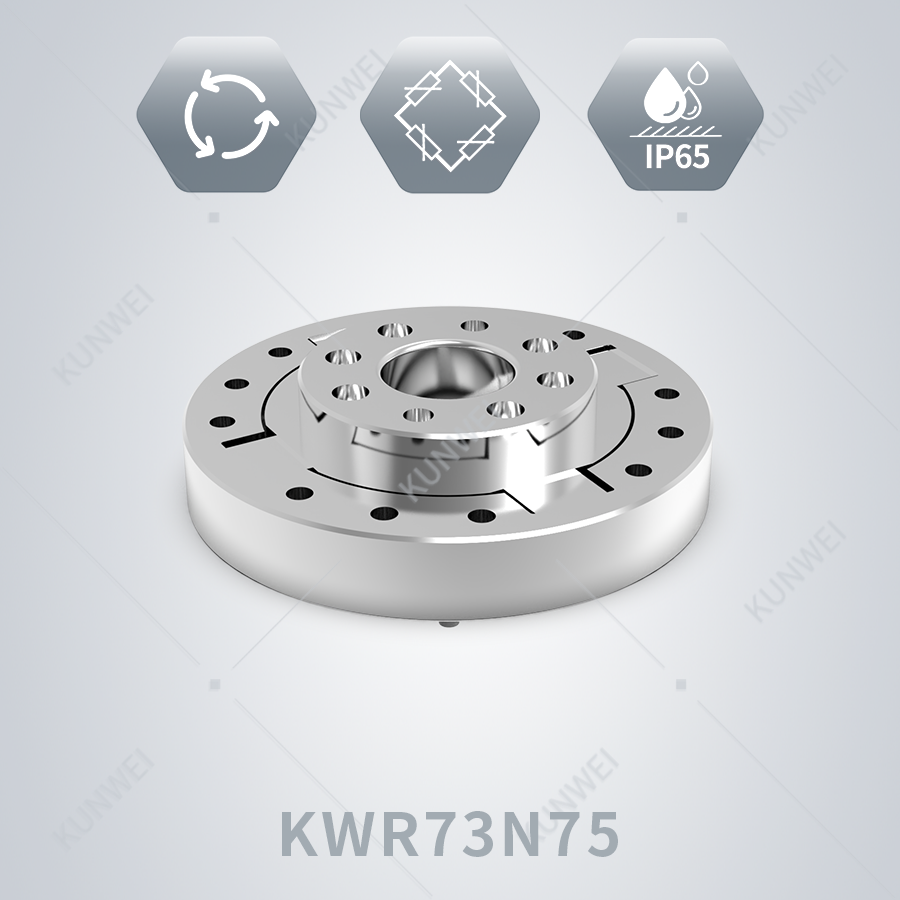
Joint torque sensors are specifically designed to measure the rotational force (torque) output at the joints of robotic systems. These sensors play a key role in integrated robotic joints by providing precise torque feedback required for motion control and safety.
Key characteristics of Kunwei’s joint torque sensors include:
-
high reliability
-
high sensitivity
-
fast response time
-
real-time torque monitoring
These features make them suitable for various robotic platforms, including:
-
humanoid robots
-
collaborative robots
-
industrial robotic arms
Torque sensors are widely regarded as one of the most essential components enabling robots to perform force-controlled tasks safely and effectively. They allow robots to adapt to complex environments while ensuring safe interaction with humans.
Customer Feedback: From Technical Trust to Proven Value
During the exhibition, many robotics developers and engineers stopped by the Kunwei booth to discuss product applications and performance.
A senior R&D manager from a leading Chinese humanoid robotics company shared his experience working with Kunwei:
“We have collaborated with Kunwei on multiple projects. Their products consistently deliver excellent stability and precision. The HRS series, especially when installed in wrist and ankle joints, provides outstanding overload capability, which is extremely valuable for optimizing robot structure and dynamic performance.”
Kunwei’s force sensing solutions have already been deployed in a wide range of advanced humanoid robotics projects. The company’s six-axis force sensors and joint torque sensors are currently used in robots developed by several prominent companies, including:
-
UBTECH Robotics
-
Zhiyuan Robotics
-
Galaxy General Robotics
-
Xiaomi
These sensors provide critical force feedback that enables robots to perform complex tasks such as:
-
maintaining walking balance
-
executing delicate grasping operations
-
performing precision manipulation tasks
As humanoid robots evolve toward real-world deployment, reliable force sensing is becoming increasingly essential for safe and intelligent robot operation.
Production Capacity and Industry Confidence
Another major topic frequently discussed at the Kunwei booth was the company’s ability to support large-scale production.
As humanoid robotics moves toward commercialization, many industry partners are concerned about whether core component suppliers can meet the demands of mass production. Kunwei addressed these concerns by presenting its latest manufacturing capabilities.
Through the development of fully automated calibration and testing equipment, Kunwei has successfully overcome one of the major bottlenecks in large-scale sensor manufacturing. The company’s production facilities currently support an annual output of 60,000 units, enabling a balance between aerospace-grade precision and industrial-scale manufacturing efficiency.
This strong industrial capability has also gained recognition from leading investment institutions. Several well-known venture capital and industrial investment firms have invested in Kunwei Technology, including:
-
Hillhouse Capital
-
Shenzhen Capital Group
-
Xiaomi Industrial Investment
-
Inovance Technology
As one investor at the conference noted:
“The strong backing from major industrial investors reflects not only Kunwei’s technological leadership but also its long-term growth potential within the robotics industry.”
Strategic Vision: From Sensing to Intelligent Perception
During the conference, Kunwei Technology also outlined its broader strategic direction for the future.
As the robotics industry transitions from domestic substitution toward global technological leadership, Kunwei aims to move beyond the role of a traditional sensor manufacturer. The company is actively integrating sensor technology with artificial intelligence algorithms, enabling more advanced perception capabilities for next-generation robotic systems.
This strategy reflects a shift from being a component supplier to becoming a provider of intelligent perception solutions for robotics and automation.
The direction aligns closely with the conference’s theme of industrial evolution through human–machine integration. As embodied intelligence technologies continue to mature, reliable and intelligent perception systems will form the foundation for robots to operate effectively in real-world environments.
In the coming years, stable, precise, and intelligent force perception technologies will play a critical role in helping the humanoid robotics industry overcome commercialization challenges and unlock new applications across manufacturing, service industries, and daily life.

.jpg)
.jpg)