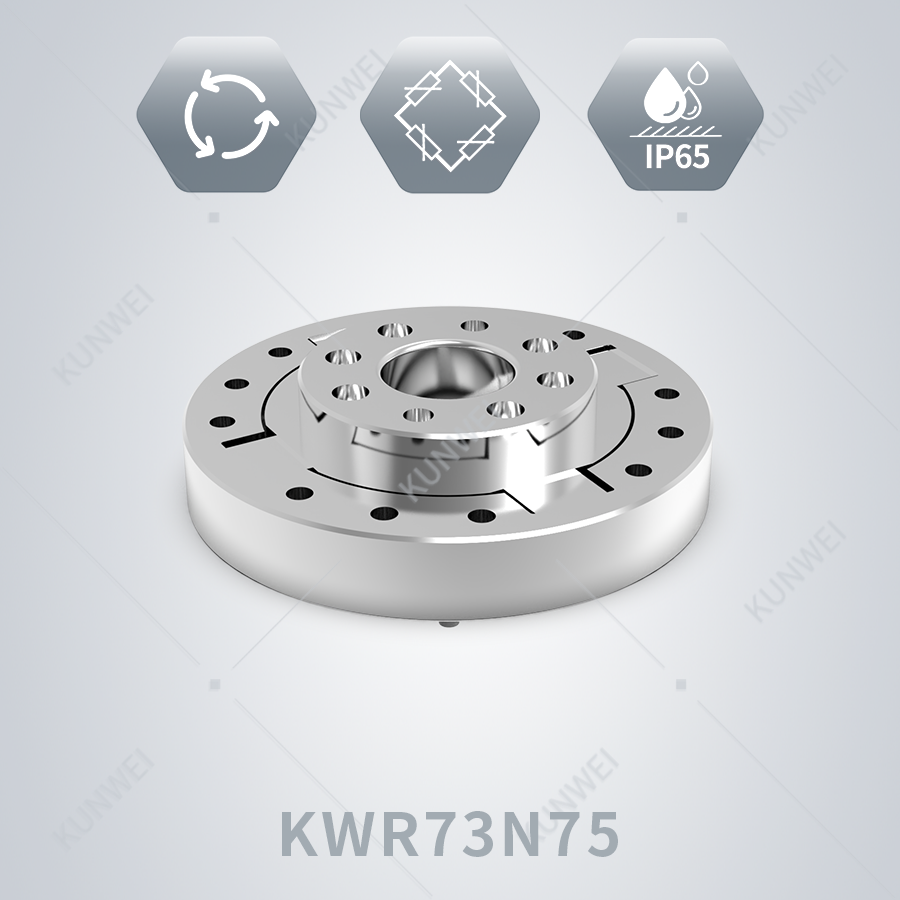
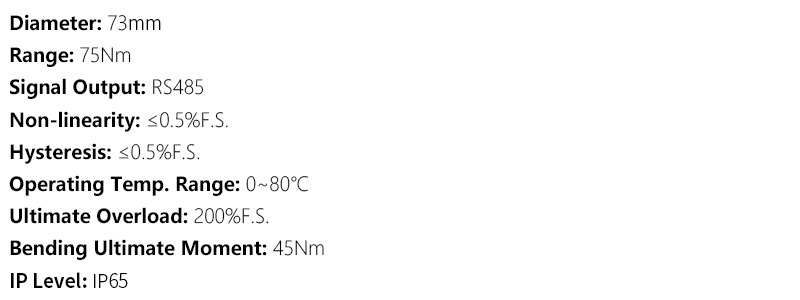
Static 73mm 75Nm Robot Torque Sensor for Humanoid Robot
Description

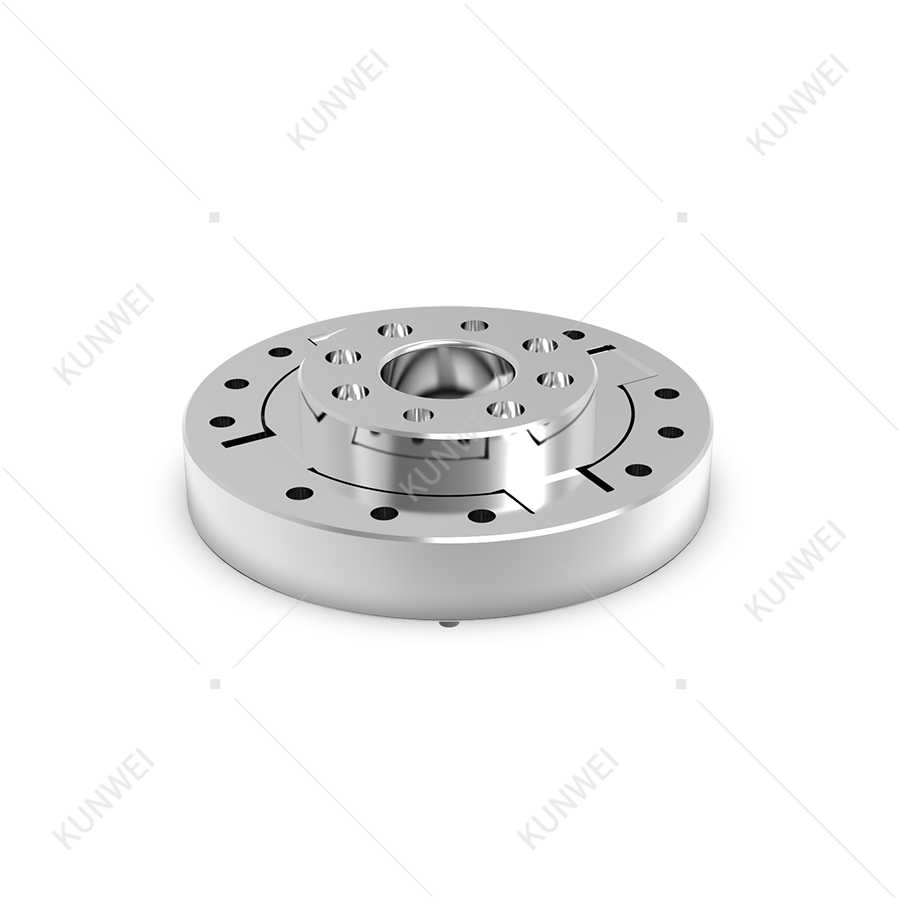
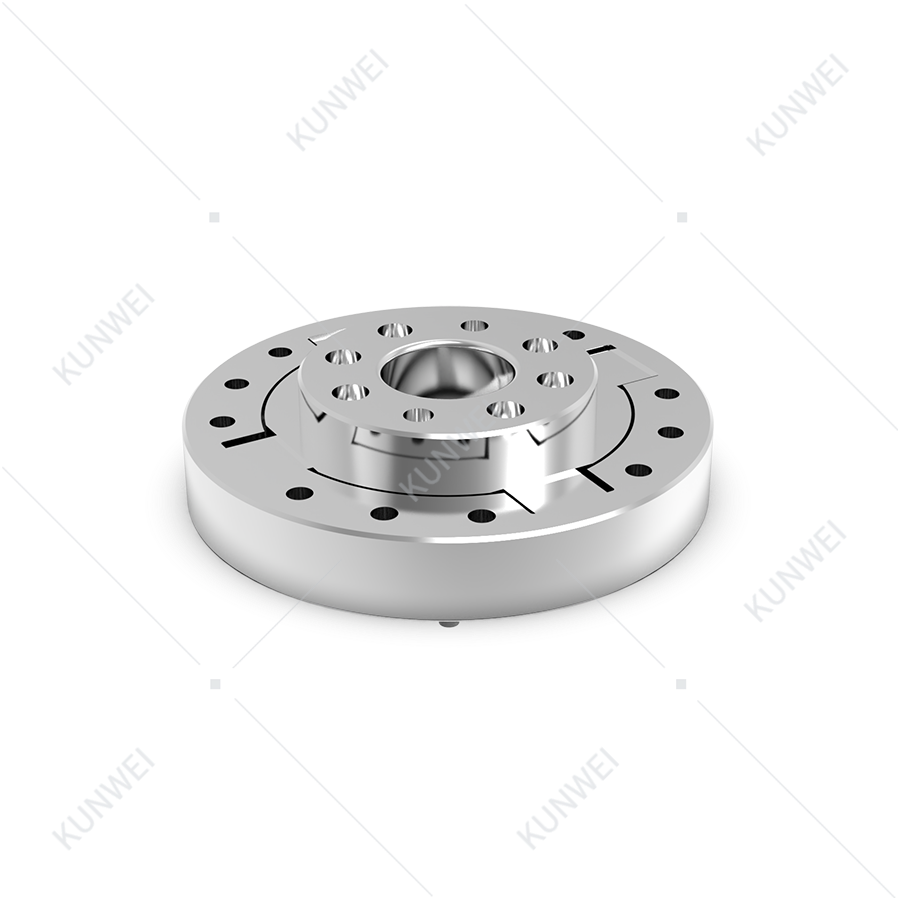
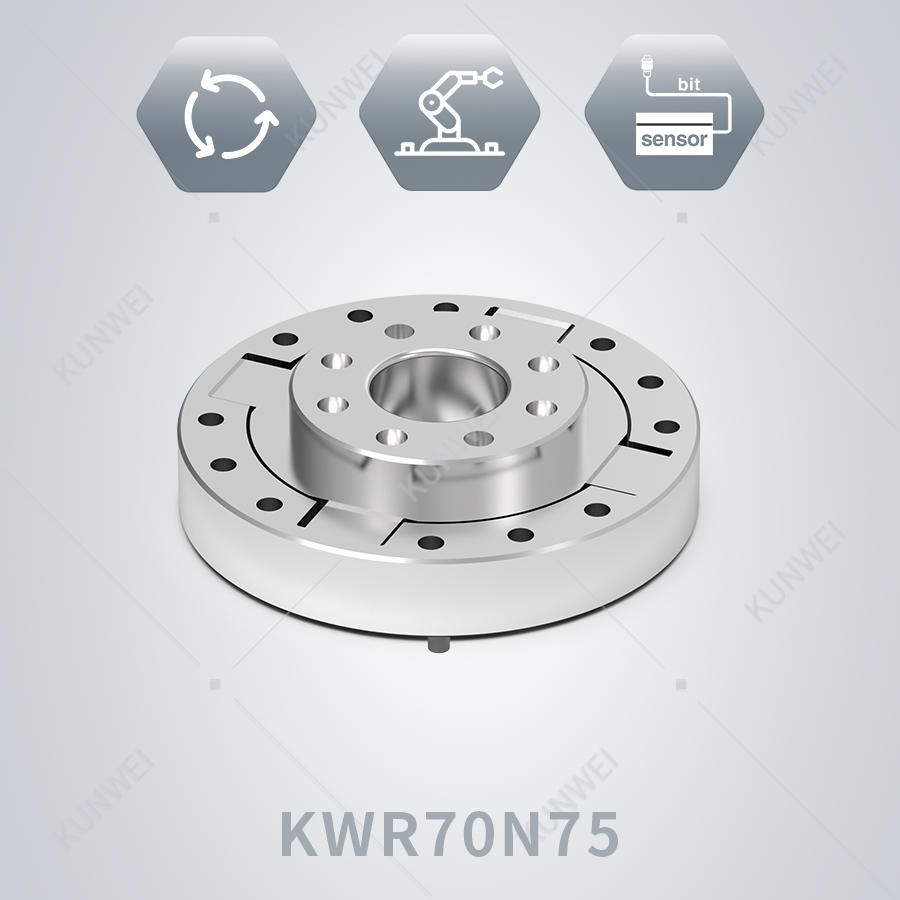
The KWR73N75 sensor is mainly made of high-quality stainless steel material. After treatment and aging, the hardness of the material can reach HRC 40-45, with outstanding mechanical properties and good toughness. After surface treatment, it has good corrosion resistance, high strength, corrosion resistance, and good processing performance. It is widely used in the aerospace, energy, medical, and industrial fields. When measuring torque, it maintains high torsional stiffness to avoid affecting joint positioning accuracy due to sensor deformation
The KWR73N75 sensor adds an auxiliary beam design to the traditional structure, which not only increases strength, thin patch area walls, concentrates strain, improves signal-to-noise ratio, but also makes the natural frequency of the sensor high, avoiding resonance with the robot joint motion frequency. Using symmetrical beams to counteract the interference of non torque loads such as bending moments and axial forces. Hollow design reduces the impact on the dynamic characteristics of the system.
The KWR73N75 sensor adopts a temperature self compensating strain gauge. Compared with conventional strain gauges, the temperature drift effect is smaller, and the sensor is equipped with temperature compensation in the Wheatstone bridge circuit to further reduce the impact of temperature changes on the sensor. The sensor adopts double-sided surface mount and bridge circuit series connection, with high bridge resistance and low power, to avoid temperature drift caused by current heating of the strain gauge, optimize signal-to-noise ratio, and improve long-term stability.
The KWR73N75 sensor has a built-in digital board structure and an embedded design, which is directly integrated into the joint drive unit, saving space. The PCB and elastomer are housed together, reducing external interference and improving electromagnetic interference resistance. The structure is compact and easy to install.
The KWR73N75 sensor supports analog (± 10V, 4-20mA) or digital interfaces (RS485, CAN, etc.) to meet different scene requirements, providing flexible interface selection.
 |
 |
 |
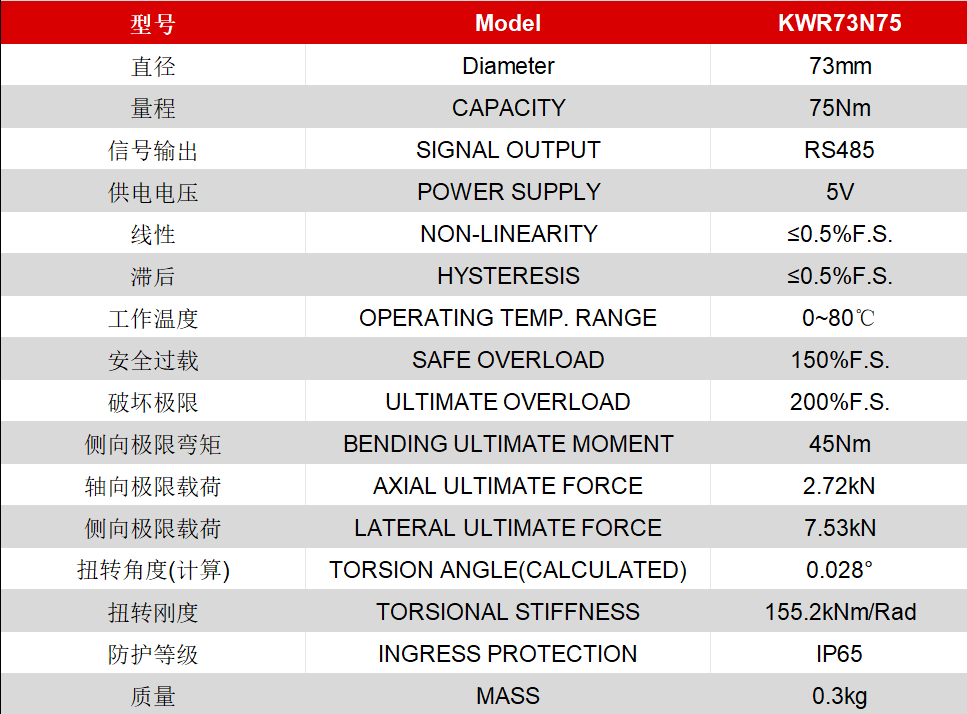
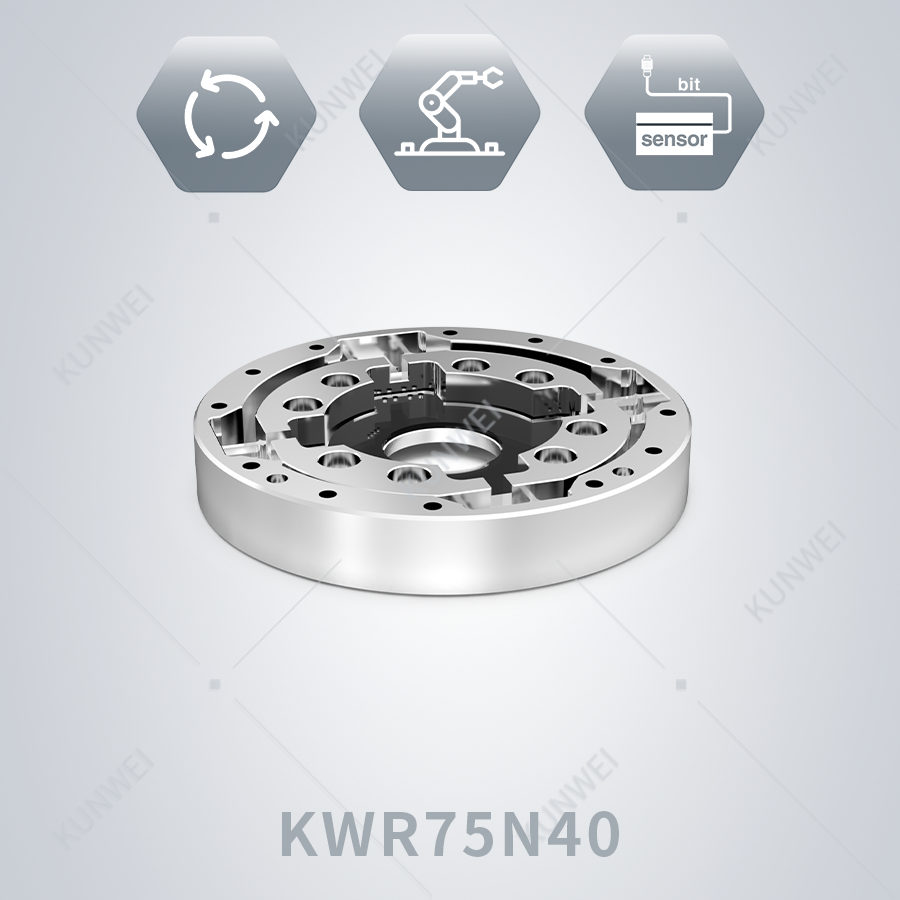
Model of KWR73N75
From drawings to finished products, we not only manufacture sensors, but also control the entire chain, ensuring precision throughout. When “research and development”, “machining”, and “production” are no longer separate links, but interlocking precision gears, high-quality products that can be controlled from the source are born. Deeply cultivating the field of joint torque sensors, building an independent system for the entire chain of “research and development machining production”, allowing every innovation to move from the laboratory to the production line, and turning every part from a drawing into a boutique. From material mechanics simulation to structural optimization design, using finite element analysis software to simulate stress changes, allowing products to avoid 90% of potential problems in the drawing stage; The flexible production line supports small batch customized processing, seamlessly connecting R&D and production needs from single piece trial production of R&D prototypes to mass production of production orders. Production, making ‘standards’ a’ daily routine ‘. In a 100000 level clean production workshop, the birth of each sensor follows a strict “growth trajectory”. Each process has clear operating specifications and verification standards, and the data stability error is strictly controlled within ≤ 0.5%. From raw material storage to finished product delivery, the entire process is traceable, and any doubts at any stage can be quickly traced to the root – here, “quality” is not a slogan, but a process engraved on the production line. From the “think more” during research and development, to the “stricter” during machining, to the “double check” during production, with the confidence of independent control of the entire chain, every joint torque sensor carries a “reliable gene”. Choosing us is not just about choosing a product, but also about choosing a reassuring solution from innovation to implementation.
.jpg)
.jpg)