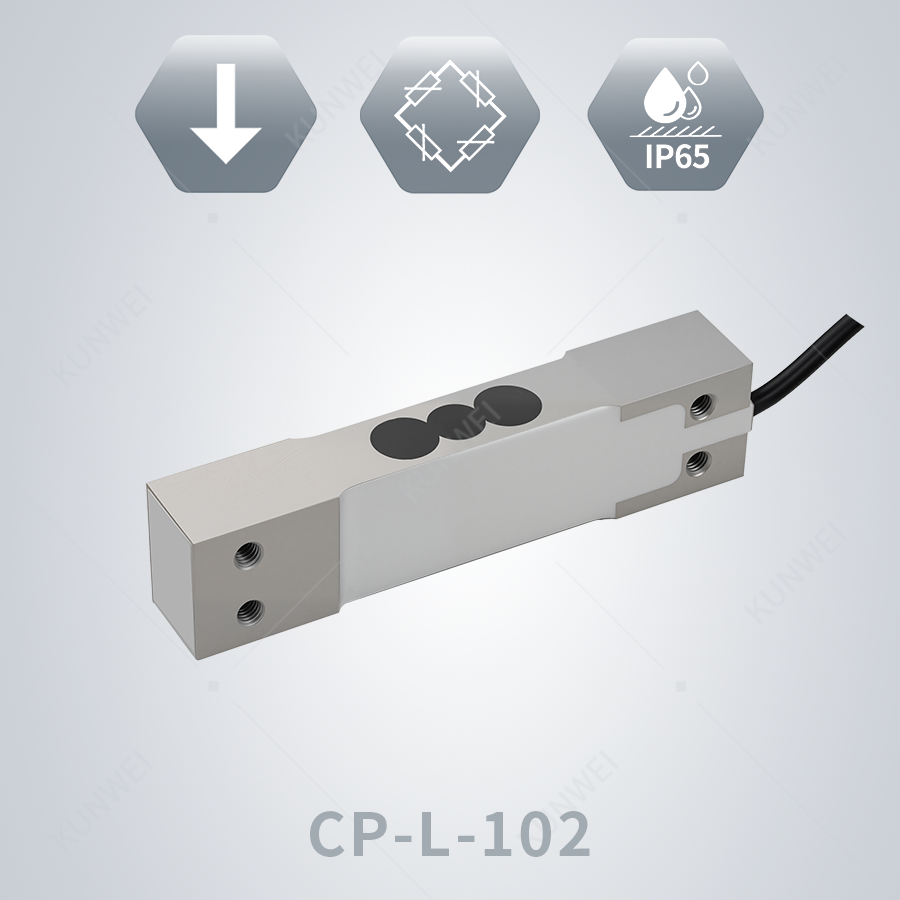
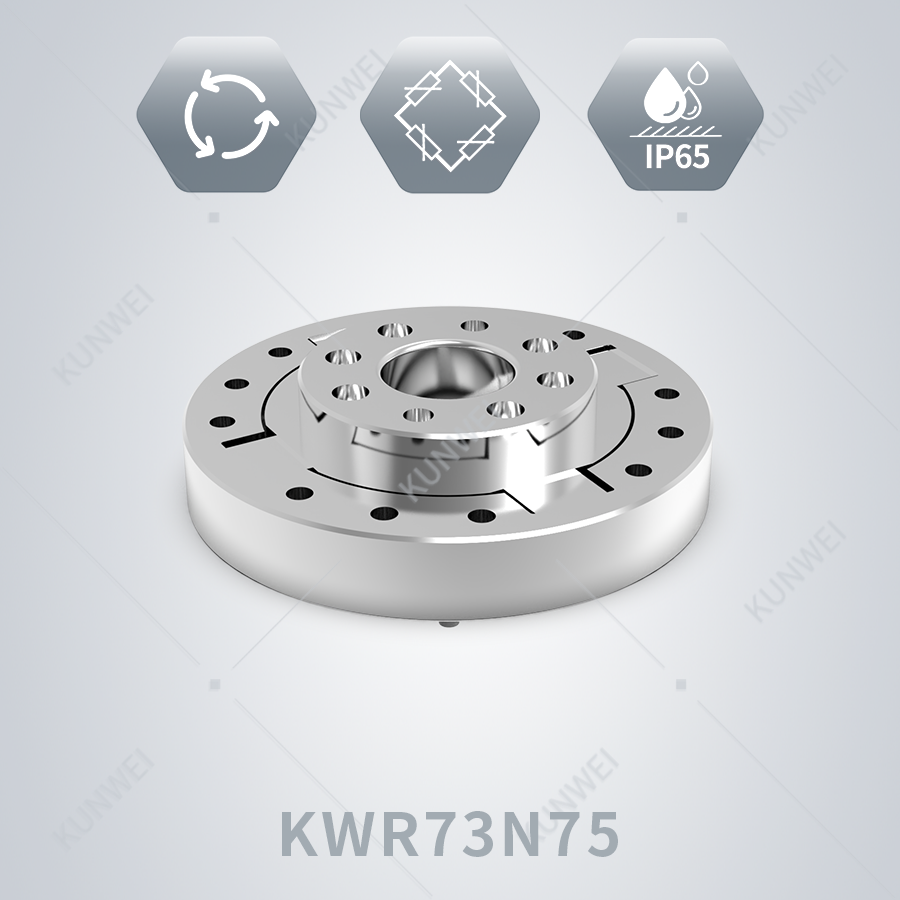
Proper installation of load cells is essential to ensure accurate measurements, long-term stability, structural safety, and reliable industrial weighing performance. According to strain gauge measurement theory and references in the field of industrial weighing systems engineering, factors such as mounting alignment, load distribution, vibration isolation, cable protection, thermal compensation, environmental sealing, and calibration procedures directly affect the precision and operational lifespan of load cells.
Modern sensor manufacturers, such as Kunwei Sensing, are continually improving load cell technologies by using advanced strain gauge materials, digital compensation systems, corrosion-resistant housings, and intelligent signal processing in order to support increasingly demanding industrial automation applications.
Why Is Proper Load Cell Installation More Important Than Many Engineers Realize?
Load cells have become essential components in modern industrial automation, process control, material handling, precision weighing, structural monitoring, logistics, manufacturing, and intelligent sensing systems. While the sensor itself may appear compact and mechanically simple, the performance of a weighing or force measurement system often depends more on the quality of its installation than on the nominal accuracy rating of the load cell.
In many industrial environments, inaccurate measurements are not caused by defective sensors, but by improper installation practices. Even a high-precision load cell may produce unstable or unreliable readings if it is subjected to uneven loading, side forces, thermal expansion, structural vibration, improper mounting, cable interference, environmental contamination, or foundation instability.
Because modern industrial systems increasingly rely on real-time measurement data for automated process control, production optimisation, safety monitoring, inventory management, predictive maintenance, digital manufacturing, robotics integration and intelligent logistics, the importance of correct load cell installation continues to grow across nearly every industrial sector.
Today, load cells are widely used in tank weighing systems, truck scales, batching systems, packaging lines, crane weighing, hopper systems, industrial presses, conveyor weighing, medical equipment, aerospace testing, structural engineering, and laboratory instrumentation. Each application introduces unique installation challenges that directly influence measurement accuracy and system durability.
For example, tank weighing systems must compensate for thermal expansion; conveyor systems must reduce vibration interference; truck scales require structural load equalisation; high-speed production lines need electrical noise protection; marine environments demand corrosion resistance; and food processing facilities require hygienic sealing.
The complexity of these requirements explains why load cell installation has become a specialised engineering discipline involving mechanical engineering, electrical engineering, structural analysis, signal processing, materials science, industrial automation, and environmental protection.
Modern manufacturers such as Kunwei Sensing now engineer advanced load cells featuring digital signal filtering, temperature compensation, stainless steel sealing, laser-welded enclosures, anti-overload protection, intelligent diagnostics, and high-resolution sensing electronics.
However, even the most advanced sensor technology cannot compensate for poor installation conditions.
Incorrect installation can result in measurement drift, unstable output, repeatability problems, premature sensor failure, calibration errors, structural stress concentration, inaccurate batching, and production inefficiency.
As Industry 4.0 and smart manufacturing continue to accelerate, the reliability of measurement systems is becoming increasingly valuable. Accurate load cell installation now directly affects production quality, process automation, energy efficiency, operational safety, inventory accuracy, compliance standards, and equipment lifespan.
Understanding what should be considered during load cell installation therefore requires examining mechanical alignment, load direction, structural design, environmental conditions, electrical interference, calibration methods, maintenance accessibility, and long-term operational stability.
Proper installation transforms load cells from simple sensors into highly reliable industrial intelligence components capable of supporting modern precision manufacturing and automated control systems.
What Are Load Cells?
Load cells are force transducers that convert mechanical force into measurable electrical signals.
Most industrial load cells operate using strain gauge technology, piezoelectric sensing, hydraulic sensing, or pneumatic sensing. The most common design uses bonded strain gauges attached to a deformable metal structure.
When force is applied:
The metal deforms slightly, electrical resistance changes, and the signal is converted into measurable weight or force data.
Load cells are essential for weighing systems, force monitoring, tension measurement, compression measurement, and industrial automation.
Why Installation Quality Directly Affects Load Cell Accuracy?
The accuracy of a load cell depends heavily on proper force transmission.
Even small installation errors can result in the following issues:
- Non-linearity
- Hysteresis
- Signal instability
- Zero drift
- Uneven loading
Mechanical stress distortion
Improper mounting structures may introduce unwanted forces, such as side loads, torsional forces, and bending stress, which distort sensor readings.
Structural instability
Weak support structures may shift under load.
This affects repeatability, calibration stability, and measurement precision.
Environmental influences
Industrial environments introduce the following, all of which may affect sensor performance:
- Vibration
- Moisture
- Dust
- Thermal expansion
- Electromagnetic interference
Key Factors to Consider When Installing Load Cells
Proper load alignment
Correct force alignment is one of the most critical installation requirements.
Load cells are designed for specific force directions:
- Compression
- Tension
- Shear
- Bending
Improper alignment may result in:
- Off-axis loading
- Signal distortion
- Permanent sensor damage
Best practices:
- Ensure vertical load transfer
- Minimize side forces
- Use self-aligning mounting kits when necessary
Stable mounting surfaces
The supporting structure must be rigid and level.
Uneven mounting surfaces can cause uneven load distribution, mechanical stress concentration, and unstable readings.
Important structural considerations:
- Flatness tolerance
- Foundation rigidity
- Weld quality
- Structural deflection limits
Load Distribution Across Multiple Load Cells
Multi-cell systems require balanced load sharing.
Unequal distribution may overload certain sensors.
| Installation Factor | Potential Problem | Recommended Solution |
| Uneven platform | Measurement inconsistency | Precision leveling |
| Structural flexing | Signal instability | Reinforced supports |
| Off-center loading | Overload risk | Load equalization design |
| Unequal mounting height | Calibration drift | Shim adjustment |
Environmental Considerations for Load Cell Installation
The lifespan and accuracy of sensors are strongly affected by industrial environments.
Temperature variations
Thermal expansion may alter the following:
- Structural dimensions
- Cable resistance
- Strain gauge output
Modern load cells include temperature compensation, but the design of the installation still matters.
Moisture and corrosion
Harsh environments may damage connectors, cables, strain gauges, and sealing systems. Stainless steel load cells are widely used in marine industries, food processing, and chemical plants.
Dust and contamination
Industrial contamination may interfere with:
- Moving assemblies
- Cable integrity
- Sealing performance
Electrical Installation Considerations
Electrical noise can significantly impact sensor signals due to the extremely small nature of load cell outputs.
Cable routing
Avoid routing load cell cables near:
- Motors
- Power cables
- Variable frequency drives
- Transformers
Grounding
Proper grounding minimises electrical interference, signal fluctuation, and noise distortion.
Shielded cables
High-quality shielded cables improve signal stability.
Manufacturers such as Kunwei Sensing are increasingly integrating advanced signal shielding technologies into industrial weighing systems.
Vibration and Dynamic Load Management
Industrial systems often produce vibrations and shock forces.
Common sources of vibration include:
- Rotating machinery
- Conveyors
- Motors
- Hydraulic systems
- Production equipment
Why is vibration dangerous?
Excessive vibration may cause:
- Unstable readings
- Fatigue damage
- Premature failure
Vibration Isolation Solutions
| Vibration Issue | Installation Solution |
| Mechanical shock | Shock absorbers |
| Structural vibration | Isolation mounts |
| High-speed operation | Signal filtering |
| Dynamic loading | Dampening systems |
Importance of Overload Protection
Load cells are precision instruments that may be damaged if they are overloaded.
Common overload causes:
- Accidental impact
- Improper material loading
- Forklift collision
- Excessive structural force
Overload protection devices
Modern systems may include:
- Mechanical stops
- Overload brackets
- Safety bumpers
- Shock absorbers
These devices protect sensor integrity and operational safety.
Load Cell Calibration After Installation
Calibration verifies the accuracy of measurements after installation.
Why calibration is essential
Even properly installed load cells require calibration because structural conditions vary, mounting tolerances differ, and cable lengths influence signals.
Common calibration methods:
Dead weight calibration uses certified reference weights.
Electronic calibration uses simulated electrical signals.
System calibration tests the complete operational system.
Common Installation Mistakes
- Side loading
Unless they are specifically designed for it, load cells should not experience lateral forces.
- Improper welding near load cells
Welding current may damage strain gauges.
- Poor cable protection
Exposed cables are at risk of mechanical damage, moisture intrusion, and electrical noise.
- Ignoring thermal expansion
Large tanks and structures expand when the temperature varies.
Flexible mounting assemblies may help to compensate for this.
Types of Load Cells and Their Installation Requirements
Different load cell designs require different installation methods.
| Load Cell Type | Main Application | Installation Focus |
| Compression Load Cell | Tank weighing | Centered vertical loading |
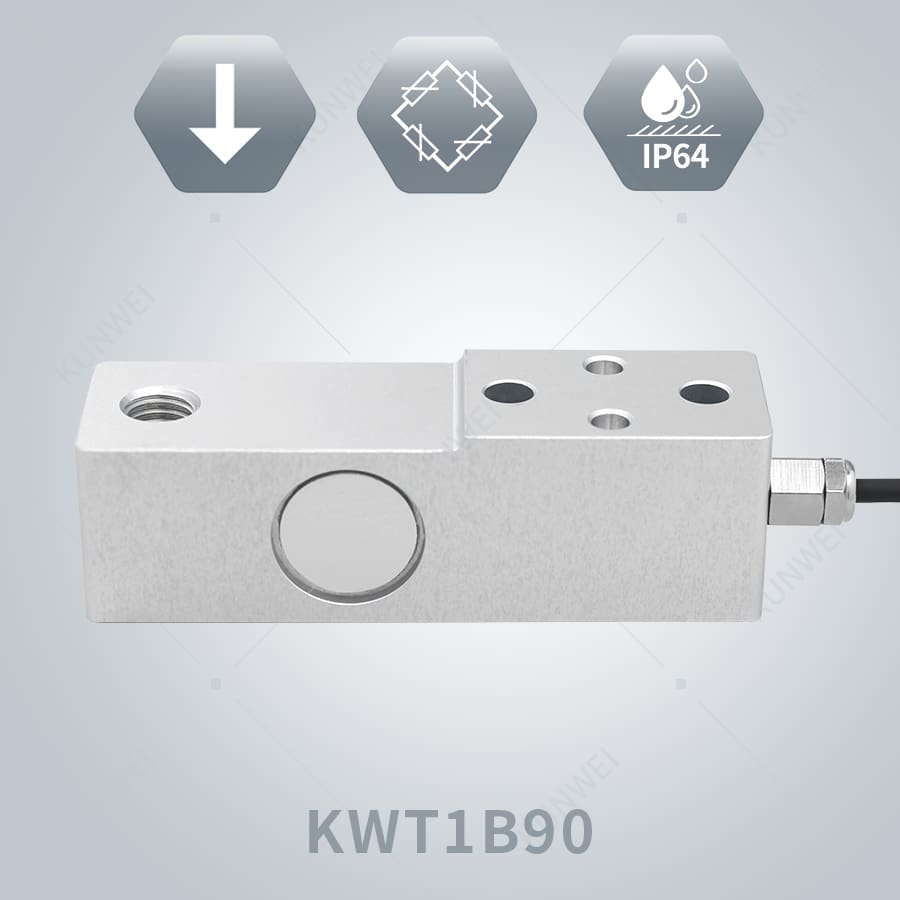
| Shear Beam Load Cell | Platform scales | Stable side restraint |
| S-Type Load Cell | Tension measurement | Axial alignment |
| Single Point Load Cell | Retail scales | Uniform platform loading |
| Canister Load Cell | Heavy industrial weighing | High-capacity foundation stability |
Smart Load Cell Technologies in Modern Industry
Digital technologies are increasingly being used in modern industrial weighing systems.
Digital load cells
Digital systems provide:
- Higher signal stability
- Reduced electrical noise
- Easier diagnostics
Intelligent diagnostics
Advanced systems monitor:
- Overload conditions
- Temperature variation
- Signal integrity
- Calibration drift
Industrial automation integration
Modern load cells integrate with:
- PLC systems
- SCADA platforms
- IoT monitoring
- Predictive maintenance systems
Kunwei Sensing and other advanced manufacturers are increasingly developing smart sensing technologies optimised for Industry 4.0 environments.
Maintenance Considerations After Installation
Long-term accuracy depends on routine maintenance.
- Inspection areas
Regularly inspect the following:
- Mounting bolts
- Cable conditions
- Sealing integrity
- Structural alignment
- Cleaning procedures
Avoid aggressive cleaning chemicals unless the sensor is specifically rated for them.
- Periodic recalibration
Industrial systems should undergo scheduled recalibration to maintain compliance and accuracy.
How Does Proper Installation Improve Industrial Efficiency?
Accurate load measurement directly affects production consistency, inventory accuracy, batching precision, process control, and safety monitoring.
Poor installation may increase downtime, waste, maintenance costs, and calibration errors.
Proper engineering design improves operational stability, measurement repeatability, and equipment lifespan.
FAQ About Load Cells
- What is the most important factor when installing load cells?
Proper load alignment is one of the most critical factors because off-axis loading may distort measurements and damage sensors.
- Why do load cells require calibration after installation?
Structural conditions and installation variables affect system accuracy, making calibration essential.
- Can vibration affect load cell accuracy?
Yes. Excessive vibration may create unstable readings and long-term sensor fatigue.
- Why are shielded cables important for load cells?
Shielded cables help protect sensitive sensor signals from electrical interference.
- How can overload damage load cells?
Excessive force may permanently deform internal sensing structures and reduce accuracy.
- What industries commonly use load cells?
Load cells are widely used in manufacturing, logistics, food processing, construction, mining, automation, transportation, and laboratory systems.
Conclusion
Proper installation of load cells is essential for achieving accurate measurements, long-term stability, operational safety, and reliable industrial automation. Even highly advanced sensors can produce inaccurate or unstable results if the installation conditions are not designed properly. Critical factors in determining the effectiveness and lifespan of industrial weighing systems include load alignment, structural rigidity, vibration isolation, environmental protection, cable routing, overload prevention, calibration accuracy, and thermal compensation. As modern industries increasingly rely on real-time sensing data for process control, quality assurance, predictive maintenance, and intelligent manufacturing, the importance of professional load cell installation is growing in nearly every industrial sector.
Meanwhile, advancements in digital sensing technologies, smart diagnostics, corrosion-resistant materials and intelligent signal processing are transforming load cells into highly sophisticated industrial measurement systems that can support Industry 4.0 applications and automated production environments. Manufacturers such as Kunwei Sensing are continually improving sensor precision, environmental durability, signal stability, and intelligent integration capabilities to meet the evolving demands of modern industrial operations. Ultimately, the performance of load cells depends not only on the quality of the sensors themselves, but also on careful engineering design, proper installation practices, routine maintenance and long-term system optimisation.