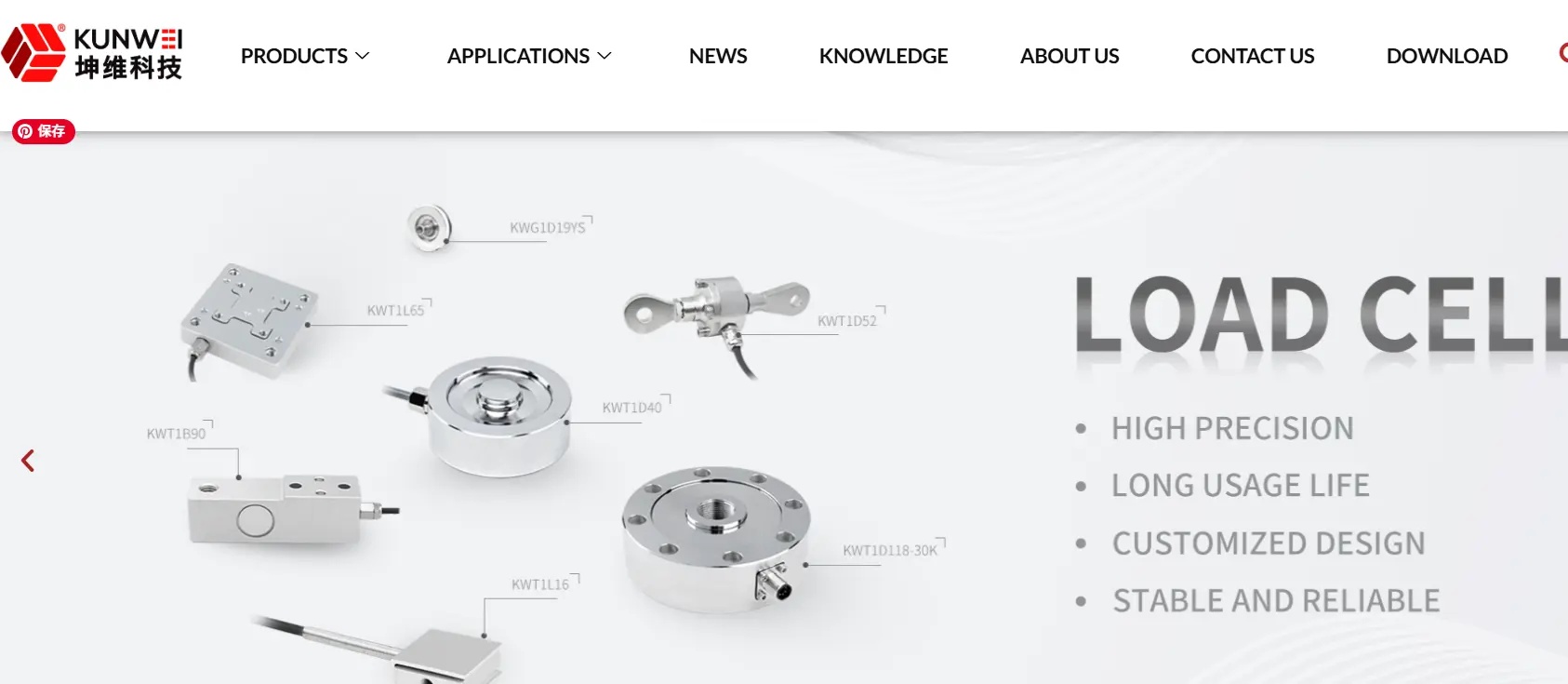
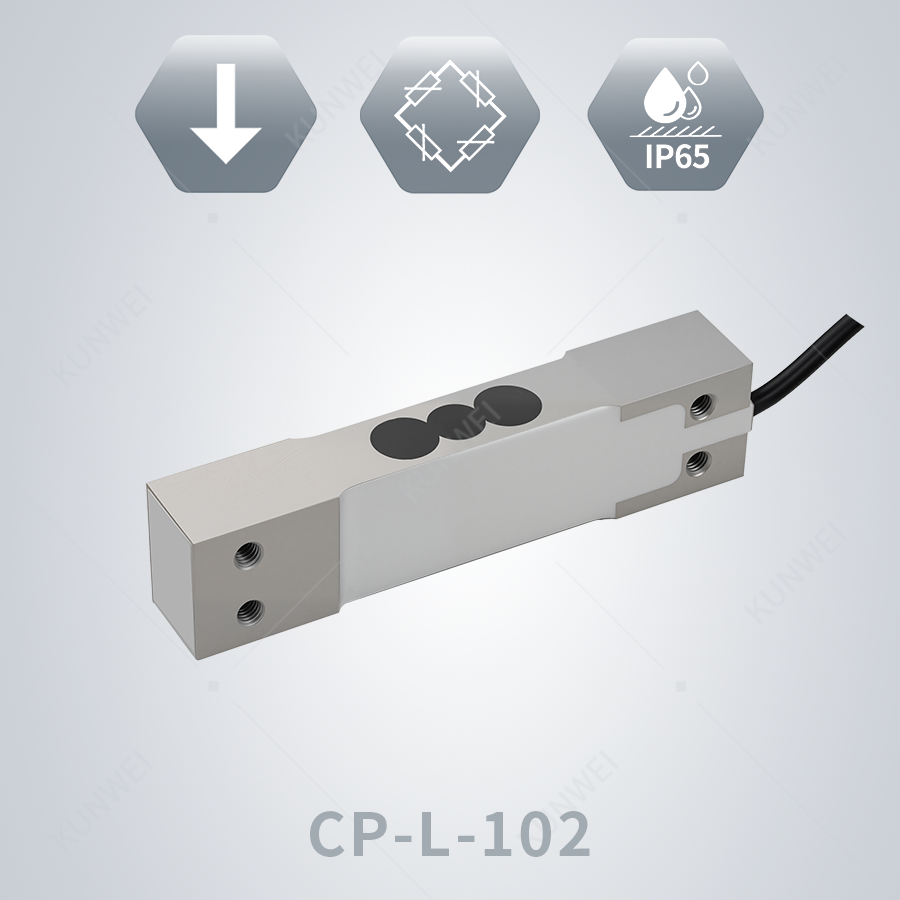
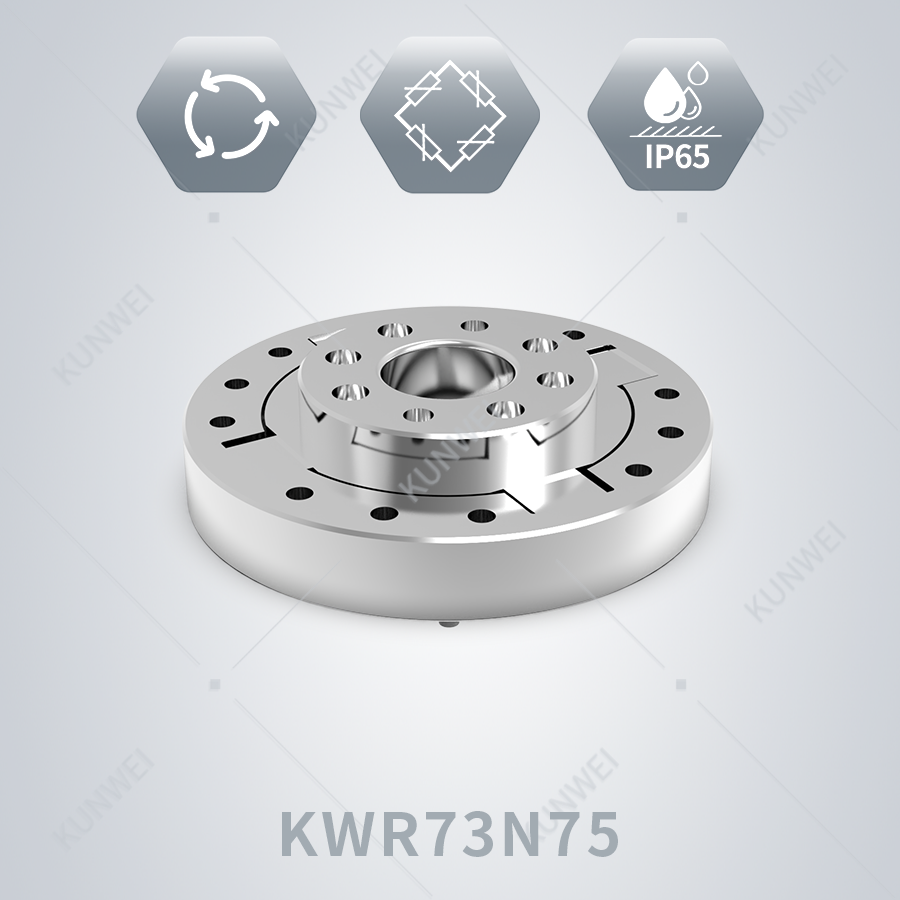
A load cell is a transducer that converts mechanical forces such as weight, tension, compression, or pressure into a measurable electrical signal. According to Introduction to Mechatronics and Measurement Systems by David G. Alciatore and Michael B. Histand and Instrumentation and Control Systems by William Bolton, modern load cells most commonly use strain gauge technology. In this system, deformation of an elastic element causes a proportional change in electrical resistance, which can be accurately measured and converted into force data.
Load cells are now essential components in industrial weighing systems, automation equipment, material testing machines, process control systems, robotics, logistics operations, and smart manufacturing environments. Their ability to provide precise, real-time force measurement makes them one of the most widely used sensors in modern industry.
Introduction
In modern industrial environments, accurate force measurement is fundamental to quality control, process automation, safety, and productivity, and is no longer optional. Reliable measurement technology is critical whether you are weighing raw materials in a chemical plant, monitoring filling operations in a food processing plant, measuring tension in a steel production line, or controlling force in a robotic assembly system.
The load cell occupies a unique position among the many sensing devices used in industrial automation. Although they are often associated with weighing scales, load cells perform far more sophisticated functions than simply measuring weight. They serve as the primary sensing element in countless systems where force, compression, tension, torque, or pressure must be measured accurately.
As Industry 4.0 continues to transform manufacturing, the demand for intelligent sensing solutions is accelerating. Modern load cells now integrate digital communication, wireless monitoring, predictive maintenance capabilities, and advanced signal processing. Consequently, it has become increasingly important for engineers, system integrators, procurement specialists, and manufacturing professionals to understand how load cells work, the various types available, and their applications.
This comprehensive guide explores the definition, working principles, types, applications, advantages, limitations, selection criteria, and future trends of load cell technology.
What Is a Load Cell?
A load cell is a device used to measure force. It converts mechanical force into an electrical signal that can be processed, displayed, recorded, or used for automated control.
Put simply, when a force is applied to a load cell, the sensor deforms slightly. This deformation creates a measurable electrical response that is proportional to the applied force.
The measured force may include:
- Weight
- Compression
- Tension
- Pull force
- Push force
- Shear force
- Torque-related loads
Load cells are used wherever precise force measurement is required.
Unlike traditional mechanical scales, which rely on springs and levers, modern load cells provide highly accurate electronic measurements that are ideal for automated industrial environments.
Why Are Load Cells Important?
Accurate force measurement is essential for virtually every manufacturing process.
Without accurate load measurement, industries may experience the following:
- Product inconsistency
- Material waste
- Equipment damage
- Safety hazards
- Regulatory non-compliance
- Reduced productivity
Load cells help to eliminate these risks by providing continuous and reliable measurement data.
Industries rely on load cells to:
- Monitor production processes
- Ensure product quality
- Improve operational efficiency
- Automate manufacturing systems
- Meet legal metrology requirements
- Enhance workplace safety
As production systems become more automated, the importance of accurate force sensing continues to increase.
Basic Principle of Load Cell Operation
The operating principle of a load cell is based on the relationship between force and deformation.
When a properly designed elastic element is subjected to force, it undergoes microscopic deformation.
This deformation is proportional to the applied load.
The load cell detects this deformation and converts it into an electrical output.
The process generally follows four stages:
Step 1: Force application
A load is applied to the sensing element.
Step 2: Mechanical deformation
The elastic structure experiences slight strain.
Step 3: Signal generation
The deformation alters the electrical properties, such as resistance, capacitance, or voltage.
Step 4: Signal processing
The electrical signal is amplified and converted into a usable force measurement.
Although several sensing technologies exist, strain gauge load cells dominate the market.
How Does a Strain Gauge Load Cell Work?
The strain gauge load cell is the most widely used design of load cell globally.
It operates according to a simple yet highly effective principle.
A strain gauge is a thin conductive element bonded to the surface of a metal structure.
When force deforms the structure:
The strain gauge stretches or compresses.
Its electrical resistance changes.
This change in resistance is measured electronically.
The amount of resistance change is directly proportional to the applied force.
The measurement system then converts the signal into engineering units, such as:
- Kilograms
- Pounds
- Newtons
- Tons
- Kilonewtons
Because the deformation involved is extremely small, advanced signal amplification techniques are required.
The Role of the Wheatstone Bridge
Modern strain gauge load cells typically use a Wheatstone bridge circuit.
The Wheatstone bridge significantly improves:
- Sensitivity
- Accuracy
- Temperature compensation
- Signal stability
The bridge consists of four precision resistive elements arranged in a balanced circuit.
When force is applied, changes in resistance cause a measurable voltage difference across the bridge.
The output voltage is proportional to the applied load.
This principle has formed the basis of industrial load cell technology for decades due to its reliability and precision.
Load Cell Measurement Formula
The output of a strain gauge load cell is commonly expressed in millivolts per volt (mV/V).
The relationship between force and output can be represented conceptually as:
Output=Sensitivity×Applied Load
For example:
- Load Cell Capacity: 1000 kg
- Sensitivity: 2 mV/V
- Excitation Voltage: 10 V
At full load:
Output=2mV/V×10V=20mV
This extremely small signal is amplified by instrumentation electronics before processing.
Main Types of Load Cells
Different applications require different load cell designs.
The most common categories include:
| Load Cell Type | Measurement Principle | Common Applications |
| Strain Gauge Load Cell | Resistance change | Industrial weighing |
| Hydraulic Load Cell | Fluid pressure | Heavy-duty weighing |
| Pneumatic Load Cell | Air pressure | Clean environments |
| Capacitive Load Cell | Capacitance variation | Precision systems |
| Piezoelectric Load Cell | Crystal charge generation | Dynamic force measurement |
Each technology offers unique advantages and limitations.
Strain Gauge Load Cells
Strain gauge load cells account for the majority of industrial installations.
Advantages include:
- High accuracy
- Excellent repeatability
- Wide capacity range
- Cost effectiveness
- Mature technology
Typical applications include:
- Platform scales
- Tank weighing
- Hopper weighing
- Truck scales
- Packaging equipment
They are suitable for both static and semi-dynamic measurements.
Hydraulic Load Cells
Hydraulic load cells use fluid pressure to measure force.
When force is applied:
The pressure inside a sealed chamber increases.
This pressure is then measured by a gauge or sensor.
Force can then be calculated from this value.
Advantages include:
- No electrical power is required.
- Excellent overload protection.
- High durability.
They are commonly used in:
- Hazardous environments
- Heavy industrial weighing
- Remote locations
Pneumatic load cells use compressed air as the sensing medium.
The applied force is balanced by regulated air pressure.
Advantages include:
- Intrinsic safety
- High cleanliness
- Explosion-proof operation
Industries utilising pneumatic load cells include:
- Pharmaceutical manufacturing
- Food processing
- Chemical production
However, their response speed is generally slower than that of strain gauge systems.
Capacitive Load Cells
Capacitive load cells measure changes in capacitance caused by mechanical displacement.
Advantages include:
- Extremely high sensitivity
- Excellent resolution
- Low power consumption
Applications include:
- Precision laboratory equipment
- Semiconductor manufacturing
- Scientific instruments
These systems excel in low-force measurement applications.
Piezoelectric Load Cells
Piezoelectric sensors generate an electrical charge when they are subjected to mechanical stress.
Advantages include:
- Exceptional dynamic response
- High-frequency measurement capability
- Compact design
Applications include:
- Impact testing
- Vibration analysis
- Automotive crash testing
- Aerospace research
They are less suitable for long-term static force measurements.
Common Load Cell Configurations
Load cells are available in numerous structural designs.
| Configuration | Typical Use |
| Compression Load Cell | Tank and silo weighing |
| Tension Load Cell | Crane monitoring |
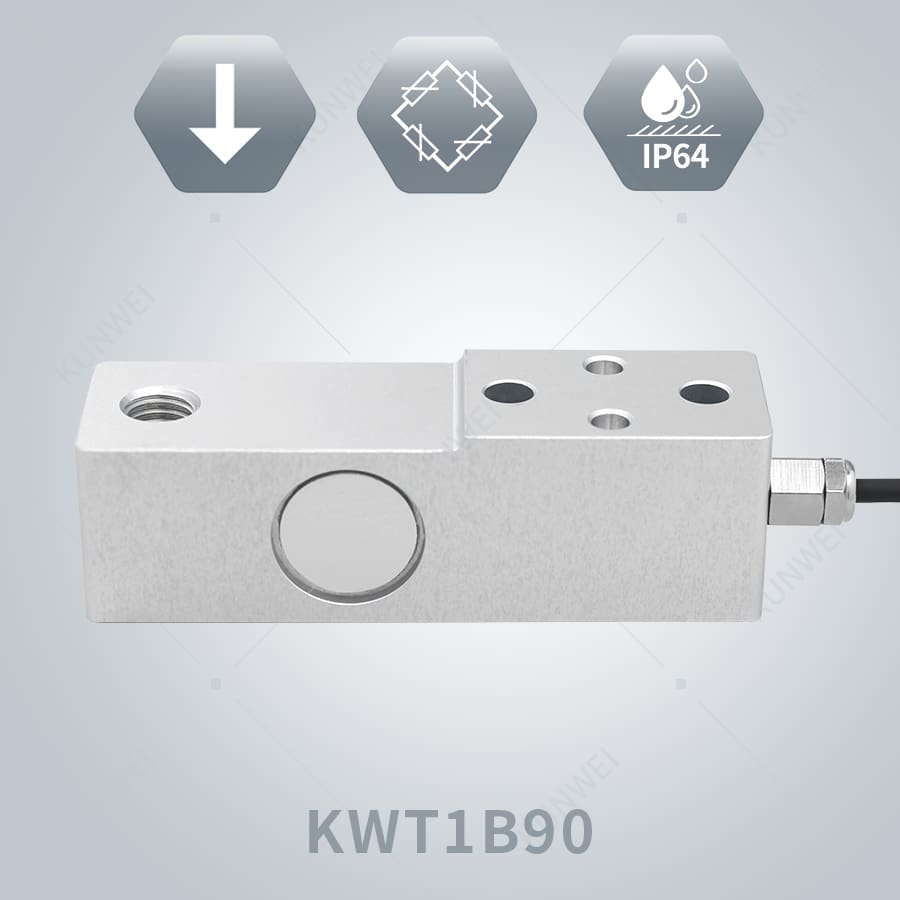
| Beam Load Cell | Bench scales |
| Shear Beam Load Cell | Industrial scales |
| S-Type Load Cell | Tension and compression |
| Pancake Load Cell | Material testing |
| Canister Load Cell | Heavy-capacity weighing |
The choice depends on installation requirements and load characteristics.
Industrial Applications of Load Cells
Load cells are among the most versatile sensors used in industry.
Manufacturing
Production lines use load cells for:
- Force monitoring
- Process control
- Quality assurance
Logistics and warehousing
Applications include:
- Pallet weighing
- Freight measurement
- Inventory management
Food processing
Load cells control:
- Ingredient batching
- Filling operations
- Packaging systems
Pharmaceutical industry
Precise dosing requires accurate force measurement.
Agriculture
Applications include:
- Grain weighing
- Feed management
- Fertiliser distribution
Renewable energy
Load cells monitor structural loads in wind turbines and solar installations.
Load Cells in Smart Manufacturing
The role of load cells has been significantly expanded by Industry 4.0.
Modern smart load cells offer the following:
- Digital outputs
- Ethernet connectivity
- Wireless communication
- Real-time diagnostics
- Predictive maintenance
Benefits include:
- Reduced downtime
- Improved process visibility
- Enhanced automation
- Better production analytics
These capabilities transform load cells from simple sensors into intelligent data acquisition devices.
Factors Affecting Load Cell Accuracy
Several variables influence measurement performance.
| Factor | Impact on Accuracy |
| Temperature | Thermal expansion effects |
| Misalignment | Measurement errors |
| Vibration | Signal instability |
| Overloading | Permanent damage |
| Electrical Noise | Reduced signal quality |
| Installation Errors | Calibration drift |
Proper installation and maintenance are essential for optimal performance.
How to Choose the Right Load Cell?
Selecting a load cell requires careful evaluation.
Key considerations include:
- Capacity
The load cell should accommodate the maximum expected loads.
- Accuracy Requirements
Different applications demand different precision levels.
- Environmental Conditions
Consider:
- Temperature
- Moisture
- Dust
- Chemicals
- Mounting Configuration
The installation geometry influences sensor selection.
- Output Signal
Options include:
- Analog
- Digital
- Wireless
Choosing the correct sensor ensures long-term reliability and performance.
Future Trends in Load Cell Technology
Several innovations are shaping the future of force measurement.
- Smart Sensors
Embedded diagnostics improve reliability.
- Wireless Monitoring
Reduces wiring complexity.
- IoT Integration
Enables cloud-based analytics.
- Miniaturization
Supports compact equipment design.
- AI-Assisted Calibration
Improves accuracy and maintenance efficiency.
These developments are expected to accelerate adoption across numerous industries.
Frequently Asked Questions (FAQ)
- What is a load cell used for?
A load cell is used to measure force, weight, compression, tension, or pressure by converting mechanical force into an electrical signal.
- How accurate is a load cell?
High-quality industrial load cells can achieve accuracies better than ±0.03% of full scale, depending on design and calibration.
- What is the most common type of load cell?
The strain gauge load cell is the most widely used type because of its accuracy, reliability, and affordability.
- Can load cells measure both tension and compression?
Yes. Certain designs, such as S-type load cells, are specifically engineered for both tension and compression measurements.
- How long does a load cell last?
With proper installation and maintenance, industrial load cells often operate reliably for 10–20 years or more.
- What causes load cell failure?
Common causes include overload, corrosion, moisture intrusion, cable damage, electrical surges, and improper installation.
Conclusion
A load cell is one of the most important sensing technologies in modern industry. It provides accurate and reliable force measurement for a wide range of applications, from weighing scales to advanced automated manufacturing systems. By converting mechanical force into electrical signals, they enable precise monitoring, process control, quality assurance, and safety management in countless industries.
As digital manufacturing, Industry 4.0, and smart sensing technologies continue to evolve, load cells are becoming increasingly intelligent, connected, and capable. Understanding how load cells work, the different types available, and the factors that influence their performance enables engineers and businesses to make informed decisions that improve efficiency and accuracy and ensure long-term operational success.