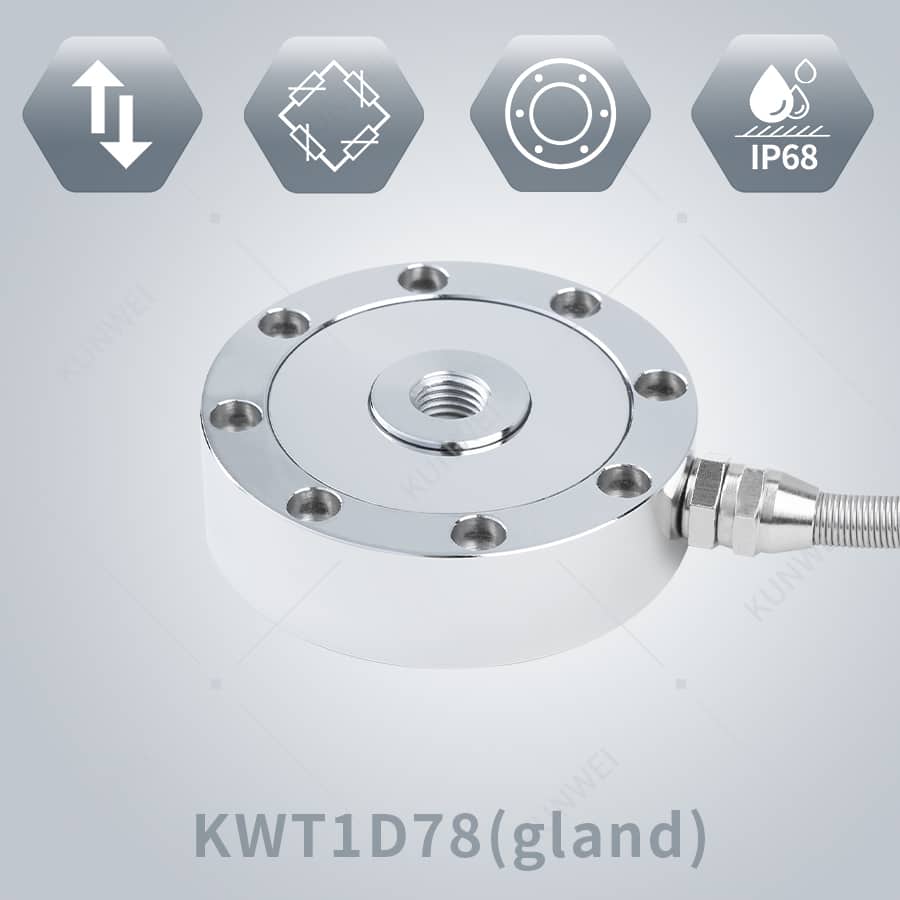
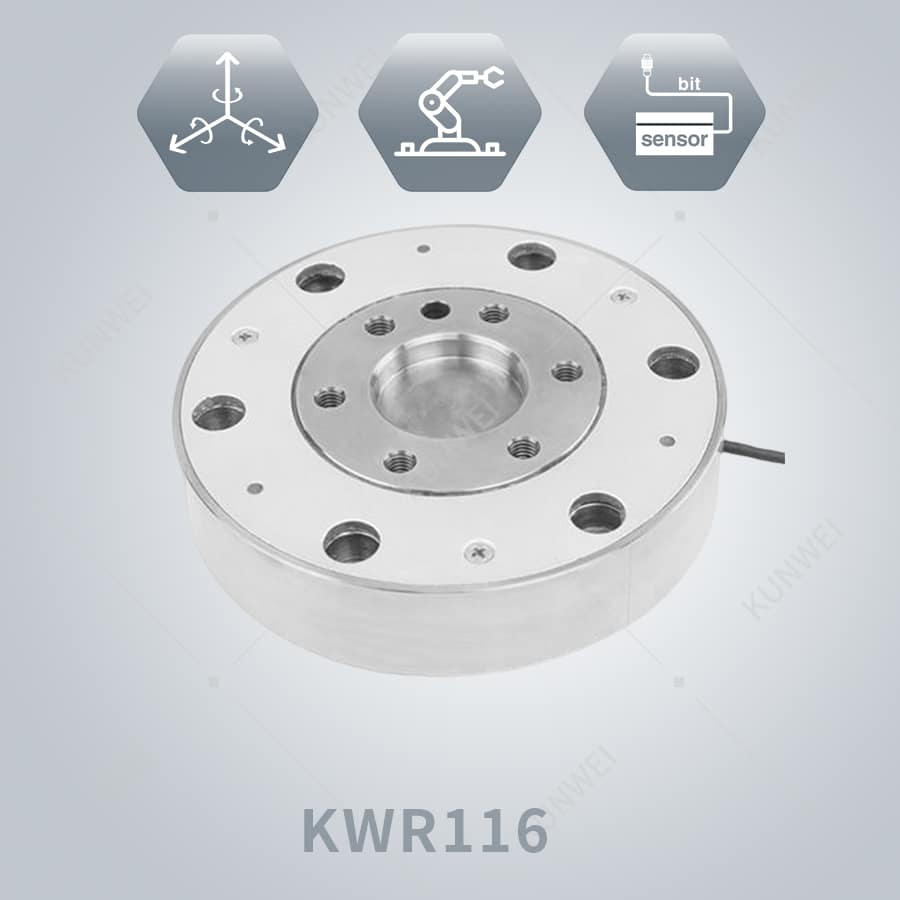
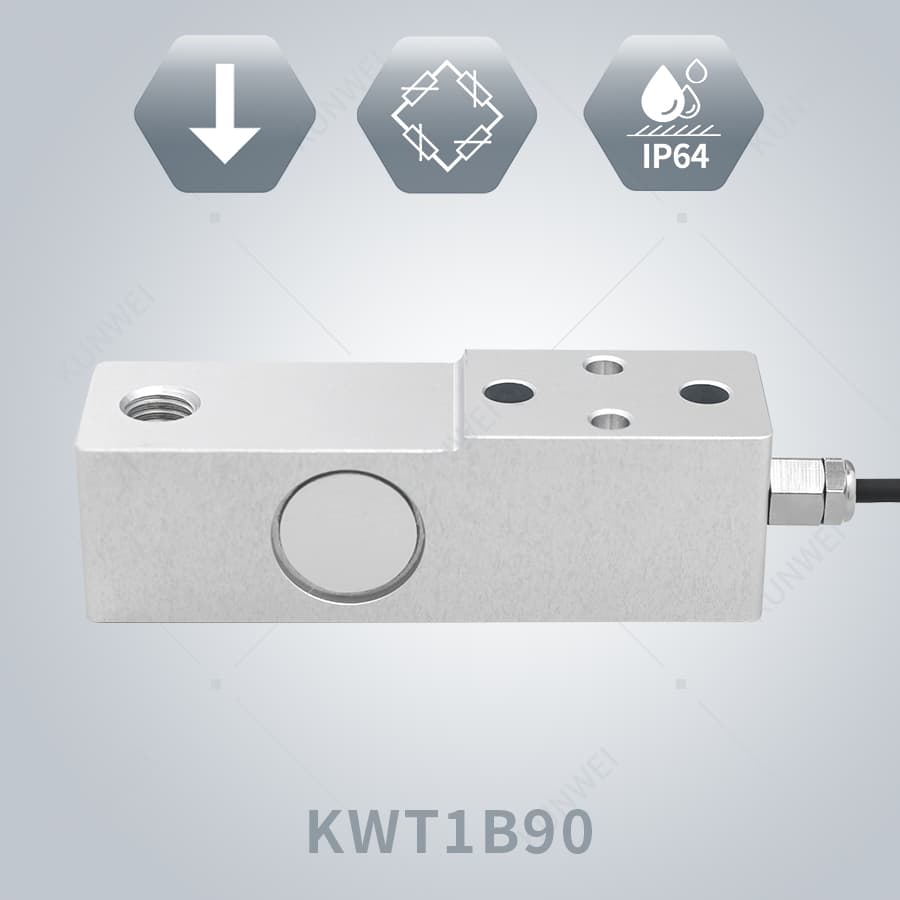
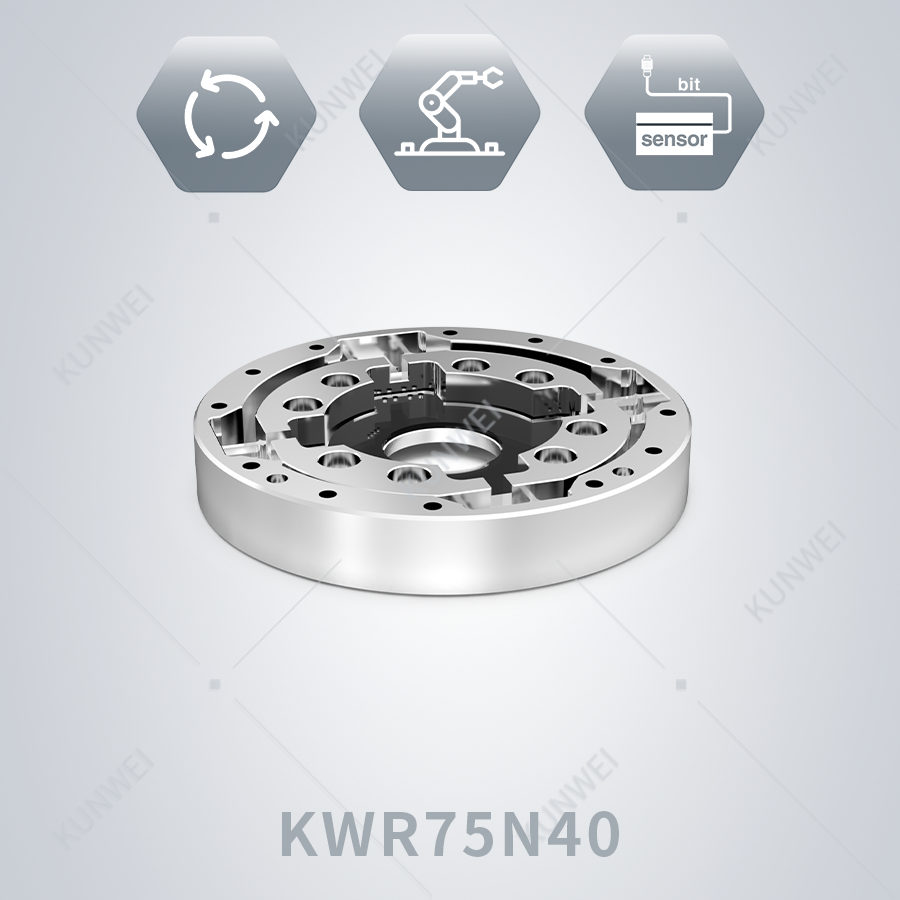
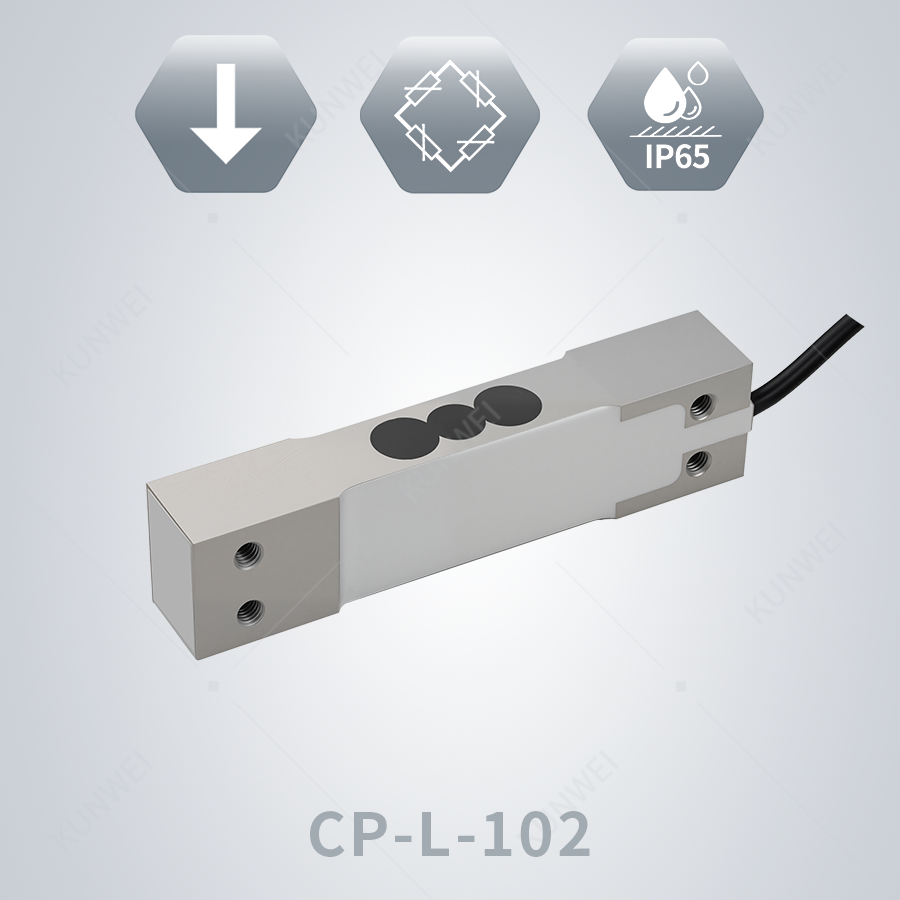
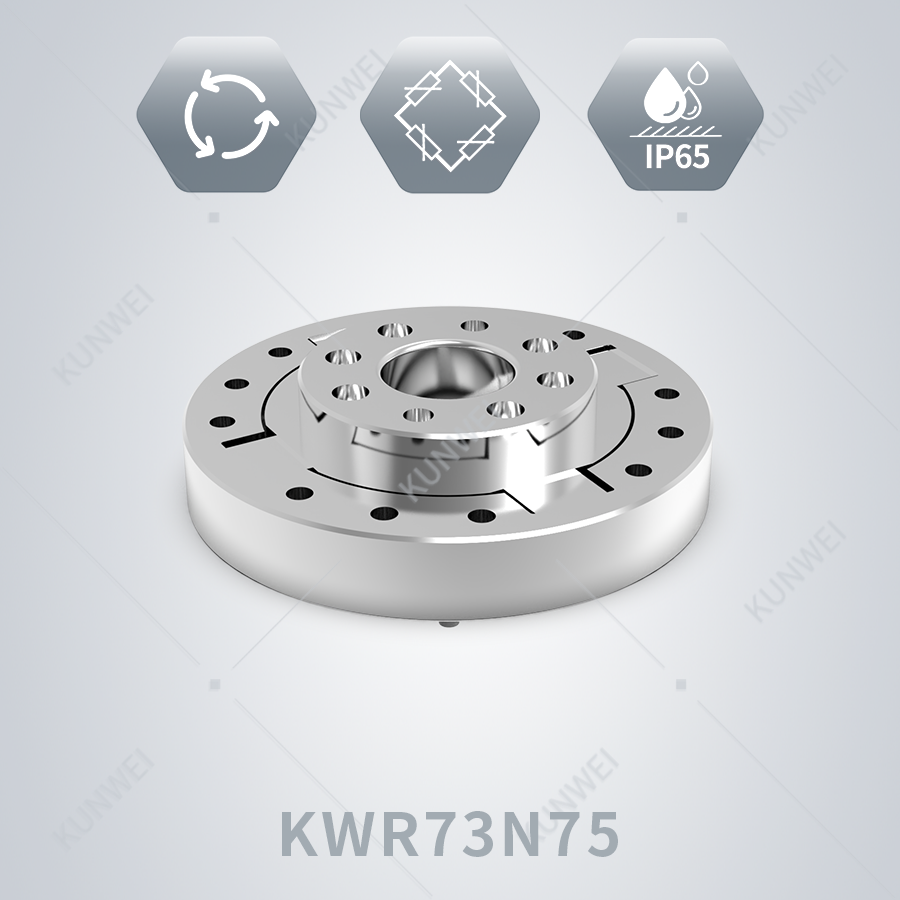
So, you need to measure a force. You open a supplier catalogue or browse online, and you’re immediately faced with a dizzying array of options. You see something called a “1-Axis Load Cell,” and it looks straightforward enough—a solid block of metal designed to measure force in one direction. Then, you see a futuristic-looking device called a “6-Axis Force/Torque Sensor,” and its spec sheet is filled with talk of vectors, moments, and coordinate systems.
Your first thought might be, “They both measure force, right? Isn’t the 6-axis one just a more complicated, expensive version of the 1-axis one?”
This is a common and completely understandable assumption. But it’s also one of the most critical misunderstandings in the world of automation and measurement. Confusing these two sensors is like confusing a bathroom scale with a high-tech motion capture system used for video games. Both measure something related to force, but they answer fundamentally different questions.
Choosing the right one isn’t about choosing the “better” sensor; it’s about understanding the language of the forces in your application. Is your application asking a simple, one-dimensional question, or is it telling a complex, multi-dimensional story?
The Core Difference: A Simple Question vs. a Complete Conversation
Let’s start with the simplest analogy possible.
- A 1-Axis Load Cell is like a bathroom scale. Its only job is to answer one single question: “How much weight is pressing straight down on me?” It only speaks one language: tension (pulling) or compression (pushing) along a single, predefined line. That’s it. It is completely blind to any other forces.
- A 6-Axis Force/Torque Sensor is like the human hand. It can feel everything, all at once. It not only feels how hard you’re pressing down (Fz), but also if you’re pushing from the side (Fx, Fy). Beyond that, it can feel as if you’re twisting it (Tz), or trying to bend it forwards and backwards (Tx) or side-to-side (Ty). It’s having a complete, six-dimensional conversation about all the forces and moments being applied to it.
This is the fundamental difference. A 1-Axis Load Cell is a specialist that does one job perfectly. A 6-Axis Sensor is a generalist that provides a complete picture of a complex interaction.
When is a 1-Axis Load Cell the Perfect Tool? The “Bowling Ball” Scenarios
You should choose a simple, robust 1-Axis Load Cell when your application is a straightforward “weighing” or “pressing” task. Think of any scenario where the force you care about is predictable, constrained, and acts along a single, clear vector.
I call these the “bowling ball” scenarios—you just want to know how heavy it is.
Classic 1-Axis Applications:
- Weighing and Batching: This is the most obvious one. Think of a silo sitting on several load cells to measure the weight of the material inside, or a hopper scale in an automated batching system. The only force that matters is the downward compressive force (gravity).
- Press-Fit Monitoring: When a machine is pressing a bearing into a housing, a 1-Axis Load Cell placed in line with the press can monitor the force to ensure it’s within the correct range. Too little force means a loose fit; too much means a damaged part.
- Tensile Testing: When you’re pulling a material sample apart to test its tensile strength, the load cell is only measuring the pulling force along that single axis.
- Simple Force Feedback: In some simple robotic tasks, like confirming a part has been seated correctly by measuring the final “push” force, a 1-Axis Load Cell can be a cost-effective solution.
Why it excels here:
- Cost-Effective: They are significantly less expensive than their 6-axis counterparts.
- Robust and Simple: The design is straightforward, making them extremely durable and easy to integrate both mechanically and electrically.
- High Accuracy (for its one job): Because it’s designed to do only one thing, it can be optimised for extremely high accuracy and resolution along its single measurement axis.
The Critical Limitation: A 1-Axis Load Cell is completely “crosstalk” blind. If a side load or a torque is applied, it will either ignore it completely or, worse, it will interpret that unwanted force as an error in its primary measurement, giving you a false reading.
When Do You Need a 6-Axis Sensor? The “Robot Dance” Scenarios
You need to upgrade to a 6-Axis Force/Torque Sensor the moment your application stops being a simple “weighing” task and becomes a complex “interaction.” Think of any scenario where the tool or gripper needs to feel and adapt to its environment in a way that mimics a human hand.
I call these the “robot dance” scenarios—the robot needs to feel its partner’s every move, twist, and turn to perform a complex, coordinated routine.
Classic 6-Axis Applications:
- Robotic Assembly: This is the killer app. Imagine a robot trying to insert a peg into a slightly misaligned hole.
- A “blind” robot would just push, jam, and either damage the part or fault out.
- A robot with a 6-Axis Sensor can feel the resistance. It feels the downward force (Fz), but it also feels the side forces (Fx, Fy) as the peg hits the edge of the hole. It can then be programmed to make micro-adjustments—”move a little left, a little forward”—until it feels the forces disappear, indicating the peg is aligned and can be inserted smoothly. It can also feel the torque (Tz) if it’s inserting a threaded part.
- Robotic Sanding, Grinding, and Polishing: To get a uniform finish on a complex, curved surface, the robot must maintain a constant contact force. A 6-Axis Sensor mounted between the robot and the sanding tool allows the robot to “feel” the surface. As the robot moves over the curve, the sensor constantly measures the contact force (Fz) and tells the robot to adjust its path in real-time to keep that force perfectly steady.
- Advanced Product Testing: How do you quantify the “feel” of a high-quality car door handle, the click of a button, or the smooth operation of a joystick? A 6-Axis Sensor can do this. It can record the complex force and torque profiles as a human or a robot operates the device, turning subjective “feel” into objective, repeatable data for quality control.
- Safe Human-Robot Collaboration: In collaborative robots (“cobots”), a 6-Axis Sensor at the base or wrist acts as a hyper-sensitive collision detector. It can feel a tiny, unexpected force from any direction—whether it’s a person bumping into the arm or a snag on a cable—and instantly trigger a safety stop, long before any harm can be done.
Why it’s essential here:
In all these cases, the “force conversation” is multi-dimensional. The side loads and torques are not “noise”; they are critical information that the robot needs to understand its environment and perform the task intelligently. A 1-Axis Load Cell would be completely blind to this vital information.
A Simple Decision Framework: The “Crosstalk” Test
Here’s a simple mental exercise to help you decide. Imagine your application. Now, ask yourself:
“Are there any forces or torques acting on my tool/part that are not aligned with the primary direction I want to measure?”
- If the answer is “No, You are likely doing a pure weighing or pressing task. A 1-Axis Load Cell is probably the right tool. It’s simple, cost-effective, and you can engineer your mechanical setup to ensure that all significant off-axis forces are eliminated.
- If the answer is “Yes”: You need to ask a follow-up question: “Are these off-axis forces just ‘noise’ that I need to ignore, or are they valuable ‘information’ that I need to use?”
- If they are just noise that could corrupt your measurement (e.g., a side load on a weighing platform), you might still use a 1-Axis Load Cell, but you’ll need to invest in a very robust mechanical design to isolate it.
- If those off-axis forces and torques are information that can help you guide the process (like feeling the edge of a hole), then you absolutely need a 6-Axis Force/Torque Sensor. There is no other option.
The Final Showdown: A Summary Table
| Factor | 1-Axis Load Cell | 6-Axis Force/Torque Sensor |
|---|---|---|
| Core Function | Measures force in a single direction (Tension/Compression) | Measures all 6 forces (Fx, Fy, Fz) and torques (Tx, Ty, Tz) |
| Analogy | A Bathroom Scale | The Human Hand |
| Best For | Weighing, batching, press-fit monitoring, tensile testing. | Robotic assembly, grinding, polishing, product testing, and safe collaboration. |
| Key Question Answered | “How much?” | “What’s happening?” |
| Cost | Low to Moderate | High |
| Integration | Simple (usually a single analog or digital output) | Complex (requires a data acquisition system and software to “decouple” the 6 signals) |
| Strengths | Robust, simple, cost-effective, high single-axis accuracy. | Provides a complete picture, enabling adaptive and intelligent automation. |
| Weaknesses | Blind to all off-axis forces and torques. | Expensive, more complex to integrate and program. |
Weighing a Bowling Ball or Teaching a Robot to Dance?
The choice between a 1-Axis Load Cell and a 6-Axis Sensor ultimately comes down to the complexity of your task.
If your goal is to simply weigh a bowling ball—a straightforward task where the only force you care about is gravity acting in one direction—then a 1-Axis Load Cell is the perfect, most cost-effective tool for the job. Using a 6-axis sensor would be like using a supercomputer to run a calculator.
But if your goal is to teach a robot to dance—to interact with its environment, to feel for its partner’s lead, to adapt its movements in real-time based on complex, multi-dimensional feedback—then you need to give it the senses to do so. You need the rich, complete “force conversation” that only a 6-Axis Force/Torque Sensor can provide.
Don’t choose based on price. Don’t choose based on which one seems “simpler.” Choose based on the question your application is asking. Are you asking a simple “how much?” or a complex “what’s happening?” Answering that question honestly will always lead you to the right sensor for the job.