
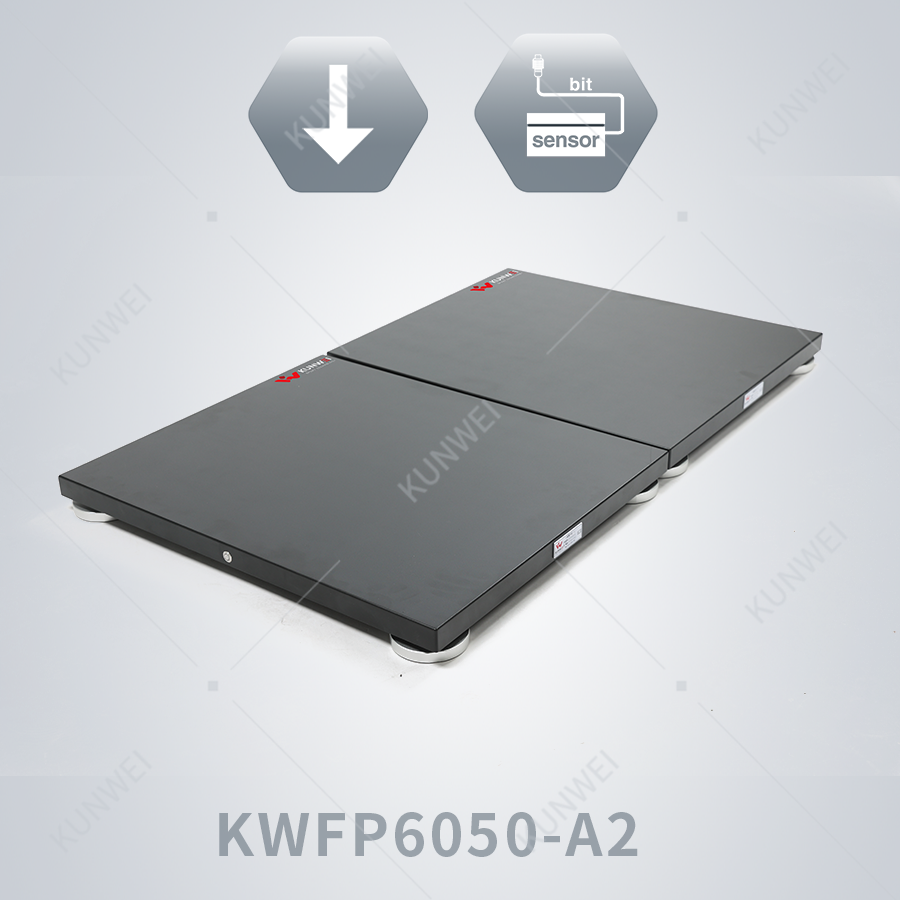
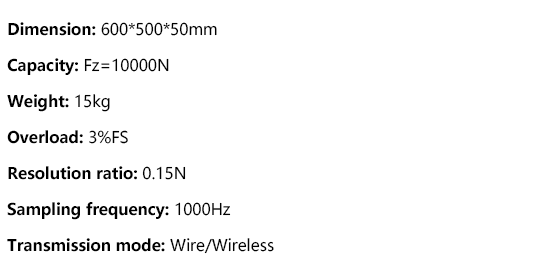
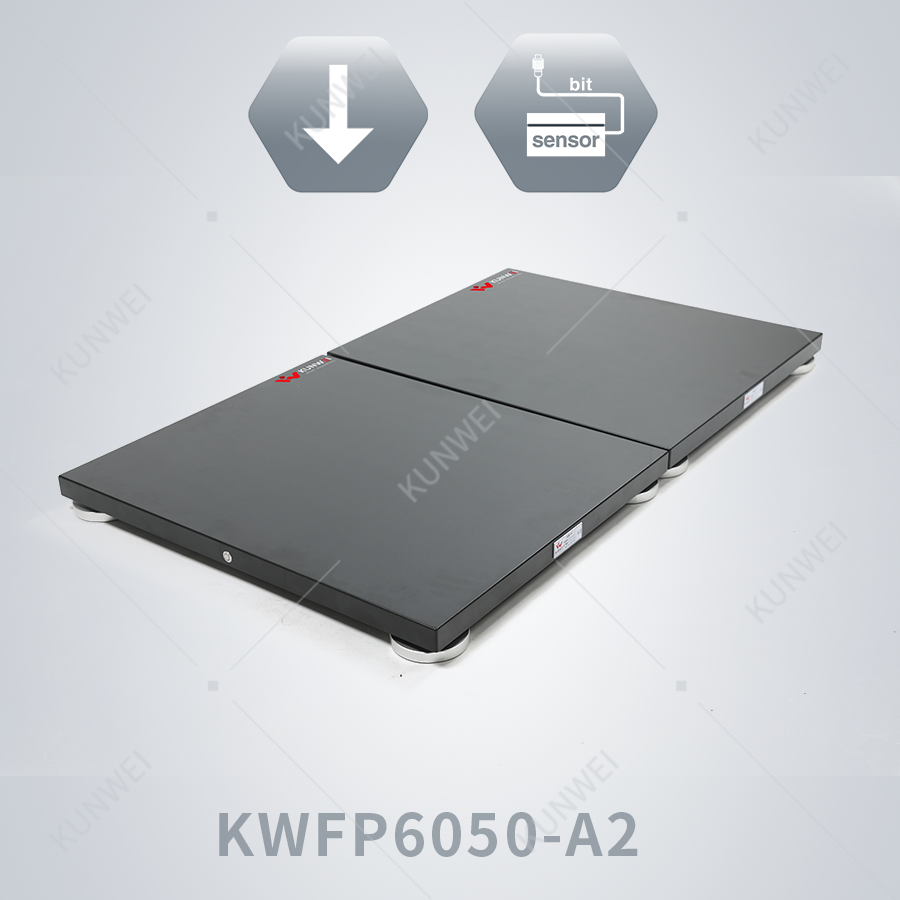
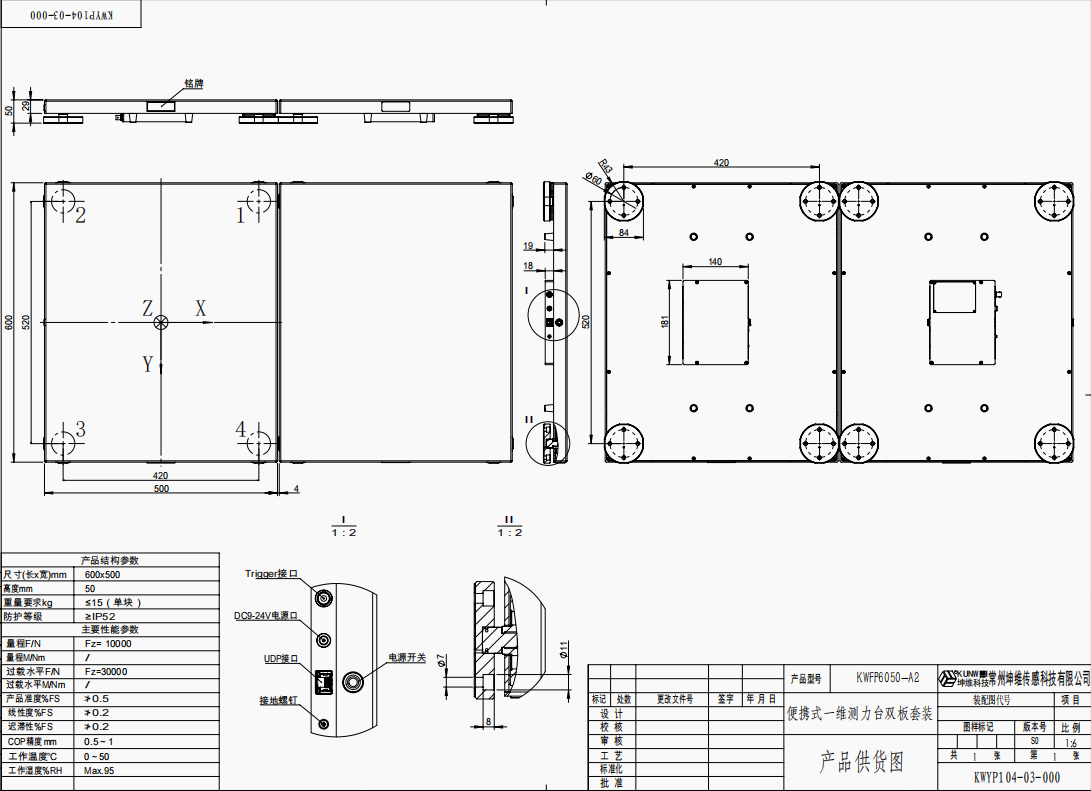
Portable 1D Force Plate KWFP6050-A2
Description

1. Test module diversification
2. Support simultaneous video capture and playback
3. With muli-level user role rights and easy for data manegement and security
4. Automatically identify key moments, divide action stages and calculate corresponding indicators
5. One-key operation, quickly generate test results
6. Support multi-platform use: computer software and tablet applications
7. Support data uploading to database,offline collection, online view data anytime and anywhere
 |
 |
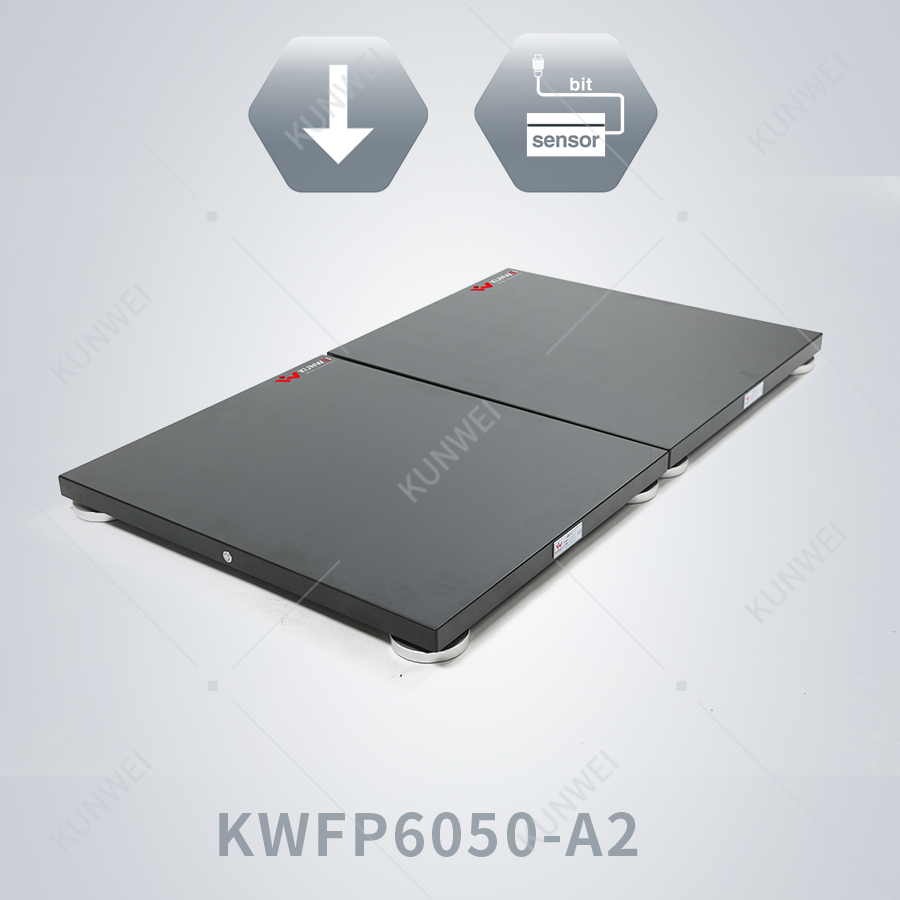 |
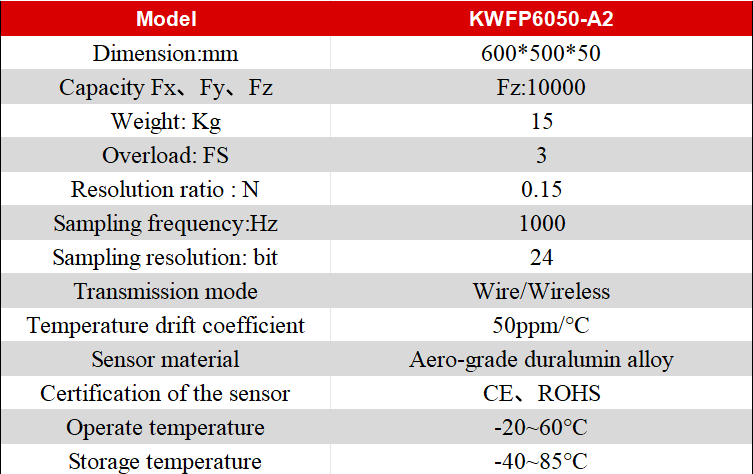
Model of KWF1206-10K
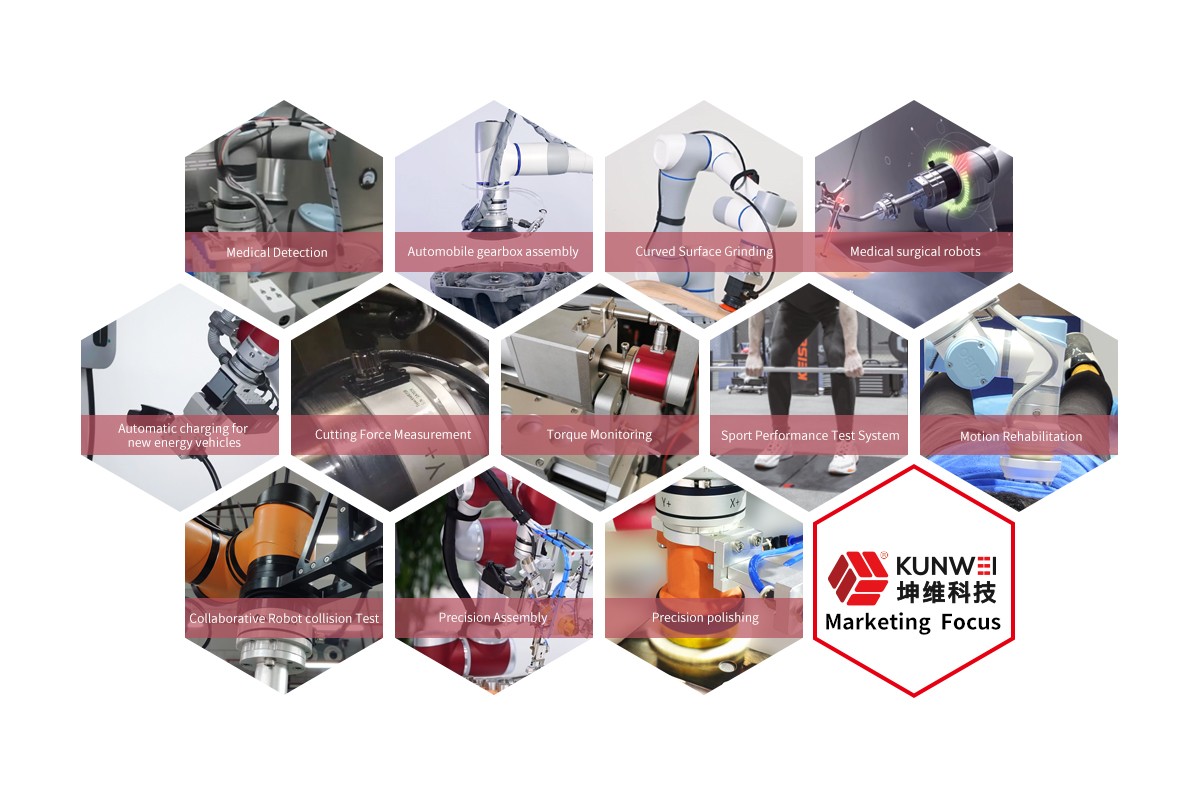
A large range three-dimensional force plate is used to measure forces and moments exerted by a human body while standing, walking, running, or performing other physical activities. It records the ground reaction forces acting on the foot and calculates the center of pressure and the direction and magnitude of the forces. These measurements can be used in various fields, including:
1. Sport Science: Sport scientists use force plates to analyze the biomechanics of athletes and improve their performance. The data obtained from the force plate can help optimize an athlete’s training regime and prevent injuries.
2. Rehabilitation: Physical therapists use force plates to assess balance, gait, and posture in patients with neurological or musculoskeletal disorders. The measurements can help track progress and identify areas that need improvement.
3. Biomechanics Research: Researchers use force plates to study human movement and biomechanics. The data obtained from the force plate can help understand injury mechanisms, improve rehabilitation techniques, and design prosthetics.
4. Ergonomics: Occupational safety experts use force plates to assess the impact of repetitive motion and strain on workers’ bodies. The data obtained from the force plate can help redesign workstations and improve workplace safety.
In conclusion, a large range three-dimensional force plate has a wide range of applications in various fields, including sports science, rehabilitation, biomechanics research, and ergonomics. The data obtained from the force plate can help optimize training regimes, prevent injuries, track progress in patients, understand injury mechanisms, improve rehabilitation techniques, design prosthetics, and redesign workstations.


.jpg)
.jpg)
.jpg)
.jpg)